
Top Septic Pumping in
Canyon
Canyon Pumping Costs & Data
Here are the critical statistics defining the current state of wastewater infrastructure in the Canyon area:
- ATU Expansion: Because the dense caliche and Pullman clay loam severely limits traditional gravity drainage, over 70% of all new housing starts outside city sewer limits are required to install complex Aerobic Treatment Units (ATUs).
- Winter Failure Rates: During severe Panhandle freezes, local data indicates a 40% spike in emergency service calls. These are predominantly caused by overloaded systems where high effluent levels freeze inside the shallow lines, causing the pipes to shatter.
- Rental Property Overload: High-occupancy student rentals near WTAMU see a massive increase in system abuse. Data indicates these properties experience a 45% higher rate of catastrophic backups due to the flushing of non-biodegradable items and extreme hydraulic loading.
- The Maintenance Deficit: Despite the vulnerability of these systems to extreme weather, nearly 30% of local homeowners fail to schedule their necessary 3-year trash tank pump-outs, leading directly to catastrophic drain field failure and burnt-out ATU motors.
The mathematics of septic maintenance on the High Plains are unforgiving. Routine, scheduled vacuum pumping is the only scientifically valid method to protect your property from a devastating $15,000 plumbing collapse.
The final invoice for your specific pump-out will be dictated by these localized variables:
- Hard Soil Excavation: Finding the tank and manually digging through dense, dry clay or caliche layers to expose the access lids adds a significant manual labor surcharge. We highly recommend paying for PVC surface risers to bypass this fee in the future.
- Winter Emergency Dispatch: Severe sewage backups or frozen line emergencies during a Panhandle blizzard require specialized equipment (like hot-water hydro-jetters) and invoke premium overtime rates for immediate hazard mitigation in sub-freezing temperatures.
- Rental Property Crust Liquefaction: High-occupancy student rentals notoriously abuse septic systems with excessive grease, wipes, and garbage disposal waste. Technicians must frequently deploy mechanical “crust-busters” to liquefy concrete-like scum layers before the vacuum can extract the waste.
- Rural Mileage & Extended Hoses: Pumping tanks located deep into ranch lands or near the canyon rim requires extra travel time. Technicians frequently deploy 100 to 200 feet of heavy industrial hose to reach tanks safely.
Furthermore, the specific soil and climate profiles dictate maintenance complexity:
| Canyon Terrain / Climate | System Challenge | Maintenance Action |
|---|---|---|
| Sub-Freezing Winters | High risk of frozen shallow lines and shattered PVC baffles if tank is overloaded. | Pre-winter pumping and structural inspections. |
| Pullman Clay Loam / Caliche | Extremely slow drainage; vulnerable to compaction from livestock or vehicles. | Strict 3-year pumping to prevent biomat failure. |
| High Wind Corridors | Aerosolizes surfacing sewage; blows dust into ATU air compressors. | Frequent ATU filter cleaning and immediate spill mitigation. |
Cost Estimation by System Profile in Canyon:
| Service Description | Estimated Range | Primary Labor Factors |
|---|---|---|
| Legacy Conventional Pump-Out | $315 – $560+ | Manual excavation through hard earth/caliche, extreme dry crust density breakdown. |
| Standard ATU Pump-Out | $340 – $640 | Multi-tank evacuation, filter sanitation, and mechanical compressor cleaning from dust. |
| PVC Riser Retrofit | +$200 – $400/lid | Installing ground-level access to permanently bypass hard-soil digging fees. |
Our platform guarantees that you connect with transparent, Panhandle-based professionals who understand the rugged, weather-extreme demands of Canyon properties.
83°F in Canyon
Your Personal Risk ROI
A new drain field is incredibly expensive. See how quickly procrastination turns into a massive bill in Canyon.
Base Drain Field Replacement in Canyon: $17,251
Local Flow Dynamics
Your effluent level will rise significantly. Protect your leach lines with this Canyon calculation.
Biological Tank Alignment
Sync your bacterial health with your local Canyon environment for the most robust wastewater breakdown.
Fast-Track to Canyon
Your home safety shouldn't be delayed by slow dispatch. Review the local transit metrics here.
Canyon Ground Moisture Report
See the real-time soil index. When the ground is saturated, your septic tank fills up dangerously fast.
Local Home Investment
More Canyon households are investing in drain field restorations than ever before. Don't be left behind.
🌱 Local Environmental Status
When an On-Site Sewage Facility (OSSF) is neglected in the Canyon area, the localized consequences are distinct and hazardous:
- Ogallala Aquifer Protection: The entire Panhandle relies heavily on the Ogallala Aquifer for both municipal drinking water and agricultural irrigation. A failing septic biomat that allows untreated coliform bacteria to bypass the topsoil can severely contaminate this irreplaceable subterranean resource.
- Aerosolization in High Winds: Canyon experiences relentless wind speeds and dust storms. If a neglected tank overflows and raw sewage pools on the surface, the high winds will dry the effluent and aerosolize the pathogens, spreading toxic bio-dust across neighboring properties and pastures.
- Freeze-Thaw Vulnerability: During harsh Panhandle winters, a hydraulically overloaded drain field (full of unpumped sludge) will hold standing water near the surface. When temperatures drop below freezing, this water turns to ice, expanding and shattering the PVC lateral lines.
- Palo Duro Canyon Runoff: The unique topography means surface runoff flows toward the canyon system. During heavy seasonal rains, surfacing sewage from a blocked system will wash directly into the canyon watershed, destroying local wildlife habitats and creating biohazards.
To protect the High Plains ecosystem, Canyon acreage owners must enforce strict maintenance protocols:
- Pre-Winter Pumping: Always schedule your routine 3-to-5-year pump-out before November. An empty or properly functioning tank is far less likely to freeze and crack during a severe cold snap.
- Protect the Biomat from Livestock: Never allow cattle, horses, or heavy farming equipment to cross the drain field. The immense weight will compact the dense soil, instantly crushing the PVC pipes.
- Chemical Discipline: Stop flushing harsh agricultural cleaners and non-biodegradable wipes that slaughter the essential bacteria necessary to break down solid waste in extreme temperature environments.
Consistent, weather-aware pumping is the absolute baseline of environmental stewardship for property owners in Randall County.
⚙️ Local Service Details
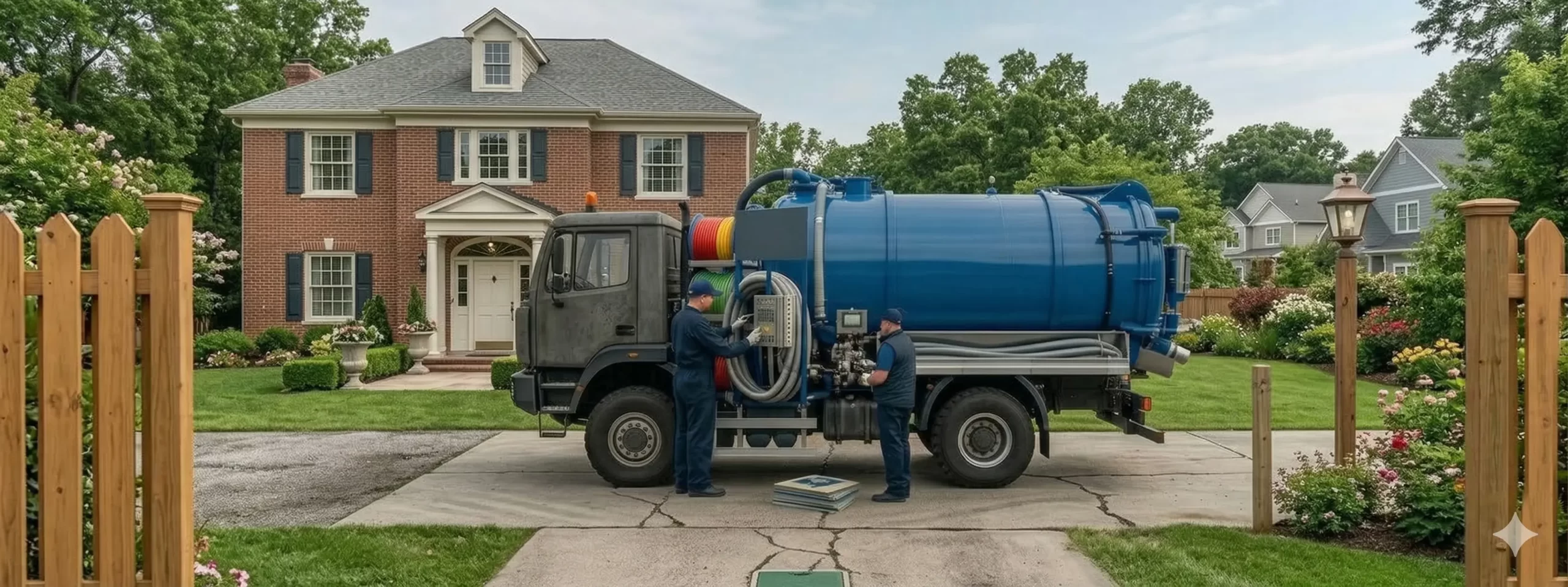
When a certified vac-truck arrives at your Canyon property, you receive a meticulously executed, multi-stage service protocol:
- Strategic Truck Placement: Carefully positioning the 30,000-pound vacuum truck on stable ground, deploying extended hoses if necessary, to ensure your driveway, delicate winter turf, and underground PVC lines are never crushed.
- Electronic Mapping & Hard Excavation: Utilizing flushable sondes to locate buried legacy tanks, followed by intense manual excavation to break through the dense clay/caliche to expose the lids safely.
- Complete Sludge Evacuation: Engaging high-CFM vacuum power to entirely empty the primary and secondary chambers, removing the floating grease mat, the liquid effluent, and the heavy, compacted bottom sludge that destroys drain fields.
- Crust Agitation & Winter Hydro-Jetting: Utilizing heavy-duty mechanical “crust busters” to break down dry, calcified solids common in West Texas. In winter emergencies, technicians use hot-water hydro-jetters to melt ice blockages in the lateral lines.
- Filter & Aerobic Maintenance: Removing and power-washing the effluent filter, and checking aerobic system components (especially cleaning dust out of air compressors) to ensure maximum operational efficiency.
- Freeze-Damage Structural Check: Visually inspecting the emptied concrete walls for corrosive degradation and checking PVC baffles for shatter-cracks caused by extreme freeze-thaw cycles.
This comprehensive, rugged approach guarantees your system operates at peak efficiency, protecting your property value and preventing catastrophic winter backups.
📍 Coverage & ZIP Codes
🏡 Real Estate Transactions
Navigating a property transfer in Canyon requires meticulous attention to septic documentation:
- Freeze-Damage Inspections: Because of the extreme winter temperature drops, appraisers will demand a full vacuum pump-out and a structural camera inspection to guarantee that aging concrete tanks and PVC baffles haven’t been cracked or shattered by previous freeze-thaw cycles.
- Randall County ATU Compliance: Due to the dense caliche and clay loam, many newer homes require Aerobic Treatment Units (ATUs). The seller must present a verified, active maintenance contract to the local environmental health department. Lapsed contracts will unconditionally stall the title transfer.
- Student Housing Conversions: Investors purchasing rural properties for student housing must prove the OSSF can handle the high-density load. Buyers routinely require a complete system diagnostic to ensure the drain field isn’t already failing from hydraulic shock.
- Appraisal Value Protection: A failed leach field in hard West Texas soil can cost $12,000 to $18,000 to replace due to the excavation difficulty. Providing a buyer with a flawless 5-year pumping and maintenance log neutralizes their ability to demand massive price concessions.
Protect your Panhandle property’s equity. Securing a professional pump-out and a clean bill of health from our vetted technicians is the most profitable step you can take before listing.
⚠️ Local Regulatory Warning
Homeowners are legally bound by the following uncompromising mandates:
- TCEQ State Statutes: The Texas Commission on Environmental Quality strictly regulates the extraction and transport of bio-hazardous waste. Only legally registered sludge transporters are permitted to pump your system and manifest the waste to an approved municipal treatment plant.
- Local ATU Contracts: If your property relies on an aerobic system with surface spray application, local health departments absolutely require you to hold a continuous, active maintenance contract with a certified provider. Lapsing on this contract leads to immediate permit revocation.
- Aquifer Protection Enforcement: Allowing raw sewage to pool in your yard, run off into a local arroyo, or seep into an improperly sealed wellhead is a severe public health violation, triggering immediate county investigations and potential daily fines.
- System Alteration Permitting: Expanding your home, adding a barn bathroom, or upgrading a drain field without filing engineered blueprints with the local Environmental Health Department will result in stop-work orders and massive retroactive penalties.
Consequences of Regulatory Non-Compliance in Canyon:
| Environmental Violation | Enforcing Agency | Potential Penalty |
|---|---|---|
| Illegal Surface Discharge (Raw Sewage) | TCEQ / Local Health | Emergency fines up to $500/day, forced condemnation of the system. |
| Expired Aerobic Maintenance Contract | County Authorities | Permit revocation, Class C Misdemeanor, blockage of property sales. |
| Using Unlicensed “Gypsy” Pumpers | State Agencies | Homeowner liability for illegal dumping, massive environmental restitution. |
Protect your estate and your legal standing. Our network exclusively provides access to fully insured, TCEQ-registered experts who guarantee absolute compliance with all local and state laws.
Homeowner Feedback



Reliable Septic Services in
Canyon, TX
Canyon Septic Expert AI
What are the specific septic tank regulations, typical soil drainage characteristics, and the local permitting authority for the Canyon area?
Septic System Regulations, Soil Characteristics, and Permitting in Canyon, TX (2026)
As a Senior Environmental Health Inspector and Septic Regulatory Expert for Texas, I can provide you with specific and hard data regarding residential on-site sewage facilities (OSSFs), commonly known as septic systems, for the Canyon, TX area in 2026. Canyon is located within Randall County, Texas.
1. Specific Septic Tank Regulations (Randall County)
In Randall County, the permitting and regulation of residential septic systems primarily fall under the statewide rules established by the Texas Commission on Environmental Quality (TCEQ). Randall County operates as an authorized agent for TCEQ regarding On-Site Sewage Facilities.
- Primary Regulatory Authority: The overarching state regulations for all OSSF systems are found in 30 Texas Administrative Code (TAC) Chapter 285, "On-Site Sewage Facilities." This comprehensive chapter covers everything from permit applications, design criteria, construction, installation, and operation to maintenance and enforcement.
- Local Enforcement and Permitting: For Canyon and other areas within Randall County, the Randall County Commissioners Court, through its Environmental Health Department, serves as the local permitting authority. They are responsible for reviewing OSSF permit applications, conducting site evaluations (soil testing and site-specific conditions), issuing permits, and performing inspections to ensure compliance with 30 TAC Chapter 285.
- Key Regulatory Requirements (under 30 TAC Chapter 285):
- All new OSSF installations, repairs, or modifications require a permit from the Randall County Environmental Health Department.
- A site-specific evaluation, including soil analysis (e.g., percolation test or soil borings to determine texture, structure, and depth to restrictive layers), is mandatory for design.
- System design must be prepared by a licensed OSSF professional (either a Registered Professional Engineer or a Registered Sanitarian who is an OSSF Designer).
- Minimum setback distances from property lines, water wells, surface waters, and structures must be adhered to.
- For aerobic treatment units (ATUs), a maintenance contract with a licensed professional is required for the life of the system, involving regular inspections and sampling (typically quarterly for two years, then biannual).
2. Typical Soil Drainage Characteristics in Canyon, TX
The soils in and around Canyon, TX, generally fall within the Texas Panhandle's High Plains region. Based on USDA Natural Resources Conservation Service (NRCS) soil surveys for Randall County, the predominant soil types are characterized by:
- Common Soil Series: You'll frequently encounter soils like Pullman clay loam, Olton clay loam, and Acuff clay loam. These are deep, productive agricultural soils.
- Drainage Characteristics: These "clay loam" soils generally exhibit good to moderate drainage, but the significant clay content means they have a lower permeability rate compared to sandy soils. This translates to a slower percolation rate. While they can be well-drained, the rate at which effluent moves through the soil can be a limiting factor for conventional septic systems.
- Implications for Drain Field Design:
- Slower Percolation: Due to the clay loam texture, effluent will not infiltrate as quickly as in sandy soils. This typically requires larger drain field footprints for conventional systems to adequately absorb the wastewater and prevent surface surfacing or system failure.
- Reduced Hydraulic Loading: The design professional will apply a lower hydraulic loading rate per square foot when sizing the drain field, as mandated by 30 TAC Chapter 285, to account for the soil's absorption capacity.
- Potential for Aerobic Systems: In areas with particularly restrictive clayey soils, high groundwater tables (though less common directly in Canyon's elevated areas, it can exist in low-lying spots), or limited space, an aerobic treatment unit (ATU) system is often the preferred or required solution. ATUs treat wastewater to a higher quality before it enters the soil, allowing for smaller dispersal areas (e.g., surface drip or spray irrigation) and making them more suitable for less permeable soils.
- Caliche Layers: It's also important to note that caliche layers (hardened calcium carbonate) can be present at varying depths in Randall County. These layers can severely impede drainage and may require significant excavation or alternative system designs. A thorough site evaluation by a licensed OSSF professional is crucial to identify such conditions.
3. Local Permitting Authority for Canyon Area
The Randall County Commissioners Court, specifically operating through the Randall County Environmental Health Department, is the exact local permitting authority for residential septic systems in the Canyon area. They administer the TCEQ OSSF program for the county.
- Contact Information: For current permit applications, specific local requirements, and fee schedules, you would contact the Randall County Environmental Health Department. Their offices are typically located within the Randall County government complex in Canyon.
- Process: The process generally involves submitting a permit application, site plan, and design documents prepared by a licensed OSSF professional to the Randall County Environmental Health Department. They will conduct a site visit, review the design, and issue the permit if all regulations are met. Inspections are conducted during and upon completion of the system installation.
4. Realistic 2026 Cost Estimates for Septic Systems in Canyon, TX
These estimates are based on current market trends (2024/2025) with a conservative projection for inflation and material/labor cost increases into 2026. Actual costs can vary significantly based on site-specific conditions, system complexity, and the chosen contractor.
- Septic Tank Pumping (Residential, typically 1,000-1,500 gallon tank):
- Estimate (2026): $330 - $660.
- Frequency: Conventional tanks typically need pumping every 3-5 years, depending on household size and water usage. Aerobic tanks have maintenance contracts that often include sludge removal as needed, but a full pump-out might still be required periodically.
- New Septic System Installation (Residential):
- Conventional System (Septic Tank + Drain Field):
- Estimate (2026): $8,500 - $16,500.
- This type is suitable only where soil conditions (percolation rate, depth to restrictive layer) and lot size are adequate, which can be challenging in some Randall County clay loam areas. Costs can increase if extensive earthwork or imported soil is required.
- Aerobic Treatment Unit (ATU) System with Surface or Drip Irrigation:
- Estimate (2026): $16,000 - $33,000+.
- These systems are more common in Randall County due to variable soil conditions, smaller lot sizes, or stricter environmental requirements. The higher cost reflects the advanced treatment unit, pump system, control panel, and irrigation field.
- Mandatory Maintenance Contract: An additional ongoing cost for ATU systems is a required maintenance contract, typically ranging from $200 - $400 per year in 2026, covering quarterly or biannual inspections and necessary adjustments.
- Conventional System (Septic Tank + Drain Field):
- Additional Potential Costs:
- Permit Fees: Varies by county, typically a few hundred dollars.
- Site Evaluation/Design Fees: Can be $500 - $1,500, often included in the total installation quote or charged separately by the OSSF Designer.
- Repair Costs: If a drain field fails or a component breaks, repairs can range from a few hundred dollars for minor issues to several thousand for drain field replacement.
Expert Septic FAQ
I rent my Canyon house to college students. How often should I pump the septic tank?
Does the extreme cold in the Panhandle winter pose a danger to my septic system?
Can we allow our cattle or horses to graze over the septic drain field?
Once the field is compacted or crushed, it cannot be repaired; the entire field must be dug up and replaced. You must fence off your drain field from all livestock and heavy farm equipment.