
Emergency Well Pump Repair in Port Lavaca, TX
Folks around Port Lavaca know the ground here is tricky. We’re on the coast, which means our groundwater is under constant threat from saltwater intrusion, especially after a dry spell or heavy pumping. It ain’t like the Hill Country where you hit limestone and have pure spring water. Here, it’s a battle to keep good, clean, fresh water flowing to your faucet.
Most of our potable water comes from the Chicot Aquifer, which is part of the larger Gulf Coast Aquifer system. It’s mostly sand, silt, and clay, meaning it can be prolific but also prone to fine sediment. Deeper wells might tap into the Evangeline, but for most homes, it’s the Chicot we’re dealing with, and its characteristics define a lot of our pump & well challenges.
This environment is brutal on cheap pumps. That ‘bargain’ pump from the big box store might last a couple of years, but the abrasive sand, coupled with the slightly corrosive nature of our local water, will eat away at impellers & housings. Then you factor in the high demand during hot Texas summers, and you’ve got a recipe for early failure. Investing in a quality pump here isn’t a luxury; it’s a necessity.
Fast Local Service & Diagnostics
Calls are routed to a licensed local well professional.
Well Pump Repair in
Port Lavaca
Port Lavaca & Calhoun County Well Stats
Calhoun County relies heavily on groundwater for both agricultural irrigation and domestic use. Estimates suggest thousands of private wells scattered across the county. Many of these are older wells, some drilled decades ago, which means they might not meet current construction standards, leading to increased vulnerability to contamination or structural failure. We see a mix of well depths, from shallower irrigation wells around 80-150 feet to deeper domestic wells hitting 250-400 feet, sometimes even deeper, especially further inland from the immediate coast, trying to avoid the fresher/saltwater interface.
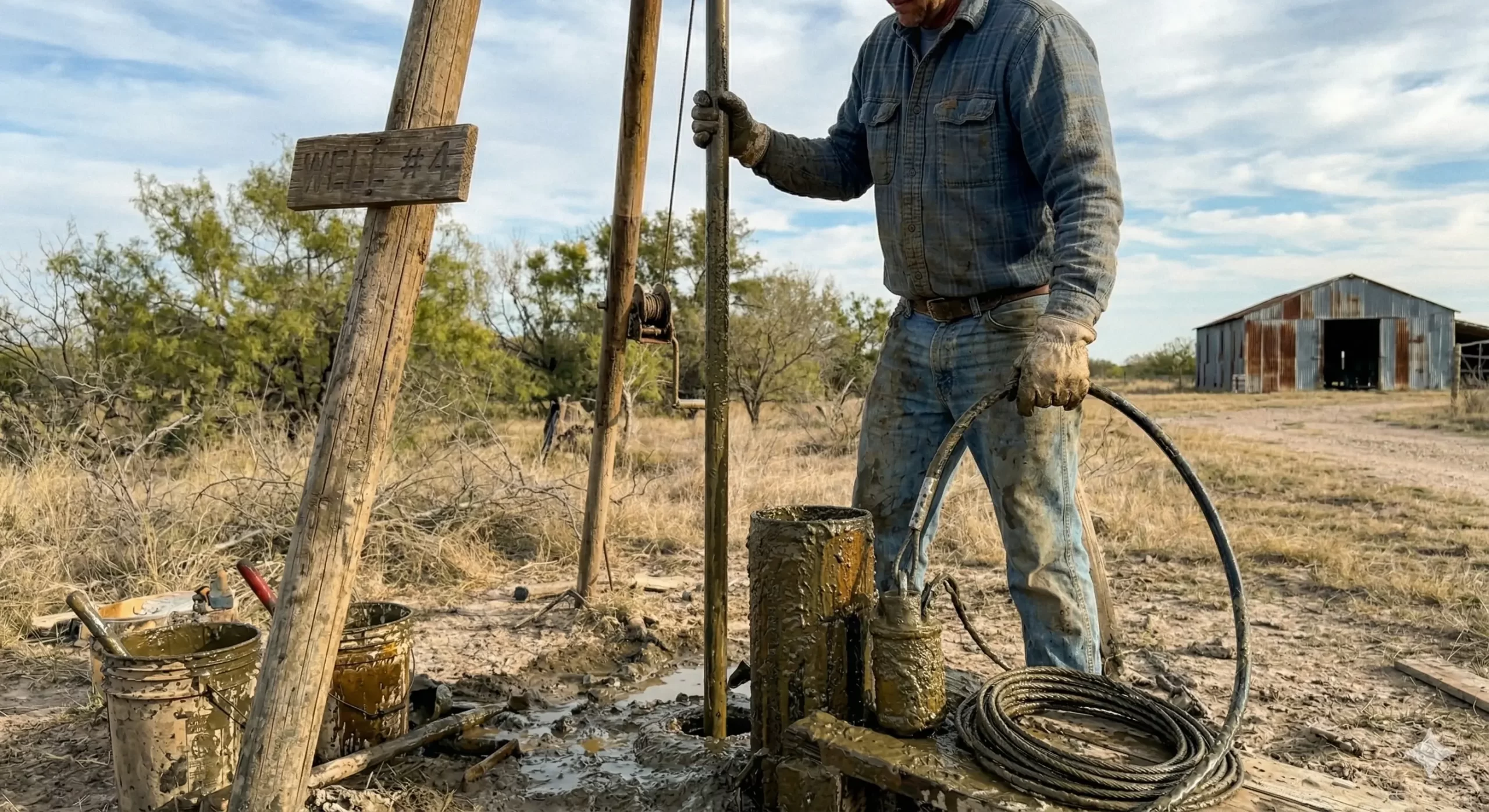
Pulling a pump in Calhoun County ain’t cheap, and there are good reasons for it. Our wells aren’t necessarily super deep compared to West Texas, but the unconsolidated sandy & clay formations can create issues like caving or sand locking around the pump, making it extremely difficult to extract. Plus, some properties are tight on space, requiring smaller, specialized pull rigs or careful maneuvering, which adds time & complexity.
The equipment we use for these jobs is heavy-duty & specialized. We’re talking about hydraulic pump rigs, not just a tripod & chain hoist. We often need specialized tools to free sand-logged pumps without damaging the casing. And given the potential for corrosive water, we often recommend & install pumps & drop pipe made from stainless steel or other robust materials, which are inherently more expensive than standard galvanized steel or PVC.
Spring Well Maintenance in Texas
Heavy spring rains can cause surface runoff to breach well caps. We strongly recommend testing your water for coliform bacteria and inspecting the sanitary seal.
Save $500+ on Replacements
Via the TX Energy Co-op VFD Upgrade Program
82°F in Port Lavaca
Local Aquifers & Geology
The primary groundwater sources in Port Lavaca include the The Chicot Aquifer, a primary component of the Gulf Coast Aquifer System. It’s an unconfined to semi-confined aquifer consisting mainly of interbedded sands, silts, and clays. Water quality varies, often showing elevated hardness, iron, and a strong potential for saltwater intrusion in coastal areas like Port Lavaca due to its proximity to the Gulf of Mexico and relatively shallow depth in many locations. This aquifer is highly susceptible to contamination from surface activities due to its permeable nature.. Drilling through the local Port Lavaca & Calhoun County primarily feature coastal prairie soils, often classified as sandy loams, clays, and silty clays. Near the coast and in marshy areas, you’ll find highly organic soils. This soil profile presents challenges for well drilling, as the unconsolidated sands can easily collapse if not properly cased, and the clays can swell & cause issues with well stability over time. The high plasticity of some clays can also make grouting a critical step to prevent surface contamination. means that average well depths range from 150 ft – 450 ft, with some irrigation wells shallower & some domestic wells deeper depending on location & water quality needs..
Due to these geological factors, local homeowners frequently struggle with Sand abrasion & corrosion are the leading causes of pump failure here. The fine sands common in the Chicot Aquifer act like sandpaper on impellers & diffusers, especially if the well isn’t properly developed or screened. This wear leads to reduced efficiency & eventually total pump failure. Combined with the slightly corrosive nature of some groundwater, often due to dissolved minerals or even minor saltwater presence, it’s a brutal environment for mechanical components..
Drilling Depth Comparison
Deeper wells require heavy-duty crane hoists for pump extraction.
Climate & Water Quality
Pump systems in the Port Lavaca area face severe environmental stressors. The most significant threat is Our coastal climate, defined by high humidity, intense heat, frequent heavy rainfall, and the constant threat of hurricanes, poses significant risks to well equipment. Hurricanes & tropical storms can cause prolonged power outages, stressing well components when power is restored (surge damage). Flooding can submerge wellheads, leading to electrical shorts or contamination. The high humidity contributes to corrosion of exposed metal parts, and extreme heat increases operational stress on pump motors & control boxes. Salt spray from coastal winds can also accelerate corrosion.
Additionally, the raw groundwater often presents issues with We primarily battle with high levels of hardness, elevated iron, and occasional sulfur (rotten egg smell). However, the most critical & persistent issue in our area is the risk of *saltwater intrusion*. This means the fresh/saltwater interface can shift, bringing brackish water into freshwater wells, making the water unpalatable & highly corrosive to pumps & plumbing. Sand is also a common problem, contributing to turbidity & pump wear..
Regional Groundwater Advisory
Known primary contaminant threat to submersible pumps and pipes in this area:
Common Area Systems
VFD Upgrade Savings
Constant Pressure vs StandardReplacing a standard single-speed pump with a Variable Frequency Drive (VFD) eliminates hard starts and drastically reduces energy draw in Texas.
Compliance & Local Permits
Calhoun County Level: Calhoun County does not have an active Groundwater Conservation District (GCD) covering the entire county for domestic wells. Therefore, private well permits typically fall under general state regulations administered by the Texas Department of Licensing and Regulation (TDLR) for well driller & pump installer licensing. However, for larger agricultural or industrial wells, or public supply, there might be regional water authority permitting requirements, such as those from the Lavaca-Navidad River Authority (LNRA) or the Texas Commission on Environmental Quality (TCEQ). For most residential wells, while a specific local ‘permit’ from the county is often not required, all wells must be drilled & completed by a TDLR licensed driller & meet state construction standards.
Top Pump Brands in Texas
Most frequently installed hardware based on local geology (2026 data).
- Inspect pressure tank for proper air charge & integrity, ensuring no waterlogging or corrosion.
- Calibrate & test pressure switch settings & contacts for proper cut-in & cut-out pressures.
- Measure pump motor amp draw & voltage, comparing to manufacturer specifications to detect overloading or inefficiencies.
- Verify all electrical connections, grounding, & conduit for safety & compliance.
- Perform a basic visual water quality check for turbidity, sediment, & noticeable odors; discuss advanced testing if warranted.
- Thoroughly inspect the wellhead for cracks, proper sealing, rodent entry, & overall structural integrity.
Premium Well Pump Brands We Service
Our licensed technicians in Port Lavaca are certified to repair, replace, and install high-quality groundwater equipment from industry-leading manufacturers, including:
- No water coming from any faucets, or only air sputtering out.
- Significantly reduced water pressure throughout the house, making showers & dishwashing difficult.
- Pump constantly cycling on & off, even when no water is being used (short-cycling).
- Unexplained increase in your electricity bill, indicating the pump is working harder than it should.
- Water appearing cloudy, sandy, or rust-colored, suggesting well or pump issues.
- Strange noises coming from the pump itself, the pressure tank, or the well casing.
Port Lavaca Real Estate Well Regulations
Local Dispatch & Response Times
Live Dispatch: Texas
Updated Just Now⚠️ High demand. Call now to secure the next available technician.
- We offer 24/7 emergency services, because water doesn’t care if it’s a holiday or 2 AM.
- For calls within Port Lavaca & immediate surrounding areas, our target response is typically 2-4 hours, provided a crew is available & not already on a critical job.
- Response times can be affected by severe weather, especially during hurricane season or heavy rains, and the volume of other emergency calls.
- Our trucks are stocked with common parts to diagnose & address most issues on the first trip, minimizing downtime.
- If an immediate repair isn’t possible, we’ll assess the situation & discuss temporary solutions or provide an estimated timeline for full restoration.
⚠️ Calhoun County & State Regulatory Warning: Abandoned Wells
Pump Lifespan Estimator
Select household size in Port Lavaca to see strain impact.
Groundwater Threat Level
Current aquifer and mineral impact on pumps in Port Lavaca.
Dropping water tables cause pumps to suck air and overheat.
Hard water calcifies pump impellers, reducing lifespan.
The Cost of Ignoring Symptoms
Fixing a short-cycling pump early saves thousands in Port Lavaca.
Data reflects average well contractor estimates in Port Lavaca.
Local Port Lavaca
Well Pros
Fast Local Service & Diagnostics
Calls are routed to a licensed local well professional.
Septic System Services in Port Lavaca, TX
Do you have a septic tank on your property? Proper maintenance is critical to protecting your well water quality.
Port Lavaca Homeowner Feedback
“Had a pump quit on me last week. Called ’em up, they were out quick. Replaced the old one, got me water back. Can’t ask for more. Good folks.”

Local Homeowner
✓ Verified TX
“My water was getting all gritty and sandy for months, especially when the sprinkler system ran. I thought the well was collapsing. Called these guys, they came out with their rig. Took ’em most of the day, but they pulled the old pump. Turns out the plastic riser pipe had a big crack near the bottom, letting all that sand in. They put in new stainless steel drop pipe and a brand-new Grundfos pump, plus a sediment filter right at the wellhead. No more grity coffee! Did a great job, no more grity water. A bit pricy but worth it to have clean water again.”

Local Homeowner
✓ Verified TX
“Pump gave out Sunday morning, naturally. Called them up, and they had a tech out here by lunchtime. Had us up and running with a new pressure switch and a quick pump reset. Fast & efficient, exactly what you need in an emergency. Highly recommend their speed.”

Local Homeowner
✓ Verified TX
Expert Port Lavaca Well System FAQ
What should I do if I suspect saltwater intrusion in my Port Lavaca well water?
If you notice your water tasting salty, looking cloudy, or if your pipes & fixtures are corroding unusually fast, you might have saltwater intrusion. First, stop heavy pumping if possible to reduce the draw on the aquifer. Second, contact a qualified well service company immediately. We can perform specific water quality tests to confirm salinity levels. If confirmed, solutions vary from modifying pump depth to installing reverse osmosis systems, or in severe cases, drilling a new, deeper well in a more secure freshwater zone. Early detection is key to managing the issue & potentially extending the life of your existing well.
Why am I getting sand in my water, and what’s the best fix for it here?
Sand in your water is a common headache in our coastal aquifers. It can be caused by several factors: an improperly developed well, a damaged well screen or casing, the pump being set too deep into the screen, or simply the natural geology of the Chicot Aquifer. The best fix often involves pulling the pump to inspect the well casing & screen for damage. If the well is structurally sound, we might adjust the pump’s setting, install a sand separator or cyclonic filter at the wellhead, or recommend a pump designed to handle higher sand content. Ignoring sand leads to premature pump failure, sediment buildup in pipes, & damage to appliances.
How often should I have my well system in Port Lavaca maintained, given our local conditions?
Given the specific challenges of our coastal environment – potential for corrosive water, sand, high humidity, and extreme weather – we strongly recommend an annual well system check-up. This isn’t just about the pump; it includes inspecting the pressure tank, pressure switch, electrical components, wellhead seal, and a basic water quality assessment. Regular maintenance allows us to catch minor issues like failing capacitors or slight sand infiltration before they become costly major breakdowns. Think of it like changing the oil in your car; it extends the life of a critical asset and ensures reliable operation, especially when you need it most during our hot summers.
What precautions should I take for my well before & after a hurricane or major storm here?
Before a hurricane, if flooding is anticipated, turn off the power to your well pump at the breaker to prevent electrical damage if the wellhead is submerged. Secure the well cap to prevent debris & contaminants from entering. After the storm, once floodwaters have receded, inspect your wellhead for damage. If the wellhead was submerged, it’s critical to disinfect your well to kill potential bacteria that entered during flooding. This involves chlorination, followed by flushing & retesting the water for coliform bacteria before resuming use for potable purposes. Also, check for any visible damage to electrical conduits or the pressure tank. Power surges during restoration can also damage components, so a post-storm electrical check is always a good idea.
Port Lavaca Groundwater Expert AI
What are the specific groundwater regulations, average well depths, and the local conservation district for Port Lavaca, Calhoun County?
Groundwater Regulations for Residential Water Wells in Port Lavaca, Calhoun County, TX (2026)
As a Senior Hydrogeologist and Local Groundwater Regulatory Expert for Texas, I can provide you with specific information regarding residential water wells in Port Lavaca, Calhoun County, Texas, as of 2026.
1. Specific Groundwater Regulations
Unlike many counties in Texas, Calhoun County is NOT located within an active Groundwater Conservation District (GCD). This means there is no local GCD responsible for permitting, well spacing, or production limits for residential wells.
However, groundwater resources and water well construction are still regulated at the state level. The primary regulatory body for residential water well drilling, completion, and plugging in Calhoun County is the Texas Department of Licensing and Regulation (TDLR). The TDLR oversees all licensed water well drillers and pump installers and enforces state standards for well construction to protect groundwater quality.
Key State Regulations and Requirements:
- Texas Occupations Code Chapter 1901: Governs the licensing of water well drillers and pump installers, ensuring only qualified professionals work on wells.
- 16 Texas Administrative Code (TAC) Chapter 76: These are the specific TDLR rules that dictate how water wells must be drilled, completed, and plugged. They include:
- Well Registration: Even though no local permit is required, newly drilled wells (including residential) must be registered with the TDLR within 30 days of completion. The driller is responsible for submitting a "Well Driller's Report" (WDR) to the TDLR and the Texas Water Development Board (TWDB).
- Well Construction Standards: Detailed specifications for casing, cementing, screens, and surface completion to prevent contamination and ensure well integrity.
- Setback Requirements:
- At least 50 feet from a property line.
- At least 50 feet from a septic system absorption field.
- At least 100 feet from a septic system absorption field if the well is a public water supply well.
- At least 150 feet from a septic tank, sewage treatment plant, or other potential sources of contamination.
- At least 500 feet from a concentrated animal feeding operation.
- Plugging Requirements: Abandoned or deteriorated wells must be properly plugged by a licensed driller to prevent contamination pathways to the aquifer.
- Texas Water Code Chapter 35: Pertains to the overall management of water wells and drilling activities in the state.
For wells that might be considered "public water supply" (even small ones serving more than one household or a specific number of connections/individuals), the Texas Commission on Environmental Quality (TCEQ) would also have oversight regarding water quality monitoring and system operation, but this is less common for typical single-family residential wells.
Official Resources:
- TDLR Water Well Driller and Pump Installer Program: https://www.tdlr.texas.gov/wwd/wwd.htm
- TDLR Well Drilling and Plugging Rules (16 TAC Chapter 76): https://texreg.sos.state.tx.us/public/readtac$ext.ViewTAC?tac_view=4&ti=16&pt=4&ch=76
- Check the TDLR water well driller database for licensed professionals: https://www.tdlr.texas.gov/LicenseSearch/ (Select "Water Well Driller/Pump Installer").
2. Average Well Depths for Port Lavaca
Based on historical state well logs from the Texas Water Development Board (TWDB) for the Port Lavaca area in Calhoun County, residential water wells seeking reliable freshwater typically range in depth to avoid shallower, potentially brackish zones. For Port Lavaca, a realistic average well depth for residential use is approximately 250 feet. Some wells may be shallower (150-200 feet), and others deeper (300-400 feet), depending on specific site conditions and the desired water quality/quantity.
3. Local Conservation District
As stated previously, there is NO Groundwater Conservation District (GCD) currently active or with jurisdiction over Calhoun County, including Port Lavaca. Therefore, there is no local GCD to contact for permitting or specific local groundwater rules. Regulation defaults to the state agencies, primarily the TDLR.
You can verify GCD coverage through the TWDB: https://www.twdb.texas.gov/groundwater/conservation_districts/index.asp
4. Specific Aquifer Beneath Port Lavaca
The primary aquifer system supplying groundwater to Port Lavaca and Calhoun County is the Gulf Coast Aquifer system. Specifically, residential wells in this area typically draw from the shallower formations within this system, primarily the Chicot Aquifer and, for deeper wells, potentially the upper parts of the Evangeline Aquifer.
These aquifers consist of unconsolidated sands, silts, and clays, and water quality can vary with depth and proximity to the coast, with salinity being a concern in shallower zones or those closer to saltwater intrusion fronts.
Fast Local Service & Diagnostics
Calls are routed to a licensed local well professional.
Blix
provides official
Emergency Well Pump Repair services for the
Port Lavaca
area.