
Emergency Well Pump Repair in Lamesa, TX
Folks around Lamesa know the harsh realities of pulling water from deep underground here on the Caprock. We’re in a semi-arid region, and while the soil’s good for cotton, that water ain’t just gonna jump out of the ground. Drought cycles hit us hard, and the water table seems to drop a little more every year, putting extra strain on every well out there.
Our lifeline here is primarily the Ogallala Aquifer, a massive underground sponge that’s been feeding West Texas for generations. But let’s be straight: it’s not recharging like it used to. We’re pumping out more than nature’s putting back in, which means your pump has to work harder, and sometimes, you’ve got to go even deeper.
That’s why cheap, off-the-shelf pumps just don’t cut it in Dawson County. They ain’t built for the depths, the continuous demand, or the grit we often find in our water. You put a flimsy pump down 400 feet, you’ll be calling me back in a couple of years, tops. Investing in quality here is not a luxury, it’s a necessity.
Fast Local Service & Diagnostics
Calls are routed to a licensed local well professional.
Well Pump Repair in
Lamesa
Lamesa & Dawson County Well Stats
Dawson County relies heavily on groundwater, primarily from the Ogallala Aquifer. Depths for domestic wells typically range from 300 to 600 feet, while irrigation wells can go deeper. Average well yields vary but have seen a decline over the past decades due to aquifer depletion. The county has thousands of registered wells, with irrigation being the dominant user, placing significant demand on the groundwater resources.
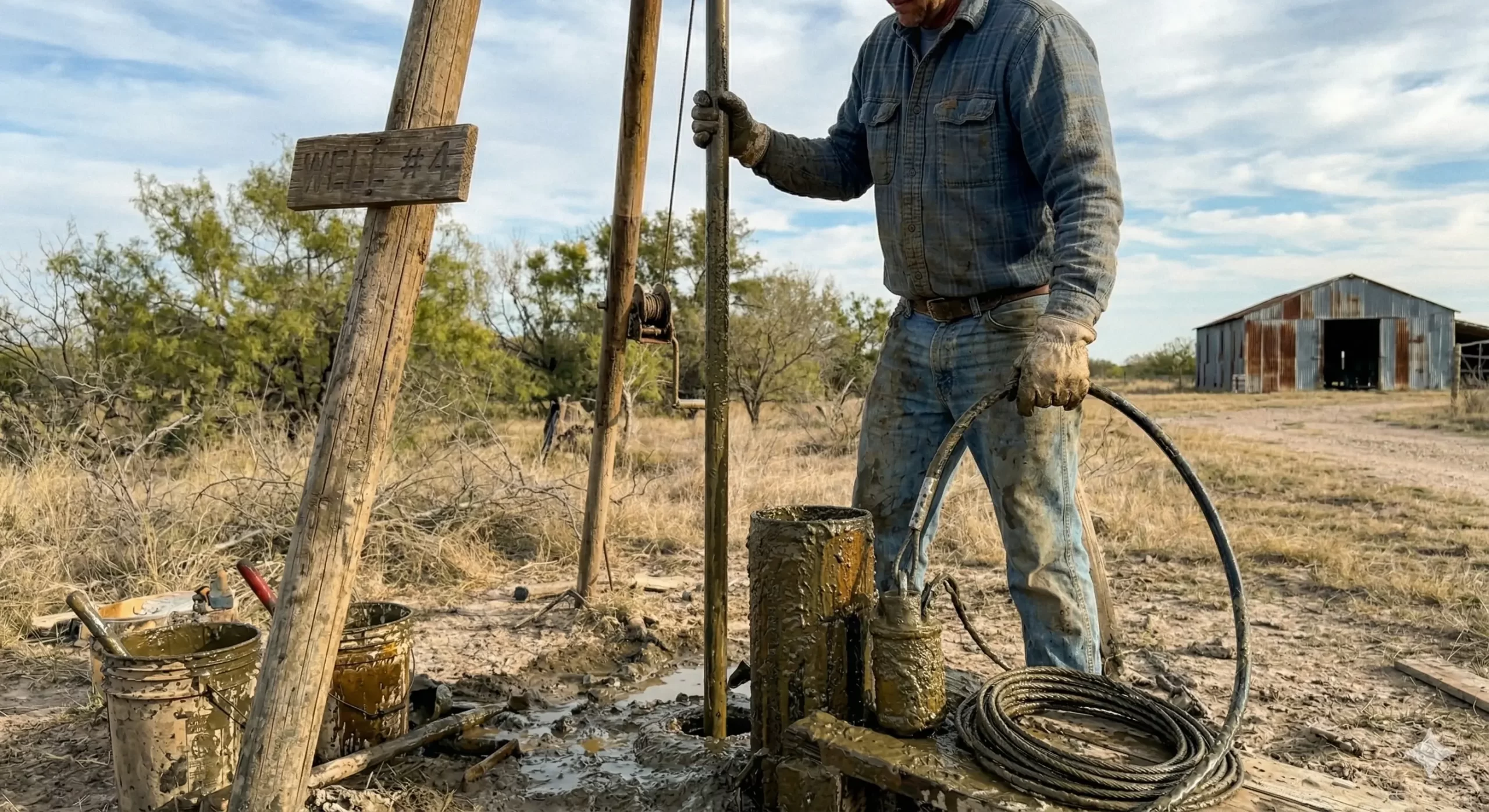
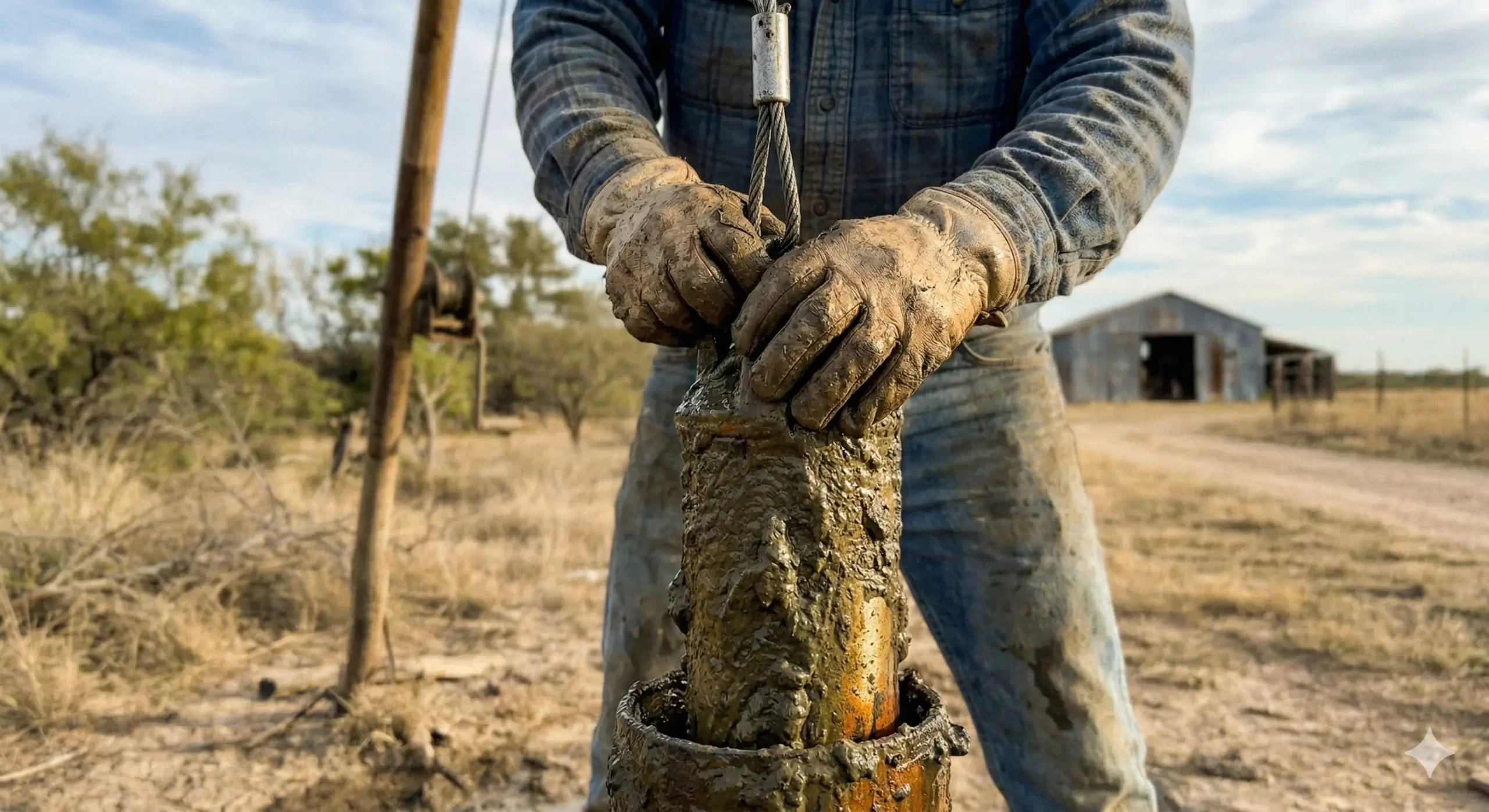
Pulling a pump in Lamesa is rarely a simple job. We’re dealing with significant depths, often 300-600 feet, and getting through that hard caliche and occasional bedrock takes time and specialized equipment. Access to some agricultural wells can also be tricky, requiring careful navigation of fields and sometimes even grading to get the rig close enough.
To get a pump out of these deep wells, we use heavy-duty pump rigs, not just a tripod and a chain. We’re talking about a truck-mounted hoist, specialized pipe wrenches, electrical testing gear, and sometimes a portable generator if the power’s out. Everything’s bigger and tougher out here to handle the demands of West Texas wells.
Spring Well Maintenance in Texas
Heavy spring rains can cause surface runoff to breach well caps. We strongly recommend testing your water for coliform bacteria and inspecting the sanitary seal.
Save $500+ on Replacements
Via the TX Energy Co-op VFD Upgrade Program
70°F in Lamesa
Local Aquifers & Geology
The primary groundwater sources in Lamesa include the Ogallala Aquifer (part of the High Plains Aquifer). This vast, unconfined aquifer consists of unconsolidated sands, gravels, silts, and clays deposited by ancient streams. It’s the primary water source for agriculture and municipal use across the Texas High Plains. Its most significant trait is its slow recharge rate, leading to substantial water level declines over decades of intensive pumping.. Drilling through the local The predominant soil types in Lamesa and Dawson County are typically fine sandy loams and clay loams, underlain by a very dense, hard layer of caliche (calcium carbonate). This caliche layer can be several feet thick and makes drilling new wells or accessing existing lines very challenging. Below the caliche, you often find loamy sand and clay, characteristic of the High Plains geology. means that average well depths range from 300 ft – 650 ft.
Due to these geological factors, local homeowners frequently struggle with Sand abrasion is, hands down, the #1 killer of well pumps in Lamesa. The Ogallala Aquifer, being unconsolidated sands and gravels, can release fine sand into the well, especially with high-volume pumping. This sand acts like sandpaper on impellers, diffusers, and even the motor, leading to premature wear, reduced efficiency, and eventual pump failure. Low water levels causing dry running is a close second..
Drilling Depth Comparison
Deeper wells require heavy-duty crane hoists for pump extraction.
Climate & Water Quality
Pump systems in the Lamesa area face severe environmental stressors. The most significant threat is The severe and prolonged droughts characteristic of West Texas are the biggest threat. When the water table drops, pumps designed for higher water levels are forced to pump from deeper, or worse, run dry. This causes motors to overheat and seize. Extreme summer heat also stresses above-ground electrical components, and while less common, hard freezes can burst exposed lines and pressure tanks.
Additionally, the raw groundwater often presents issues with Hardness (high levels of calcium & magnesium) is common, leading to scale buildup. Iron and some sulfates can also be present, causing staining and odor. However, the most pervasive and destructive issue for pumps and water systems in Lamesa is typically suspended sand and sediment, necessitating proper well development and often filtration..
Regional Groundwater Advisory
Known primary contaminant threat to submersible pumps and pipes in this area:
Common Area Systems
VFD Upgrade Savings
Constant Pressure vs StandardReplacing a standard single-speed pump with a Variable Frequency Drive (VFD) eliminates hard starts and drastically reduces energy draw in Texas.
Compliance & Local Permits
Dawson County Level: In Dawson County, well drilling and operation are primarily regulated by the High Plains Underground Water Conservation District No. 1 (HPUWCD No. 1). You generally need a permit from HPUWCD No. 1 before drilling any new well, whether for domestic, livestock, or irrigation use. They have rules concerning well spacing (distance from property lines and other wells) and, historically, have implemented production limits, especially for irrigation wells, to manage aquifer depletion. It’s critical to check with HPUWCD No. 1 before starting any well project to ensure compliance with their specific regulations.
Top Pump Brands in Texas
Most frequently installed hardware based on local geology (2026 data).
- Verify voltage & amperage draw at the control box & pump (if accessible) to check for motor overload or faulty wiring.
- Inspect pressure tank integrity, air charge, and pressure switch function for proper cut-in/cut-out settings.
- Test water for sand, sediment, and unusual turbidity; recommend mitigation if excessive.
- Check all accessible check valves and foot valves for proper operation and leakage.
- Examine all electrical connections, grounding, and wiring for corrosion, wear, or damage.
- Visually inspect well casing for signs of damage or deterioration near the surface; assess wellhead sanitation.
Premium Well Pump Brands We Service
Our licensed technicians in Lamesa are certified to repair, replace, and install high-quality groundwater equipment from industry-leading manufacturers, including:
- No water coming out of any faucet, or very weak flow.
- Fluctuating water pressure, sometimes strong, then weak.
- Pump running continuously without shutting off, leading to high electric bills.
- Cloudy, sandy, or muddy water coming from your faucets.
- Loud or unusual noises coming from the well area or pressure tank.
- Circuit breaker for the well pump tripping frequently.
Lamesa Real Estate Well Regulations
Local Dispatch & Response Times
Live Dispatch: Texas
Updated Just Now⚠️ High demand. Call now to secure the next available technician.
- Typically within 2-4 hours for complete loss of water during business hours, depending on distance and current job load.
- After-hours and weekend emergencies usually see a response within 4-6 hours, if not sooner, understanding that ‘no water’ is a critical situation.
- Non-emergency service calls are scheduled as soon as possible, usually within 24-48 hours.
- We prioritize calls for hospitals, schools, and essential services in the community.
- Factors like severe weather or multiple simultaneous emergencies can extend response times, but we always keep folks updated.
⚠️ Dawson County & State Regulatory Warning: Abandoned Wells
The Cost of Ignoring Symptoms
Fixing a short-cycling pump early saves thousands in Lamesa.
Data reflects average well contractor estimates in Lamesa.
Groundwater Threat Level
Current aquifer and mineral impact on pumps in Lamesa.
Dropping water tables cause pumps to suck air and overheat.
Hard water calcifies pump impellers, reducing lifespan.
Pump Lifespan Estimator
Select household size in Lamesa to see strain impact.
Local Lamesa
Well Pros
Fast Local Service & Diagnostics
Calls are routed to a licensed local well professional.
Septic System Services in Lamesa, TX
Do you have a septic tank on your property? Proper maintenance is critical to protecting your well water quality.
Lamesa Homeowner Feedback
“Called ’em up when my well quit. Showed up quick, fixed it right. Good honest folks.”

Local Homeowner
✓ Verified TX
“Had our big irrigation pump go out right when the cotton needed water most. The old pump was a mess, pulling up sand bad, and the motor kept shortin’ out. Turns out, the well screen was shot, and the pump had worn itself out fightin’ the sand. These guys not only pulled that old beast out, which was a job and a half from 500 feet, but they put in a new Goulds with a better sand shroud and helped me understand why the old one failed. They even fixed a leaky pipe connection I didn’t even know I had. Couldn’t be happier with the servise.”

Local Homeowner
✓ Verified TX
“Lost water on a Sunday morning. Figured we were out of luck ’til Monday. Called these guys, and they had someone out there by noon. Got us fixed up by sundown. Lifesavers!”

Local Homeowner
✓ Verified TX
Expert Lamesa Well System FAQ
How do I know if my well pump is sized correctly for my Lamesa home or irrigation needs?
Proper pump sizing in Lamesa is crucial due to our deep wells and varying water demands. For domestic use, it involves calculating your home’s total fixture units to determine peak demand (gallons per minute), combined with the well’s depth, water level, and pipe friction loss to find the total dynamic head. For irrigation, it’s more about acres, crop water requirements, and specific sprinkler head GPM. An undersized pump will constantly run and fail prematurely, while an oversized pump is inefficient and can also damage the well. We perform detailed calculations and well tests to ensure your pump delivers the right amount of water efficiently, without overstressing the system or the aquifer.
My water often has sand in it, and I’m worried about my pump. What can be done about sand in a Lamesa well?
Sand is a common and destructive issue for Lamesa wells drawing from the Ogallala Aquifer. If you’re seeing sand, it’s usually a sign of an improperly developed well, a damaged well screen, or excessive pumping rates. We can assess the situation by performing a sand test. Solutions can range from re-developing the well to pull out fines, installing a sand separator or filter system at the surface, or, in severe cases, replacing the pump with a ‘sand-handler’ model or addressing issues with the well’s construction. Ignoring sand will inevitably lead to premature pump failure and damage to your home’s plumbing and appliances.
My well’s yield seems to be dropping, and my pressure isn’t what it used to be. Is my well dying or just my pump?
A drop in well yield and pressure can be caused by several factors, and it’s not always the pump’s fault. It could indicate a failing pump, a partially clogged well screen or casing, a significant drop in the static water level of the aquifer (which is common around Lamesa), or even a combination of these. We start by performing a detailed pump test to check its performance (amps, voltage, flow rate). Then, we’ll measure the water level in your well. If the pump is fine and the water level hasn’t dropped dramatically, we might investigate for mineral buildup or sand bridging in the well itself. It’s a process of elimination to diagnose the root cause.
What kind of regular maintenance should I be doing for my well system in Dawson County to prevent major breakdowns?
Regular maintenance is key to extending the life of your well system, especially with the demands placed on wells in Dawson County. We recommend an annual check-up by a professional, which includes verifying pump performance (amps, voltage, pressure), inspecting the pressure tank and switch, checking for proper grounding, and testing water quality for sand or sediment. Between professional visits, homeowners should regularly check their pressure gauge for consistent readings, listen for unusual pump noises, and occasionally check for leaks. Keeping the wellhead clean and accessible is also important. Proactive maintenance can catch small issues before they become expensive breakdowns.
Lamesa Groundwater Expert AI
What are the specific groundwater regulations, average well depths, and the local conservation district for Lamesa, Dawson County?
Groundwater Regulations and Information for Residential Water Wells in Lamesa, Dawson County (2026)
As a Senior Hydrogeologist and local groundwater regulatory expert for Texas, I can provide you with precise information regarding residential water wells in Lamesa, Dawson County, for the year 2026. The groundwater landscape in the Ogallala region requires careful adherence to local and state regulations.
Local Groundwater Conservation District (GCD)
The primary regulatory body for groundwater in Dawson County, including Lamesa, is the Dawson County Underground Water Conservation District (DCUWCD). This district is empowered by the Texas Legislature under Texas Water Code Chapter 36 to protect, conserve, and manage groundwater resources within its boundaries.
- Official Website: https://www.dcuwcd.org/
- Contact: It is always advisable to contact the DCUWCD directly for the most current rules and permit applications.
Specific Groundwater Regulations for Residential Wells
The DCUWCD's rules and regulations, which are subject to periodic updates, govern all water wells within Dawson County. For residential water wells (often categorized as "exempt wells" if used for household purposes and not exceeding a certain pumping rate, typically 25,000 gallons per day), the following general requirements are in place:
- Well Permit:
- A permit from the DCUWCD is required prior to drilling, equipping, or altering any new or existing water well. While "exempt" wells often have a simpler permitting process, they still require a permit application and approval.
- This permit ensures proper well spacing and construction standards are met to prevent contamination and protect the aquifer.
- Well Registration:
- All existing and new wells, including residential wells, must be registered with the DCUWCD. This helps the district maintain an inventory of groundwater use.
- Well Spacing Requirements:
- The DCUWCD enforces specific spacing rules to prevent undue interference between wells and to protect the integrity of the aquifer. These typically dictate minimum distances from property lines and other existing wells. For residential wells, common minimum setbacks can range from 50 to 100 feet from property lines and potentially more from other wells, depending on their pumping capacity and classification. Always consult the DCUWCD's current rules for precise figures.
- Well Construction Standards:
- All wells must be drilled by a licensed water well driller and constructed according to standards set by the Texas Department of Licensing and Regulation (TDLR) under Texas Administrative Code, Title 16, Chapter 76. This includes proper casing, cementing, and wellhead completion to prevent contamination.
- A "Well Driller's Report" (WDR) must be filed with the TDLR and often with the DCUWCD upon completion of the well.
- Well Plugging Requirements:
- Abandoned or deteriorated wells pose a significant risk of aquifer contamination. The DCUWCD, in accordance with TDLR rules, requires that all unneeded or improperly constructed wells be plugged by a licensed well plugger.
Primary Aquifer Beneath Lamesa, Dawson County
The primary groundwater source for Lamesa and most of Dawson County is the Ogallala Aquifer, which is part of the larger High Plains Aquifer System. This unconfined aquifer consists primarily of sands, silts, clays, and gravels deposited by ancient rivers flowing eastward from the Rocky Mountains. It is a critical, but declining, water resource for the region.
Average Residential Well Depths in Lamesa
Based on historical state well logs and current trends in the Ogallala Aquifer in Dawson County, residential water wells in the Lamesa area are estimated to have an average depth ranging from 200 to 275 feet in 2026. It is important to note:
- Variability: Actual depths can vary significantly based on specific location, elevation, and the desired yield. Some wells may be shallower (150-200 feet), while others, particularly those drilled more recently or seeking better yields, might be deeper (up to 300-350 feet).
- Declining Water Levels: The Ogallala Aquifer has experienced significant water level declines over decades due to agricultural irrigation and other uses. This means that new wells or deepened existing wells may be necessary to access sufficient water, contributing to the trend of increasing average well depths over time.
- Local Driller Consultation: The most accurate depth for a new well on a specific property will be determined by a licensed local driller who can assess nearby well logs and conduct test drilling.
Key Resources and URLs
- Dawson County Underground Water Conservation District: https://www.dcuwcd.org/ (Check their website for current rules and permit applications.)
- Texas Department of Licensing and Regulation (TDLR) - Water Well Drillers and Pump Installers: https://www.tdlr.texas.gov/wwd/wwd.htm (Information on licensed drillers and well construction rules.)
- Texas Water Development Board (TWDB) - Groundwater Resources: https://www.twdb.texas.gov/groundwater/index.asp (Provides extensive data and reports on Texas aquifers, including the Ogallala.)
- TDLR Online Well Driller's Report Search: https://www.tdlr.texas.gov/wwd/wwd.htm#find (You can search for well logs in your area to get a better idea of local depths.)
I strongly recommend contacting the Dawson County UWCD directly before planning any well drilling or modification to ensure full compliance with all local regulations in 2026.
Fast Local Service & Diagnostics
Calls are routed to a licensed local well professional.
Blix
provides official
Emergency Well Pump Repair services for the
Lamesa
area.