
Emergency Well Pump Repair in Texas City, TX
Folks often don’t realize the unique challenges of groundwater in coastal Texas, especially in Texas City. We’re dealing with a dynamic environment here, where proximity to the Gulf means a constant watch for saltwater intrusion into our fresh water aquifers. On top of that, the heavy clay soils and subsidence issues in Galveston County put extra stress on well casings and pumping equipment.
Our primary source for well water comes from the Gulf Coast Aquifer system, which includes the Chicot, Evangeline, and Jasper aquifers. While these are productive, the water quality can vary significantly. You’re typically pulling water from several hundred feet down through layers of sand, silt, & clay. This makes well construction & pump selection critical.
This isn’t a place where a cheap pump from a big box store is going to last. The combination of abrasive sand, naturally occurring corrosive elements like iron & sometimes sulfur, and the sheer depth required to get reliable, clean water means you need robust, heavy-duty equipment. Cheap pumps just can’t handle the continuous demands and harsh water chemistry we see around here; they’ll burn out or wear down fast, costing you more in the long run.
Fast Local Service & Diagnostics
Calls are routed to a licensed local well professional.
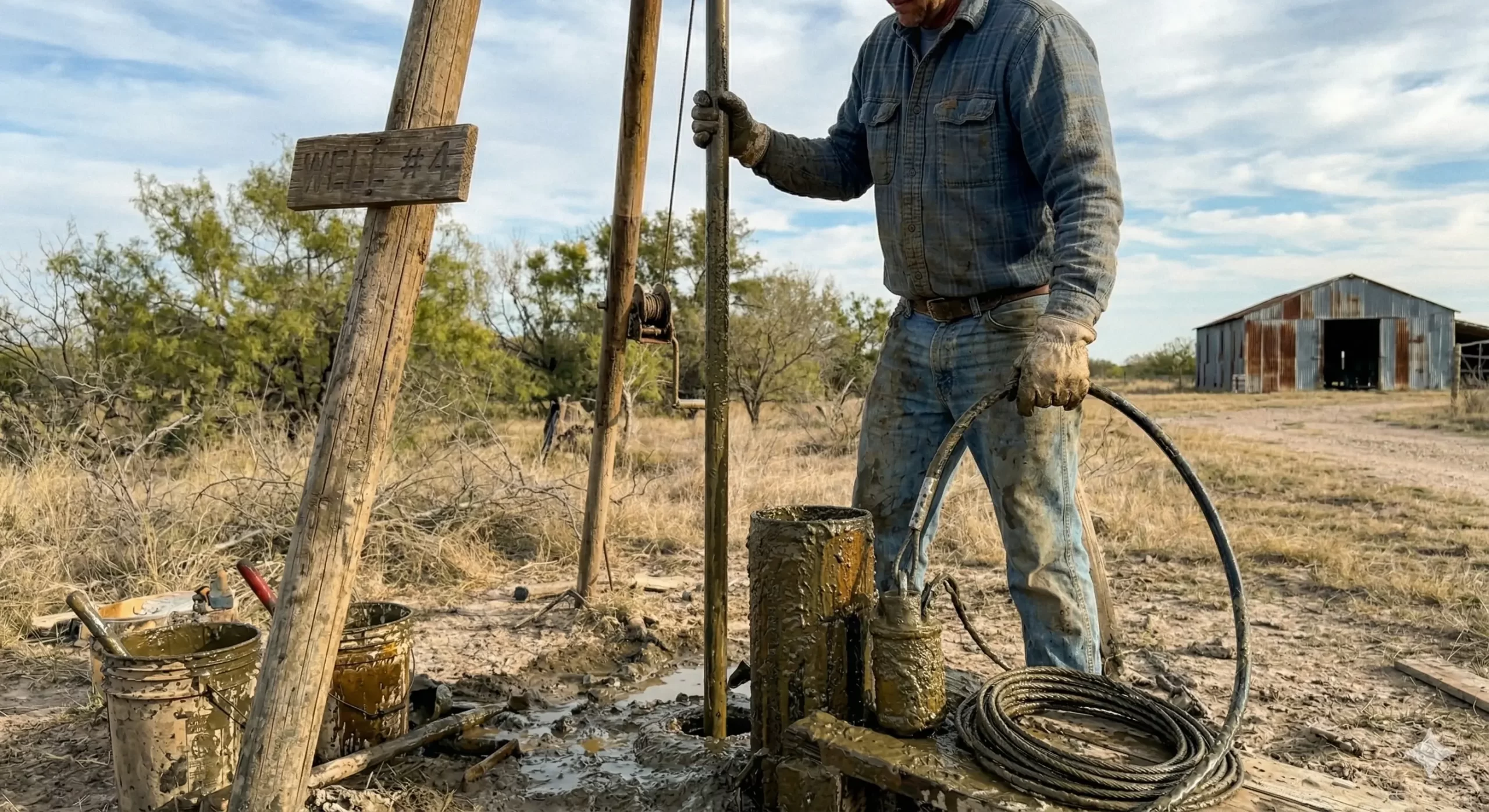
Well Pump Repair in
Texas City
Texas City & Galveston County Well Stats
Galveston County relies on groundwater for a significant portion of its domestic, agricultural, & industrial needs. Domestic wells typically range from 300 to 800 feet deep to access potable water, avoiding the shallower, more saline zones. Yields vary widely but are generally sufficient for residential use, usually between 10-25 gallons per minute (GPM). Many wells are cased with PVC in the upper sections & steel for deeper, more stable zones, though all-PVC is common. Well development is crucial to minimize sand production.
Pulling a pump in Galveston County, especially Texas City, comes with its own set of challenges that directly impact cost. We’re not dealing with hard rock here, but deep, unconsolidated formations where the well bore can sometimes be unstable or sand-logged. Subsidence is a real concern, and it can cause well casings to shift or even collapse, making pump retrieval incredibly difficult or requiring extensive well rehabilitation. Also, access to some properties can be tricky for our large pulling rigs, adding time & complexity.
The necessary equipment for a pump pull & replacement here typically includes a heavy-duty well service rig capable of handling depths up to 800-1000 feet, specialized retrieval tools for sand-bound or stuck pumps, a high-capacity air compressor for well development, & often a portable generator to power everything. For deeper wells or those with heavy sand, we might even need a crane for safer handling of long pump columns. All this specialized gear & the skilled operators come at a price, but it ensures the job gets done right & safely.
Spring Well Maintenance in Texas
Heavy spring rains can cause surface runoff to breach well caps. We strongly recommend testing your water for coliform bacteria and inspecting the sanitary seal.
Save $500+ on Replacements
Via the TX Energy Co-op VFD Upgrade Program
80°F in Texas City
Local Aquifers & Geology
The primary groundwater sources in Texas City include the The Gulf Coast Aquifer System, comprising the Chicot, Evangeline, & Jasper aquifers. These are unconsolidated sand, silt, & clay formations. Water quality typically shows moderate to high hardness, elevated iron content causing staining & metallic taste, & occasional sulfur (hydrogen sulfide) leading to a ‘rotten egg’ smell. Salinity can be an issue in wells closer to Galveston Bay due to saltwater intrusion from over-pumping or natural geological conditions.. Drilling through the local The soil profile in Texas City consists predominantly of coastal prairie soils, characterized by deep, often poorly drained clays & sandy loams. You’ll encounter expansive clays that can shift with moisture changes, alluvial deposits, & marine sediments. This clay-rich environment can be challenging for digging and can lead to subsidence issues when significant groundwater is removed, impacting well casing integrity. means that average well depths range from 350 ft – 800 ft (for reliable domestic supply).
Due to these geological factors, local homeowners frequently struggle with Sand abrasion & motor failure. Fine sand & silt can slowly wear down impellers & housings, drastically reducing pump efficiency. This abrasive action, combined with the high demand for water and sometimes fluctuating power, leads to frequent motor burnouts if the pump isn’t correctly sized or protected by proper controls..
Drilling Depth Comparison
Deeper wells require heavy-duty crane hoists for pump extraction.
Climate & Water Quality
Pump systems in the Texas City area face severe environmental stressors. The most significant threat is The humid, subtropical climate of Texas City, punctuated by tropical storms & hurricanes, poses significant threats. Power outages during storms can cause pumps to short-cycle or run dry, leading to premature failure. Flooding can inundate wellheads, contaminating the well with surface water. High humidity can corrode electrical connections & control boxes. Long-term, subsidence exacerbated by heavy rainfall & groundwater withdrawal can structurally compromise well casings.
Additionally, the raw groundwater often presents issues with The most common water quality issues include high hardness (calcium & magnesium), significant iron content causing orange/brown staining & a metallic taste, & intermittent hydrogen sulfide (sulfur) leading to a ‘rotten egg’ odor. Fine sand & silt are also persistent problems, requiring good well development & sometimes filtration. Saltwater intrusion is a concern for some wells, particularly those shallower or located closer to the bay..
Regional Groundwater Advisory
Known primary contaminant threat to submersible pumps and pipes in this area:
Common Area Systems
VFD Upgrade Savings
Constant Pressure vs StandardReplacing a standard single-speed pump with a Variable Frequency Drive (VFD) eliminates hard starts and drastically reduces energy draw in Texas.
Compliance & Local Permits
Galveston County Level: In Galveston County, groundwater withdrawal is regulated by two key entities: the Harris-Galveston Subsidence District (HGSD) and the Galveston County Groundwater Conservation District (GCGCD). HGSD primarily aims to reduce subsidence by regulating large-volume groundwater pumping. While domestic wells pumping less than 17 GPM for household use are generally exempt from HGSD permitting, they are still subject to GCGCD rules. The GCGCD requires all new wells, and existing wells that are being modified or re-drilled, to be registered & permitted. This helps the district manage groundwater resources & ensure sustainable use. Well owners must contact the GCGCD before any new construction or significant alteration of a well.
Top Pump Brands in Texas
Most frequently installed hardware based on local geology (2026 data).
- Comprehensive Amp Draw & Voltage Test: Checking the motor’s electrical load & incoming voltage to detect wiring issues or motor stress.
- Pressure Tank Integrity & Pre-charge Check: Verifying the tank’s air pressure & bladder condition to prevent pump short-cycling.
- Water Quality & Sand Production Assessment: Sampling water for sand, iron, hardness, & other contaminants that impact pump life.
- Wellhead & Pitless Adapter Inspection: Ensuring proper seal, cap integrity, & electrical connections are secure & watertight.
- Static & Pumping Water Level Measurement: If well access allows, determining aquifer health & pump placement efficiency.
- Control Box/Variable Frequency Drive (VFD) Diagnostics: Analyzing error codes, settings, & performance data for optimal system operation.
Premium Well Pump Brands We Service
Our licensed technicians in Texas City are certified to repair, replace, and install high-quality groundwater equipment from industry-leading manufacturers, including:
- No water or significantly reduced water pressure throughout the property.
- Pump running continuously without shutting off, leading to high electric bills.
- Cloudy, sandy, or discolored water coming from the faucet.
- Unusual noises (grinding, clanking, or humming) originating from the well or pressure tank area.
- Frequent tripping of the well pump’s circuit breaker.
- Waterlogged pressure tank, indicated by water spurting from the air valve or a lack of air charge.
Texas City Real Estate Well Regulations
Local Dispatch & Response Times
Live Dispatch: Texas
Updated Just Now⚠️ High demand. Call now to secure the next available technician.
- For critical ‘no water’ emergencies, we aim for same-day or within 24-hour response, depending on call volume & severity.
- Non-emergency service calls (e.g., low pressure, minor repairs) typically see a response within 1-3 business days.
- Severe weather, like tropical storms or hurricanes, can significantly impact response times due to road closures & high call volumes. We prioritize emergency services during these events.
- Our crews are strategically located to minimize travel time within Galveston County & are equipped for rapid deployment.
- After-hours & weekend emergency services are available to ensure you’re never without water for long, though emergency rates may apply.
⚠️ Galveston County & State Regulatory Warning: Abandoned Wells
Groundwater Threat Level
Current aquifer and mineral impact on pumps in Texas City.
Dropping water tables cause pumps to suck air and overheat.
Hard water calcifies pump impellers, reducing lifespan.
Pump Lifespan Estimator
Select household size in Texas City to see strain impact.
The Cost of Ignoring Symptoms
Fixing a short-cycling pump early saves thousands in Texas City.
Data reflects average well contractor estimates in Texas City.
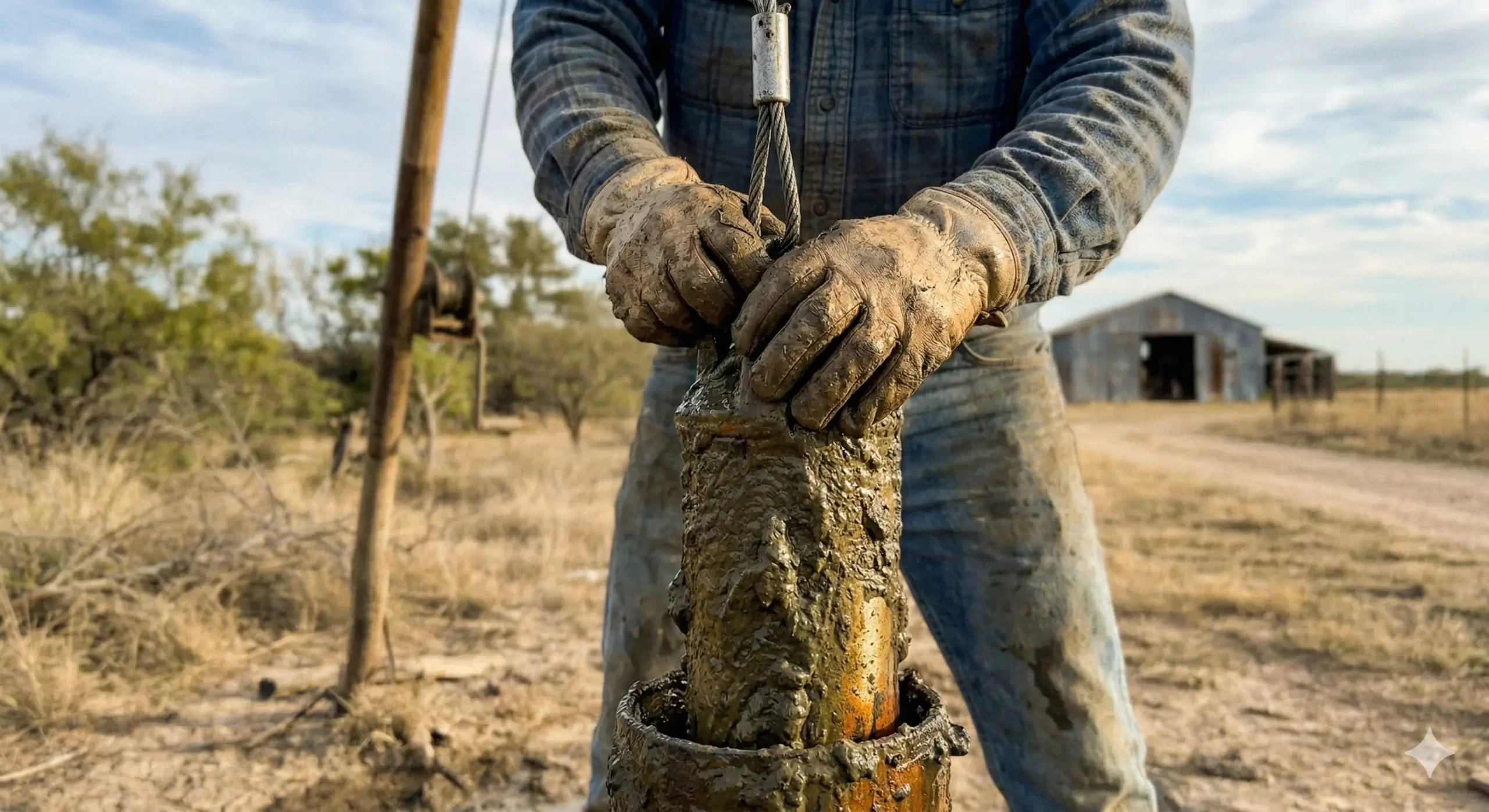
Local Texas City
Well Pros
Fast Local Service & Diagnostics
Calls are routed to a licensed local well professional.
Septic System Services in Texas City, TX
Do you have a septic tank on your property? Proper maintenance is critical to protecting your well water quality.
Texas City Homeowner Feedback
“My pump went out last Sunday morning, couldn’t get water for nothin’. Called these folks up & they were out here before lunch. Had us fixed up in no time. Real good, honest work. Glad I called ’em.”

Local Homeowner
✓ Verified TX
“Had real bad fluctuating pressure for a couple weeks, then bam, no water at all. Thought it was the pump, but the tech did a full diagnostic, checking everything. Turns out my pressure tank bladder had ruptured, and my well screen was partly clogged with silt from all the recent rain. They pulled the pump, cleaned the screen, replaced the tank, and even checked the well casing for any breakes. Took a few hours but now it’s runnin’ like a dream. Good fellas, honest work.”

Local Homeowner
✓ Verified TX
“Lost water late Friday evening, just as we were getting ready for a big family weekend. Panicked! Called these guys and they had a crew out by early Saturday morning. Got us hooked up with temporary water while they worked, and by afternoon we had full pressure again. Lifesavers! Can’t thank them enough for the quick, professional service.”

Local Homeowner
✓ Verified TX
Expert Texas City Well System FAQ
How often should I test my well water for quality in Texas City, given our coastal environment?
For well owners in Texas City, I recommend testing your water at least once a year for basic potability (bacteria, nitrates) & more frequently (every 6 months) for specific local concerns like iron, hardness, & salinity. Our coastal location means the risk of saltwater intrusion can fluctuate, especially after heavy rains or droughts. Also, with the prevalent iron & sulfur issues, regular testing helps you manage your filtration systems effectively. If you notice any changes in taste, odor, or appearance, get it tested immediately. It’s cheap insurance for your family’s health & your well system’s longevity.
What’s the deal with subsidence and my well in Galveston County? Do I need a special permit?
Subsidence is a serious concern in Galveston County, caused largely by the withdrawal of groundwater, which compacts the underlying clay layers. The Harris-Galveston Subsidence District (HGSD) was created to manage this. While domestic wells pumping less than 17 GPM are generally exempt from HGSD’s permitting, you still need to register your well & obtain a permit from the Galveston County Groundwater Conservation District (GCGCD) for any new well construction or significant modifications. The GCGCD works to conserve & protect local groundwater. Ignoring these rules can lead to fines & impact your ability to legally operate your well. It’s always best to check with GCGCD before any work starts.
My well water sometimes smells like rotten eggs. What causes that, & what can I do about it?
That rotten egg smell is almost always hydrogen sulfide gas. It’s naturally occurring in our aquifer system here in Texas City, often from decaying organic matter deep underground or from certain types of bacteria (sulfur-reducing bacteria) that thrive in oxygen-poor environments within the well or plumbing. It’s usually not a health risk but is certainly unpleasant. Solutions range from shocking the well with chlorine (though this is often temporary), installing an aeration system, or using a hydrogen sulfide removal filter, like an activated carbon filter or an oxidizing filter. The best approach depends on the concentration & your specific water chemistry, so a professional water test is the first step.
Do I need a pressure tank even with a submersible pump in Texas City’s deep wells?
Absolutely, yes. A pressure tank is a critical component of nearly every submersible well pump system, especially with our deep wells here in Texas City. Its primary purpose is to store a reserve of water under pressure, preventing the pump from short-cycling every time you open a faucet. Without a pressure tank, your pump would kick on & off constantly, drastically reducing its lifespan and increasing your energy bill. The tank also maintains a consistent water pressure in your home. It cushions the system, protecting your plumbing & pump from pressure surges. Don’t ever skip on a properly sized & maintained pressure tank.
Texas City Groundwater Expert AI
What are the specific groundwater regulations, average well depths, and the local conservation district for Texas City, Galveston County?
Groundwater Regulations and Well Information for Residential Water Wells in Texas City, Galveston County (2026)
As a Senior Hydrogeologist and Local Groundwater Regulatory Expert for Texas, I can provide you with specific information regarding residential water wells in Texas City, Galveston County, for the year 2026.
Local Groundwater Conservation District and Regulatory Authority
As of 2026, Galveston County is not located within an active Groundwater Conservation District (GCD). This means that there is no local GCD managing groundwater production, well spacing, or permitting beyond state minimums. Therefore, the primary regulatory body for the drilling, completion, and plugging of water wells in Texas City and the rest of Galveston County is the Texas Department of Licensing and Regulation (TDLR).
- TDLR is responsible for licensing water well drillers and pump installers, and for establishing statewide standards for well construction, completion, and plugging.
- While TDLR governs the technical aspects of well drilling, local city ordinances or county health departments may have additional requirements regarding well placement (setbacks from property lines, septic systems, or contamination sources) or water quality testing for new residential wells. It is highly advisable to check with the Texas City Building Department or Galveston County Health District for any such local stipulations before planning well construction.
Specific Groundwater Regulations (State Level)
The core regulations governing water well construction in Texas, applicable to Texas City, are found in the following state codes:
- Texas Water Code Chapter 36: Establishes the framework for groundwater management in Texas, including the creation of GCDs, but also the authority for TDLR regarding wells outside of GCDs.
- Texas Water Code Chapter 32: Pertains to the regulation of water well drillers and pump installers.
- Texas Administrative Code (TAC), Title 16, Part 4, Chapter 76: These are the specific rules adopted by TDLR concerning the licensing of drillers and pump installers, and the technical standards for water well drilling, completion, and plugging. Key aspects include:
- Well Registration: All new water wells, including residential wells, must be registered with TDLR. Drillers are responsible for submitting a "Well Driller's and Pump Installer's Report" (also known as a drill log) to TDLR within 30 days of completing the well. This report provides vital data on well depth, casing, geology, and water levels.
- Construction Standards: Wells must meet specific casing, cementing, and wellhead completion standards to prevent contamination and ensure structural integrity. This includes minimum casing depths and requirements for proper annular seal.
- Plugging Requirements: Abandoned wells must be properly plugged to prevent contamination of the aquifer and to eliminate safety hazards.
Official Resources:
- TDLR Water Well Driller and Pump Installer Program: https://www.tdlr.texas.gov/wwd/wwd.htm
- TDLR Well Driller's and Pump Installer's Report (example form, current as of 2024, generally consistent): https://www.tdlr.texas.gov/wwd/wwddrillerreport.pdf
- Texas Water Code (searchable): https://statutes.capitol.texas.gov/Docs/WA/htm/WA.htm
Average Well Depths and Aquifer for Texas City
Texas City is situated over the Gulf Coast Aquifer System, specifically drawing from the sands of the Upper Gulf Coast Aquifer, which includes the Chicot and Evangeline Aquifers. These aquifers consist primarily of unconsolidated sands, silts, and clays.
Based on historical state well logs (available through the Texas Water Development Board, TWDB, and TDLR databases), residential water well depths in Texas City can vary significantly depending on desired water quality, specific location, and the targeted water-bearing sand unit. However, for potable residential use in Texas City, drillers commonly target freshwater-bearing sands within the upper 100 to 300 feet.
- Estimated Average Well Depth: Approximately 200 feet for residential potable supply.
- Depths can range from as shallow as 80-120 feet for irrigation or non-potable uses, to deeper than 350-400 feet if shallower zones encounter salinity or insufficient yield. Due to proximity to Galveston Bay and the Gulf of Mexico, saltwater intrusion is a significant concern, often requiring wells to target specific freshwater lenses or to be screened at depths where salinity is minimized.
To verify specific well depths and water quality in your immediate vicinity, I highly recommend:
- Consulting the Texas Water Development Board (TWDB) Groundwater Data interactive map: https://www.twdb.texas.gov/groundwater/data/index.asp (You can search for existing wells near your property for insights into local conditions).
- Engaging a TDLR-licensed water well driller experienced in Galveston County. They will have direct knowledge of the local geology and water conditions.
In summary, for Texas City in 2026, expect state-level TDLR regulations for drilling and construction, no local GCD, and an average residential well depth around 200 feet tapping the Upper Gulf Coast Aquifer, with a strong recommendation to investigate local conditions and consult with a licensed driller and local city/county health authorities.
Fast Local Service & Diagnostics
Calls are routed to a licensed local well professional.
Blix
provides official
Emergency Well Pump Repair services for the
Texas City
area.