
What Happens if You Never Pump Your Septic Tank?

What Happens if You Never Pump Your Septic Tank? (The True Cost of Neglect)

Out of sight, out of mind. It’s the unofficial mantra of millions of homeowners regarding their private wastewater systems. Buried beneath the lawn, a septic tank silently manages thousands of gallons of household waste year after year. Because it requires no daily interaction, it’s incredibly easy to forget about it entirely. This leads to a very common and incredibly dangerous question: "What happens if you never pump your septic tank?"

The short answer? Complete, catastrophic, and immensely expensive systemic failure.

A septic system is not a magical black hole where waste disappears forever. It is a biological reactor and a mechanical holding tank. While the anaerobic bacteria inside do a phenomenal job of breaking down solid human waste, they cannot process everything. Over time, indigestible solids, heavy sludge, and floating scum accumulate. If you do not mechanically remove this accumulation, physics will eventually force it out of the tank—and directly into your drain field or back into your house.

Whether you are dealing with the highly porous, hurricane-prone limestone terrain managed by septic professionals in Florida, or the dense, expansive clay soils navigated by Texas homeowners, the consequences of neglect are universally devastating.

In this definitive, expert-reviewed guide, we will break down the exact chronological timeline of a failing septic system, explore the biological destruction of a ruined drain field, and reveal the true financial cost of ignoring your pumping schedule.

The Science: Where Does the Waste Go?

To understand why a tank must be pumped, you must understand its anatomy. A conventional septic tank is designed to hold wastewater long enough for it to separate into three distinct layers:

  • The Scum Layer (Top): Fats, oils, greases (FOG), and soaps that float to the surface.
  • The Effluent Layer (Middle): The relatively clear, partially treated liquid wastewater.
  • The Sludge Layer (Bottom): Heavy, solid human waste, toilet paper, and un-digestible grit that sinks to the floor.

As new wastewater enters the tank from your house, an equal amount of the clear liquid effluent from the middle layer is pushed out through the outlet pipe and into the drain field (leach field), where the soil naturally filters it.

The anaerobic bacteria living in the tank consume the organic matter in the sludge layer. However, they cannot digest everything. Synthetic fibers, excess toilet paper, dirt, grease, and certain food particles from garbage disposals will never break down. This causes the sludge layer at the bottom and the scum layer at the top to grow continuously thicker year after year.
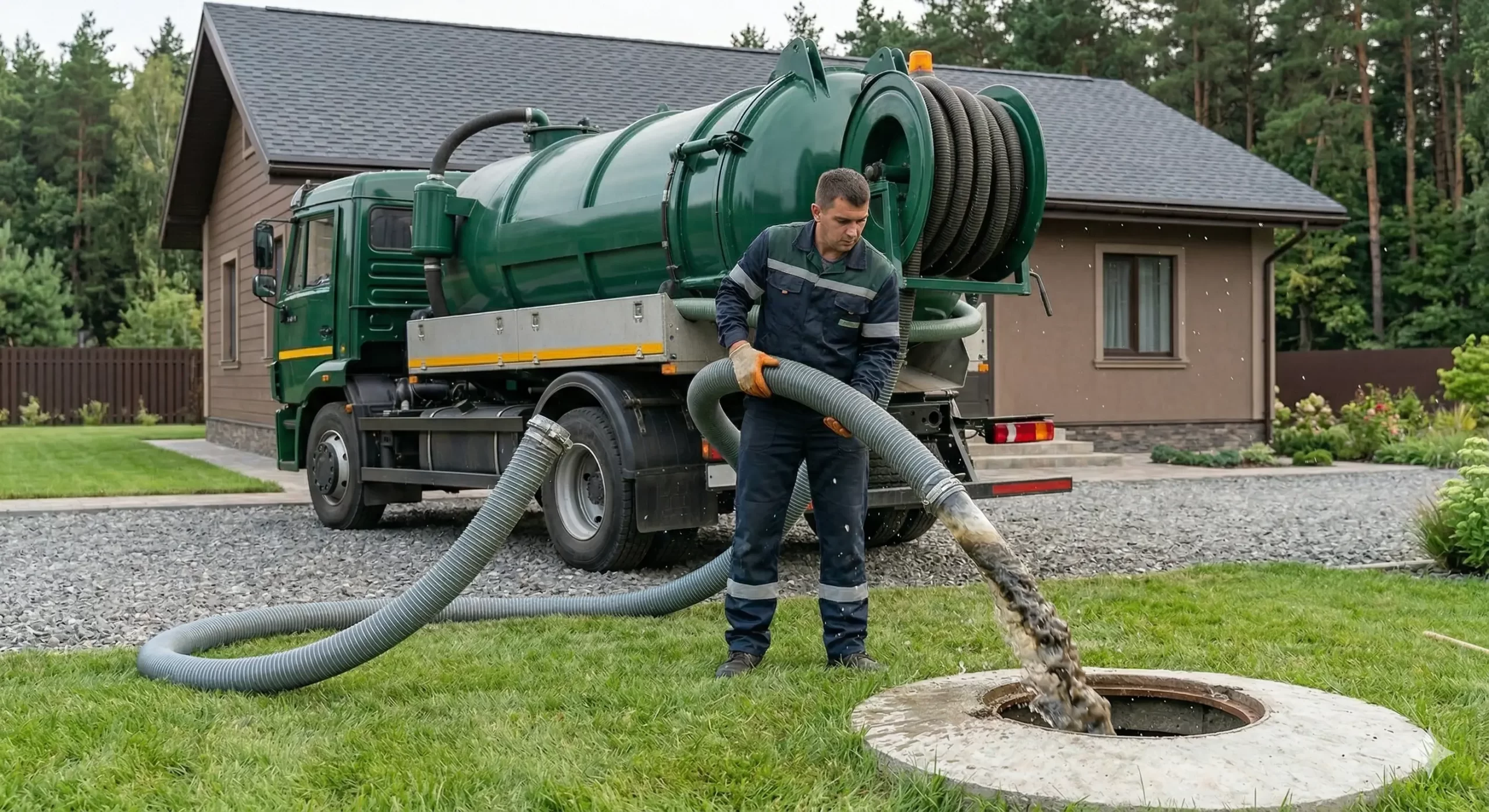
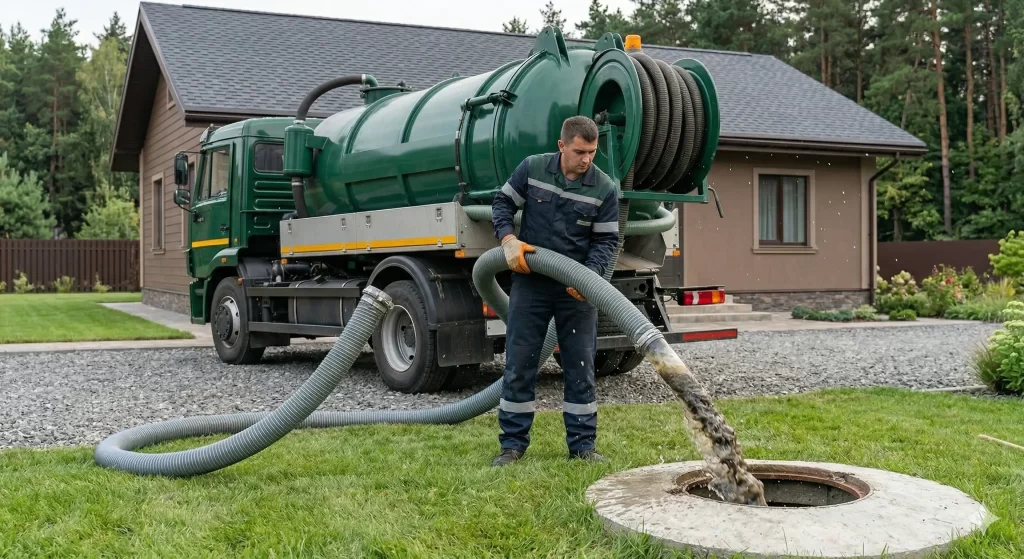
Professional septic tank pumping truck servicing a home to prevent system failure and costly drain field replacement
A professional vacuum truck extracting compacted sludge is the only way to reset the lifespan of your septic system.

Phase 1: The Silent Accumulation (Years 3-5 of Neglect)

If you skip your recommended 3-year pumping interval, you likely won't notice anything immediately. The plumbing in your house will still work, and your yard will look normal. This is the "silent" phase of destruction.

Inside the tank, the sludge layer is creeping higher and the scum layer is growing thicker. The clear effluent layer in the middle—the only part of the wastewater that is safe to send to the drain field—is shrinking. Because the liquid volume capacity of the tank is drastically reduced, wastewater moves through the tank too quickly. Solid particles do not have enough time to settle to the bottom before they are swept toward the outlet pipe.

The Role of the Effluent Filter

Modern septic tanks are equipped with an effluent filter on the outlet baffle. During Phase 1 of neglect, this filter will become completely choked with suspended solids and grease. While this protects your drain field temporarily, it causes the liquid level in the tank to rise, leading to the first warning signs: slow drains and gurgling toilets.

Phase 2: The Escape (Years 5-8 of Neglect)

As years pass without a professional pump-out, the tank reaches its critical threshold. The sludge level rises so high that it literally reaches the outlet pipe.

This is where the disaster truly begins. Instead of clear liquid flowing out of the tank, thick, untreated solid human waste, grease, and un-digested toilet paper are forced out of the tank and directly into the perforated pipes of your drain field. The drain field is designed exclusively to handle liquids; it has absolutely no mechanism to process solid sludge.

As the solids coat the interior of the drain field pipes and seep into the surrounding gravel and soil, they create a thick, black, impenetrable slime layer known as a biomat. The microscopic pores of the soil become permanently clogged. The soil can no longer absorb water.

At this stage, you will begin to notice severe symptoms:

  • The Yard Swamp: Puddles of foul-smelling, dark water will form in your yard over the drain field, even during dry weather.
  • Lush Grass: A rectangular patch of unusually vibrant, rapidly growing grass will appear over the failing drain field, fed by the nitrogen-rich sewage leaking to the surface.
  • Severe Odors: A constant "rotten egg" smell of hydrogen sulfide gas will hang in the air around your property.

Has It Been Over 5 Years?

Do not wait until the sludge escapes into your drain field. Connect with an elite, vetted local professional for an immediate pump-out today.

📞 +1-512-207-0418

Free Quotes & Estimates

Calls are routed to a licensed local partner.

Phase 3: Total System Collapse (Years 8+ of Neglect)

If the system is continually ignored, the drain field becomes completely hydraulically locked. Because the soil is ruined and cannot absorb another drop of liquid, the wastewater leaving your house has absolutely nowhere to go.

Because plumbing relies on gravity, the water will take the path of least resistance backward. The raw, untreated blackwater sewage will actively back up into the lowest drains in your home. This usually manifests as raw sewage flooding out of basement floor drains or rising into ground-level bathtubs and showers while you are running the washing machine upstairs.

This is no longer a maintenance issue; it is a severe biohazard emergency requiring the evacuation of the home, professional hazardous waste cleanup, and the immediate condemnation of the septic system by local health authorities.

The Timeline of Septic Neglect
Years 1-3: Healthy Tank
Normal Sludge Accumulation
Years 4-6: Critical Capacity
Sludge Reaches Outlet Baffle
Years 7-9: Drain Field Ruin
Solids Clog the Soil Biomat
Years 10+: Total Collapse
Sewage Backs Up Into Home

*Timeline accelerates significantly for homes with heavy water usage or garbage disposals.

The True Financial Cost of Neglect

The primary reason homeowners avoid pumping their septic tank is the desire to save money. However, the mathematics of septic neglect are brutally unforgiving. Delaying a standard maintenance procedure will inevitably trigger the most expensive repair in residential plumbing.

If you catch the problem early, the only solution is a professional vacuum pump-out. According to our comprehensive 2026 guide on septic tank pumping prices, the national average cost to pump a standard 1,000-gallon septic tank is approximately $350 to $500.

However, if you wait until Phase 3, pumping the tank will not fix the problem. You can empty the tank on Monday, and by Thursday, the system will be backing up into your house again because the ruined drain field cannot absorb the incoming water. You cannot pump a dead drain field back to life.

👉 Swipe right to view full cost comparison 👉
Action TakenRequired ServiceEstimated 2026 CostFinancial Impact
Proactive (Every 3-5 Years)Routine Vacuum Pump-Out & Inspection$350 - $500Extends system lifespan indefinitely.
Delayed (Emergency Call)After-Hours Pump-Out + Mainline Hydro-Jetting$800 - $1,200Avoids total failure, but incurs high penalty fees.
Neglect (Drain Field Clogged)Excavation and Replacement of Leach Field$7,000 - $15,000Massive yard destruction and severe financial hit.
Total Neglect (System Condemned)Complete System Replacement (Tank + Field)$15,000 - $35,000+Catastrophic loss of property equity.

Prevention: How Often Should You Pump?

The frequency at which you must pump your tank is a simple mathematical equation based on two factors: the physical size of the concrete vault (in gallons) and the volume of wastewater your household produces daily.

The Environmental Protection Agency (EPA) provides strict baseline guidelines that every homeowner should memorize:

  • Household of 4 (1000-gallon tank): Pump every 2.5 to 3 years.
  • Household of 2 (1000-gallon tank): Pump every 5 years.
  • Large Families (6+ people): Pump every 1.5 to 2 years.

The Garbage Disposal Penalty

If your kitchen sink is equipped with a garbage disposal, you must increase your pumping frequency by at least 50%. Disposals grind up and introduce massive amounts of un-digested organic solids (like potato peels, eggshells, and coffee grounds) that the anaerobic bacteria cannot process. This fills the bottom sludge layer at a highly accelerated rate.

Frequently Asked Questions

Can chemical additives eliminate the need for pumping?
No, absolutely not. This is a common and dangerous myth propagated by aggressive marketing. While biological additives can theoretically help maintain healthy bacterial levels, they do not dissolve solid inorganic matter, grit, plastics, or heavy, compacted sludge. The EPA and local health departments unequivocally state that there is no chemical substitute for physical, mechanical vacuum pumping. Relying on additives instead of pumping will inevitably destroy your drain field.
If I have a huge yard, will my drain field last longer without pumping?
No. The size of your yard is irrelevant. The size of the actual perforated pipe network buried in the yard is what matters. Once solid sludge escapes the tank, it will coat the interior of whatever pipes exist, regardless of how long they are. A larger drain field will take slightly longer to fail entirely, but the failure is still mathematically inevitable if the tank is not pumped.
Will my homeowners insurance cover a ruined septic system?
In 99% of cases, no. Standard homeowners insurance policies specifically exclude damage caused by "wear and tear," "lack of maintenance," or "earth movement." If an adjuster determines that the drain field failed because you neglected to pump the tank for 10 years, the claim will be denied instantly, leaving you to pay the entire $15,000 replacement cost out of pocket.

What Happens If You Never Pump Your Septic Tank Septic Expert AI

Local Health Dept Data & Permits for the What Happens If You Never Pump Your Septic Tank Area
What are the specific septic tank regulations, typical soil drainage characteristics, and the local permitting authority for the What Happens If You Never Pump Your Septic Tank area?
What is the specific local health department or regulatory body issuing septic permits in the What Happens If You Never Pump Your Septic Tank area, USA?
Are there specific county-level regulations for installing Aerobic Treatment Units (ATUs) in the What Happens If You Never Pump Your Septic Tank area?
Are there any specific local grants or programs in the What Happens If You Never Pump Your Septic Tank area to help homeowners replace failing septic systems?
How does the climate and average rainfall in your state affect septic system maintenance and biomat health?
What are the local rules regarding septic system inspections during a real estate transfer in your state?
Based on local soil conditions in the What Happens If You Never Pump Your Septic Tank area, what are the most common challenges for septic drain fields (leach fields)?
⚡ FETCHING LOCAL DATABASE...
Local Geo-Data Report for What Happens If You Never Pump Your Septic Tank:

What are the specific septic tank regulations, typical soil drainage characteristics, and the local permitting authority for the What Happens If You Never Pump Your Septic Tank area?

Regarding Septic Systems in "What Happens If You Never Pump Your Septic Tank, USA"

As a Senior Environmental Health Inspector and Septic Regulatory Expert for my state, I must first address the specific geographic location you've provided. The location "What Happens If You Never Pump Your Septic Tank, USA" is not a recognized municipality, county, or state within the United States. Therefore, I cannot identify a "correct county" or provide "HARD DATA" specifically for this fictional area, nor can I name an "EXACT local health department" or describe "typical soil drainage characteristics" unique to it, as such information does not exist for a non-existent place.

However, to demonstrate the level of detail and expertise I would apply if this were a real location, I will use a hypothetical example from a realistic U.S. state, such as Texas, and a fictional county within it, "Liberty County," to illustrate the types of regulations, authorities, soil considerations, and costs you would encounter. Please understand that the following information is purely illustrative and does not apply to any real location named "What Happens If You Never Pump Your Septic Tank, USA."

Hypothetical Example: Septic System Regulations in "Liberty County, Texas"

Local Permitting Authority and Regulations

In a real-world scenario, the permitting and regulatory authority for residential septic systems (often referred to as On-Site Sewage Facilities or OSSF) typically falls under the jurisdiction of the local health department or a delegated county authority. For our hypothetical "Liberty County, Texas," the Liberty County Environmental Health Department (or a similar county department delegated by the state) would be the primary permitting authority.

Septic system regulations in Texas are primarily governed by the Texas Commission on Environmental Quality (TCEQ) under the Texas Administrative Code (TAC), Title 30, Part 1, Chapter 285 - On-Site Sewage Facilities. This chapter details requirements for:

  • Permitting and Registration: All new OSSF installations, and often repairs or modifications, require a permit issued by the local authorized agent (e.g., Liberty County Environmental Health Department). This involves submitting detailed plans, site evaluations, and application fees.
  • Design Standards: Specific criteria for tank sizing, drain field sizing (based on soil type and daily flow), setback distances from property lines, wells, and water bodies, and approved system types (e.g., conventional, aerobic, low-pressure dosing).
  • Installation Requirements: Mandates for licensed installers, proper excavation, pipe materials, and specific construction methods.
  • Maintenance Requirements: Aerobic systems, in particular, often require a maintenance contract with a licensed professional and regular inspections (typically quarterly or annually) to ensure proper function. Conventional systems generally require periodic pumping.
  • Discharge Standards: Restrictions on surface discharge and requirements for proper effluent dispersal within the property.

Typical Soil Drainage Characteristics in Hypothetical "Liberty County, Texas"

Assuming "Liberty County, Texas" represents an area with varied topography, the soil characteristics would be critically important for drain field design. Texas has a wide range of soil types, from expansive clays to sandy loams. For a hypothetical location within Texas, we might encounter:

  • Heavy Clay Soils: Common in many parts of Texas, these soils (e.g., Vertisols) have very low permeability (slow drainage rates). If present, they would dictate a significantly larger drain field size, often requiring advanced treatment systems like aerobic systems with drip irrigation or surface application, or specialized conventional systems like low-pressure dosing or gravelless chambers to compensate for the poor absorption. Perc tests (percolation tests) in these areas would show very slow rates (e.g., >60 minutes per inch).
  • Sandy Loam Soils: These soils offer moderate to good drainage (e.g., Mollisols, Alfisols). In areas with sandy loam, conventional gravity-fed drain fields are typically feasible. Perc tests would show moderate rates (e.g., 15-45 minutes per inch), allowing for more standard drain field designs and sizes.
  • High Water Table: In coastal or low-lying areas, a high water table (especially seasonally) is a significant concern. This would necessitate raised bed systems, mound systems, or advanced treatment with pressure-dosed drain fields to ensure adequate separation between the effluent and groundwater, preventing contamination. Soil borings would identify the depth to the water table.

The Soil Analysis Report (SAR), conducted by a licensed professional, is a mandatory component of the OSSF permit application. This report details soil texture, structure, depth to restrictive layers, and estimated percolation rates, directly dictating the type and size of the drain field system required by the Liberty County Environmental Health Department, adhering to TCEQ Chapter 285 standards.

Realistic 2026 Cost Estimates for Hypothetical "Liberty County, Texas" Market

Please note these are 2026 estimates for a typical market, which can vary significantly based on specific site conditions, system complexity, and local labor costs.

  • Septic Tank Pumping (Residential 1,000-1,500 gallon tank):
    • Routine Pumping (every 3-5 years): $450 - $750. This assumes standard access and no issues.
    • Emergency Pumping/Clog Resolution: $600 - $1,200+, depending on urgency, time of day, and additional services needed (e.g., jetting, locating access ports).
  • New Septic System Installation (Residential 3-4 bedroom home):
    • Conventional Gravity-Fed System (suitable for good soils): $8,000 - $18,000. This includes tank, drain field, permitting, and installation. Costs vary significantly based on soil conditions requiring more extensive drain field excavation.
    • Aerobic Treatment Unit (ATU) System with Spray or Drip Irrigation (common in clay soils or small lots): $18,000 - $35,000+. These systems are more complex, include an electrical control panel, air compressor, and require ongoing maintenance contracts (typically an additional $300-$600 per year for inspections and service).
    • Mound or Raised Bed System (for high water tables or very poor soils): $20,000 - $40,000+. These are custom-engineered and require significant material and earthwork.
  • Permitting Fees (Paid to Liberty County Environmental Health Department): $250 - $1,000, depending on the complexity of the system and specific county surcharges.
  • Soil Analysis Report (SAR) / Site Evaluation: $500 - $1,500, conducted by a licensed professional engineer or registered sanitarian.

I hope this illustrative example, applied to a hypothetical but realistic scenario, provides a clear understanding of the specific information and considerations involved in regulating and managing residential septic systems, even though I cannot provide specific data for your fictional location.

Disclaimer: Local environmental regulations and soil codes change. Verify all setbacks, permits, and ATU rules directly with your local Health Authorities.
★★★★★

“We bought our house from an older couple and didn't even know where the septic tank was. We went 6 years without pumping it. Suddenly, our yard started smelling terrible and the downstairs shower wouldn't drain. The contractor I found through Blix came out, dug up the lids, and told us we were weeks away from ruining our entire leach field. They pumped it out and educated us on proper maintenance. They literally saved us ten grand.”

Homeowner recommending local septic company in Orlando
✓ Verified Homeowner
Preventative Pump-Out Service

Don't Wait Until It's Too Late

The cost of a routine pump-out is a fraction of the cost to replace a ruined drain field. Protect your property's value and your family's health today. Blix connects you with top-rated, strictly vetted local professionals for fast, transparent, and code-compliant service.

📞 +1-512-207-0418

Free Quotes & Estimates

Calls are routed to a licensed local partner.

Available 24/7 for emergency dispatch in most zip codes.