
Emergency Well Pump Repair in Forest Hill, TX
Forest Hill, like much of Tarrant County, sits on an interesting edge. You’re not quite rural, but not fully dependent on municipal water either. Many older properties and even some newer developments outside city limits still rely on private wells. The groundwater here faces pressures from urban development, increasing demand, and naturally occurring geological challenges. This isn’t some untouched aquifer; your well’s health is directly tied to a complex interplay of geology, local usage, and maintenance.
While the Trinity Aquifer is the main player, we’re talking about specific layers within it—Paluxy, Glen Rose, Travis Peak formations. The water quality and yield can vary significantly depending on which of these formations your well taps into and its depth. It’s not a one-size-fits-all situation; a good well man knows these formations like the back of his hand.
Folks try to save a buck on cheap pumps, and I get it. But in this part of Texas, with our soil and water conditions, those bargain pumps often become a headache. They’re not built for the sand and minerals found in our groundwater, nor the sustained demand. You end up paying for a pump replacement sooner, and that’s usually more expensive than investing in a quality unit from the start.
Fast Local Service & Diagnostics
Calls are routed to a licensed local well professional.
Well Pump Repair in
Forest Hill
Forest Hill & Tarrant County Well Stats
Tarrant County has a mix of older domestic wells and agricultural irrigation wells, though Forest Hill is primarily domestic. Wells generally tap into the Trinity Aquifer, with depths varying from 250 ft to over 800 ft depending on the specific formation and localized geology. Groundwater quality can be acceptable, but often requires treatment for hardness, iron, and occasional sulfur. Yields are typically sufficient for domestic use but can be stressed during prolonged droughts.
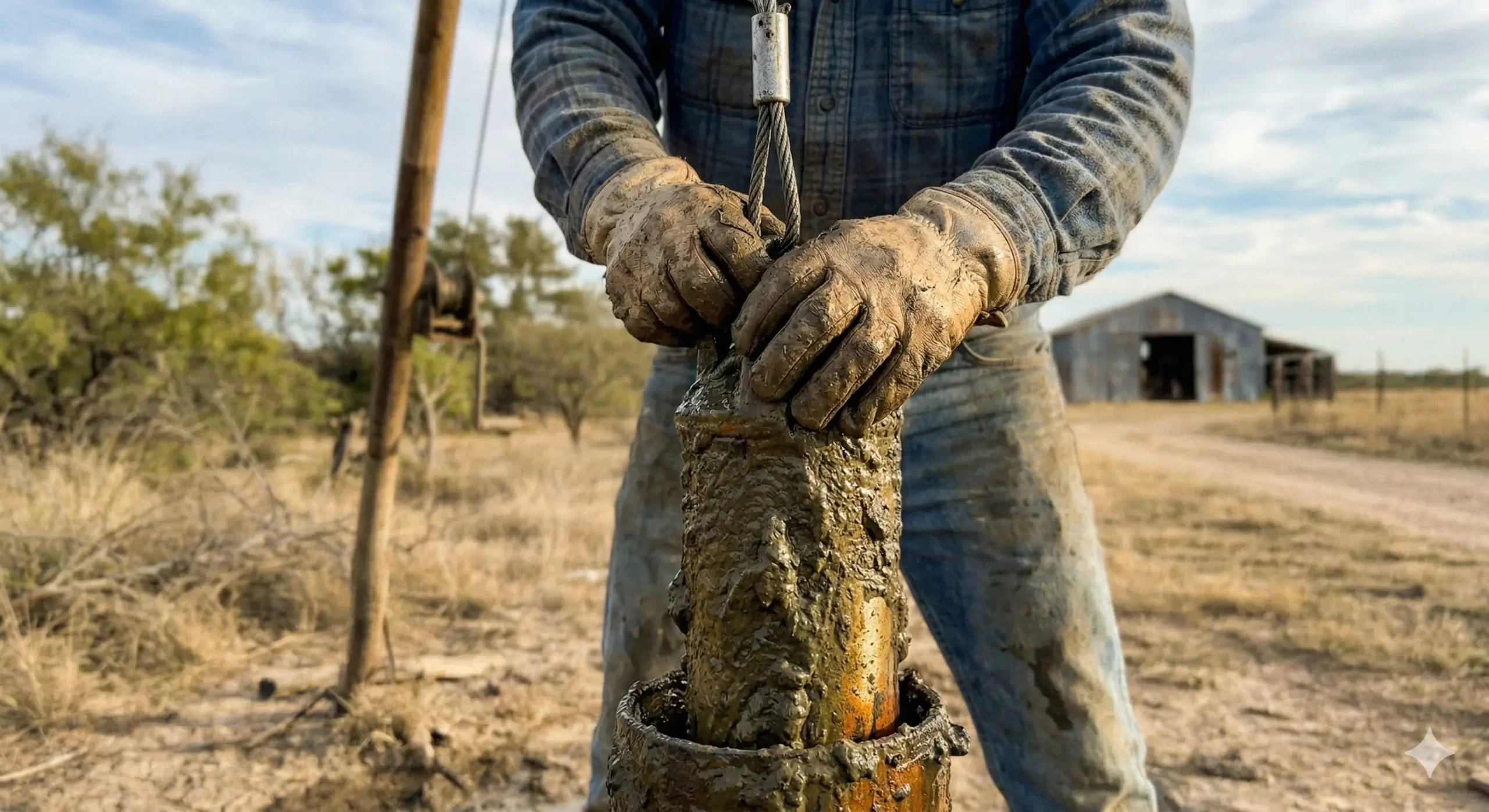
Pulling a pump in Forest Hill isn’t always about deep bedrock, though some wells hit harder formations. What often drives up the cost is access. Older properties might have wells located in tight spots, under carports, or close to fences, making it tough for a service rig to get positioned. If the casing is old or crooked, or if there’s significant mineral buildup, the pump can get stuck, requiring extra time, specialized tools, and a lot more muscle.
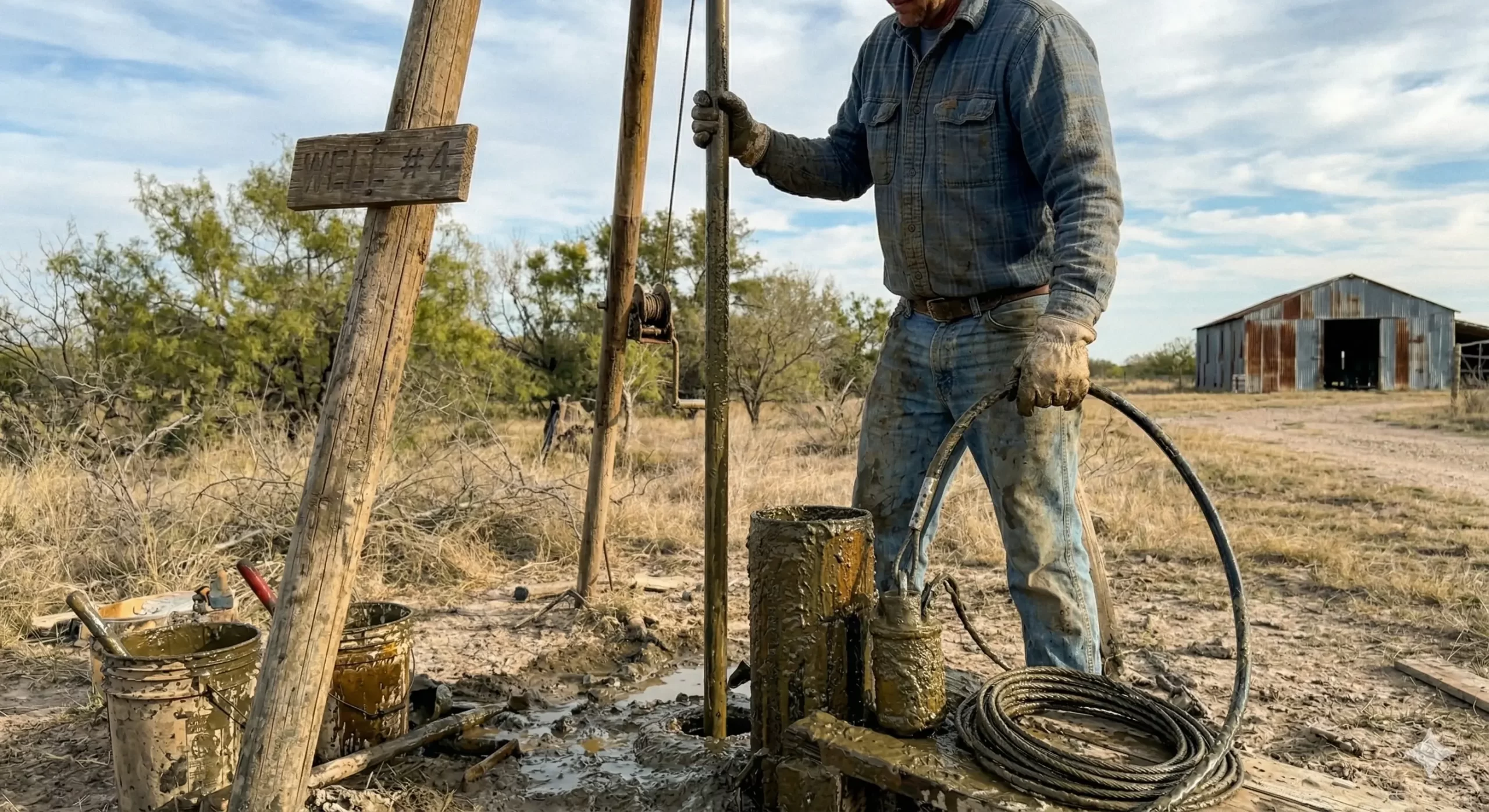
A proper well service requires more than just a pickup truck and a wrench. We roll up with a fully equipped well rig capable of pulling thousands of pounds of pipe and pump, a crane for deep sets, welding gear for repairs, and diagnostic equipment to pinpoint electrical issues. Then there’s the specialized tools for pipe retrieval, bailers for sand removal, and a full stock of new pumps, motors, pressure tanks, and controls.
Spring Well Maintenance in Texas
Heavy spring rains can cause surface runoff to breach well caps. We strongly recommend testing your water for coliform bacteria and inspecting the sanitary seal.
Save $500+ on Replacements
Via the TX Energy Co-op VFD Upgrade Program
74°F in Forest Hill
Local Aquifers & Geology
The primary groundwater sources in Forest Hill include the Trinity Aquifer System. This major aquifer underlies much of North Central Texas, including Tarrant County. It’s composed of several sand and limestone layers, primarily the Paluxy Formation, Glen Rose Limestone, and Travis Peak Formation. The Paluxy and Travis Peak are generally more permeable and yield good quality water, though the Glen Rose can be shaly and sometimes produce water with higher mineralization. Water quality varies; generally, it’s moderately hard, with some areas experiencing elevated iron, manganese, and occasional hydrogen sulfide. Yields are adequate for domestic use, but localized over-pumping or drought can affect water levels.. Drilling through the local The predominant soil type in and around Forest Hill, Tarrant County, is characterized by the Blackland Prairie ecoregion. This translates to deep, fertile, clay-rich soils, specifically Vertisols (like Houston Black clay, Austin clay). These soils are highly expansive, meaning they shrink significantly when dry and swell when wet. This can put stress on well casings, foundations, and underground piping over time, potentially leading to cracking or shifting. During dry periods, large cracks can form, allowing surface contaminants to potentially enter poorly sealed wells. means that average well depths range from 250 ft – 750 ft.
Due to these geological factors, local homeowners frequently struggle with Sand abrasion and mineral scaling. The sand and silt present in the Trinity Aquifer, especially if the well isn’t properly developed or screened, acts like sandpaper on impellers and casings. Simultaneously, the hard water and minerals (calcium, magnesium, iron) create scale buildup on pump components, in the pipe, and within the pressure tank, reducing efficiency and eventually causing pump failure or flow restriction..
Drilling Depth Comparison
Deeper wells require heavy-duty crane hoists for pump extraction.
Climate & Water Quality
Pump systems in the Forest Hill area face severe environmental stressors. The most significant threat is Texas weather is tough on well equipment. Our scorching summers lead to increased water demand, which can stress pumps that are running continuously, leading to overheating and premature failure. Prolonged droughts lower the water table, forcing pumps to work harder and potentially drawing in more sand or even running dry. Freezing temperatures, though less common here than in other parts of Texas, can burst exposed pipes, pressure tanks, or pressure switches if not properly insulated. And our frequent thunderstorms bring power surges that can fry pump motors and control boxes.
Additionally, the raw groundwater often presents issues with Hardness is almost universal here, leading to scale buildup. Iron and manganese are also common, causing staining and metallic tastes. Some wells experience low levels of hydrogen sulfide, resulting in a “rotten egg” smell. While less prevalent, sand and silt can also be an issue, particularly in older wells or those with improper screens, contributing to pump wear..
Regional Groundwater Advisory
Known primary contaminant threat to submersible pumps and pipes in this area:
Common Area Systems
VFD Upgrade Savings
Constant Pressure vs StandardReplacing a standard single-speed pump with a Variable Frequency Drive (VFD) eliminates hard starts and drastically reduces energy draw in Texas.
Compliance & Local Permits
Tarrant County Level: For private domestic wells in Forest Hill, Tarrant County, the primary regulations come from the TDLR for well driller and pump installer licensing and well construction standards (Chapter 76, Texas Water Code & Texas Administrative Code, Title 16, Part 4, Chapter 76). Tarrant County itself does not have a comprehensive Groundwater Conservation District (GCD) for regulating private domestic wells across the entire county. However, specific city ordinances might exist within Forest Hill for new construction or major modifications. Generally, drilling a new well or making significant alterations requires adherence to TDLR specifications for setback distances, casing, grouting, and sealing. It’s always best to check with the City of Forest Hill Planning & Zoning department and TDLR before starting any new well project to ensure compliance with local and state regulations.
Top Pump Brands in Texas
Most frequently installed hardware based on local geology (2026 data).
- Check well motor amp draw and voltage at the control box.
- Inspect pressure tank air charge and cut-in/cut-out pressures on the pressure switch.
- Verify pump output (gallons per minute) against original well specs.
- Perform water quality test for basic parameters like hardness, iron, and pH.
- Visually inspect all above-ground plumbing, wiring, and safety components.
- Check for ground faults or shorts in the electrical system to the pump.
Premium Well Pump Brands We Service
Our licensed technicians in Forest Hill are certified to repair, replace, and install high-quality groundwater equipment from industry-leading manufacturers, including:
- No water coming from faucets or very low water pressure.
- Pump running continuously without cycling off.
- Water spitting or spurting from faucets, indicating air in the line.
- Unusual noises coming from the wellhead or pressure tank area.
- Higher than normal electricity bills with no change in usage.
- Murky, sandy, or discolored water suddenly appearing.
Forest Hill Real Estate Well Regulations
Local Dispatch & Response Times
Live Dispatch: Texas
Updated Just Now⚠️ High demand. Call now to secure the next available technician.
- Typically, we aim for a 2-4 hour response time for true no-water emergencies within the Forest Hill area.
- Priority is given to elderly residents, families with infants, or situations where livestock or critical businesses rely on water.
- Our fully-stocked service trucks mean we carry most common parts, minimizing trips back to the shop.
- We’ll communicate estimated arrival and keep you updated if there are any unforeseen delays.
- After-hours & weekend service available, though emergency rates apply.
⚠️ Tarrant County & State Regulatory Warning: Abandoned Wells
* **Casing**: Wells must be cased with new, steel, or approved PVC pipe that meets specific standards (e.g., Schedule 40 or 80 PVC, or specific gauge steel). The casing must extend a minimum of 18 inches above the natural ground surface and be sealed with a sanitary well cap. It must also extend at least 10 feet into the first impermeable clay strata or rock, or deeper if specified by geological conditions, to protect the aquifer from surface contamination.
* **Grouting**: The annular space (the space between the borehole and the casing) must be grouted from the land surface down to at least 10 feet into the first impermeable formation. Approved grouting materials include bentonite clay or cement slurry. Proper grouting is critical for preventing contaminants from migrating down the well casing and entering the aquifer, providing crucial sanitary protection for the well. These regulations are designed to protect the state’s groundwater resources and ensure safe drinking water.
Pump Lifespan Estimator
Select household size in Forest Hill to see strain impact.
The Cost of Ignoring Symptoms
Fixing a short-cycling pump early saves thousands in Forest Hill.
Data reflects average well contractor estimates in Forest Hill.
Groundwater Threat Level
Current aquifer and mineral impact on pumps in Forest Hill.
Dropping water tables cause pumps to suck air and overheat.
Hard water calcifies pump impellers, reducing lifespan.
Local Forest Hill
Well Pros
Fast Local Service & Diagnostics
Calls are routed to a licensed local well professional.
Septic System Services in Forest Hill, TX
Do you have a septic tank on your property? Proper maintenance is critical to protecting your well water quality.
Forest Hill Homeowner Feedback
“Had a pump go out on a Sunday. Called these folks up, and they had us fixed by Monday afternoon. Fair price, good work. Can’t ask for more than that out here in Forest Hill.”

Local Homeowner
✓ Verified TX
“Our well pressure was getting worse and worse, then finally just dribbled out. Thought we needed a whole new well. The technician, name of Billy, came out and spent a good hour diagnosing. Turned out we had a really bad buildup of iron scale in our main water line coming off the pressure tank, plus the pressure switch was acting up. He flushed the system, swapped out the switch, and installed a small inline filter to help with the iron. Water pressure is like new again. Even caught a loose wire that coulda caused trouble later. Good fella, knew his stuff, didn’t try to sell us what we didn’t need. Thanks for the quick work, fella.”

Local Homeowner
✓ Verified TX
“Lost water in the middle of a hot August day, which is just about the worst time here in Texas. Called these guys and they were out way faster than I expected. They diagnosed a bad submersible pump motor quick, had a new one on the truck, and had us back in water before dinner. Lifesavers!”

Local Homeowner
✓ Verified TX
Expert Forest Hill Well System FAQ
Why does my well water in Forest Hill sometimes have a metallic taste and stain my fixtures?
That metallic taste and the reddish-brown or black stains on your fixtures are almost certainly due to elevated levels of iron and/or manganese in your well water. This is a common issue in many parts of Tarrant County, particularly with water drawn from certain layers of the Trinity Aquifer. While generally not a health concern at typical concentrations, it’s certainly an aesthetic nuisance. We can perform a detailed water analysis to determine the exact concentrations and recommend a tailored treatment solution, such as an iron filter, aeration system, or a water softener if hardness is also an issue, to effectively remove these minerals.
Do I need a permit to drill a new water well on my property in Forest Hill, Tarrant County?
For private domestic wells in Tarrant County, you don’t typically need a separate ‘drilling permit’ from a specific groundwater conservation district covering the entire county, as such a district doesn’t universally regulate private wells here. However, you *are* required to comply with state regulations set forth by the Texas Department of Licensing and Regulation (TDLR). This means your well must be drilled by a licensed well driller, constructed to TDLR standards (casing, grouting, setback distances), and the driller must submit a well log to TDLR. It’s also prudent to check with the City of Forest Hill’s planning and zoning department for any local ordinances or requirements for new well installations, especially regarding setbacks from property lines, septic systems, or other structures.
What’s the typical lifespan of a well pump in Forest Hill, considering our local conditions?
The lifespan of a well pump in Forest Hill can vary significantly, but generally, you can expect a quality submersible pump to last anywhere from 7 to 15 years, sometimes more. Factors that influence this include the pump’s brand and quality, the depth of your well, the consistency of your water usage, and crucially, your local water quality. Here in Tarrant County, high levels of sand and mineral hardness can cause premature wear on impellers and motors. Frequent power surges can also shorten a pump’s life. Regular maintenance, proper system sizing, and investing in a good quality pump from the start are key to maximizing its longevity.
How does drought affect my private well’s water supply in Tarrant County, and what should I do?
Prolonged droughts, unfortunately, are a recurring reality in Texas and directly impact the Trinity Aquifer. During a drought, the water table can drop, meaning your pump has to work harder and from a greater depth to lift water. This increases energy consumption and can reduce the pump’s lifespan. You might notice a decrease in well yield (less water pressure or slower recovery), or in severe cases, your well could even go dry temporarily.
What to do:
1. **Conserve Water:** This is the most immediate step. Reduce irrigation, fix leaks, and be mindful of indoor water use.
2. **Monitor Your Well:** Pay attention to pressure changes or if your pump is running more frequently.
3. **Well Inspection:** Have a professional inspect your well and pump. They can check water levels, pump performance, and ensure your system is running as efficiently as possible.
4. **Consider Lowering Your Pump:** If water levels consistently drop, it might be possible to lower your existing pump further into the well, if there’s sufficient depth below the current setting.
5. **New Well or Deepening:** In extreme cases, a new, deeper well or deepening an existing one might be necessary, though these are significant investments. Don’t wait until you’re out of water; proactive measures during drought conditions can save you a lot of trouble.
Forest Hill Groundwater Expert AI
What are the specific groundwater regulations, average well depths, and the local conservation district for Forest Hill, Tarrant County?
Groundwater Regulations and Residential Wells in Forest Hill, Tarrant County, TX (2026)
As a Senior Hydrogeologist and Local Groundwater Regulatory Expert for Texas, I can provide you with specific information regarding residential water wells in Forest Hill, Tarrant County, for the year 2026.
1. Local Groundwater Conservation District (GCD) and Regulatory Body
Unlike many parts of Texas, Tarrant County does not currently have a Groundwater Conservation District (GCD) covering the area of Forest Hill. Therefore, the primary regulatory oversight for water well drilling, construction, and plugging for residential wells falls under the jurisdiction of the Texas Department of Licensing and Regulation (TDLR).
While TDLR handles the licensing of well drillers and pump installers, and sets the standards for well construction and abandonment, it is also crucial to consult with the City of Forest Hill Planning and Permitting Department. Cities can have local ordinances that impose additional requirements, such as specific setbacks from property lines, public rights-of-way, or requirements for city permits even for private wells within municipal boundaries.
- Primary State Regulatory Authority: Texas Department of Licensing and Regulation (TDLR)
- Relevant Local Authority: City of Forest Hill Planning and Permitting Department
2. Specific Groundwater Regulations
Since there is no GCD in Tarrant County for Forest Hill, the state regulations enforced by TDLR are paramount:
- Texas Water Well Driller and Pump Installer Rules (16 Texas Administrative Code, Chapter 76): These rules govern the licensing of well drillers and pump installers, well construction standards, casing requirements, cementing procedures, wellhead completion, and well plugging.
- Construction Standards: Wells must be constructed to prevent contamination of groundwater and adhere to specific material requirements.
- Well Reports: Licensed drillers are required to submit a comprehensive Well Report (or log) to the TDLR and the Texas Water Development Board (TWDB) within 90 days of well completion. This report includes information on well depth, geological formations encountered, casing details, and water levels.
- Plugging Requirements: Abandoned wells must be properly plugged to prevent contamination and ensure public safety, following TDLR standards.
- Setback Rules (TDLR Minimums): While local ordinances can be more stringent, TDLR requires minimum separation distances for water wells from potential sources of contamination. Common minimum setbacks include:
- 100 feet from a septic tank absorption field.
- 150 feet from a septic tank or liquid waste disposal system drain lines.
- 500 feet from livestock feedlots or other concentrated animal operations.
- Additionally, wells must be adequately separated from property lines, existing structures, and public rights-of-way, with specific distances often determined by local city ordinances.
- Texas Water Code Chapter 32 (Subchapter D - Well Drillers and Pump Installers): This chapter outlines the legislative basis for the TDLR's authority over well drillers and pump installers.
3. Average Well Depths in Forest Hill
Based on historical state well logs from the Texas Water Development Board (TWDB) for Tarrant County, residential wells in the Forest Hill area primarily draw from the Trinity Aquifer System. The depth to suitable water-bearing zones within this system can vary.
For residential wells seeking a reliable and sustainable water supply in Forest Hill, targeting formations within the Trinity Aquifer System (primarily the Paluxy and Glen Rose Formations) is common. An estimated average well depth for residential use in Forest Hill in 2026, considering local geology and historical trends, would be in the range of 450 to 650 feet. A reasonable average to expect is approximately 550 feet, though this can vary significantly depending on the specific location and the desired yield.
4. Specific Aquifer Beneath Forest Hill
The principal aquifer system underlying Forest Hill, Tarrant County, is the Trinity Aquifer System. This extensive aquifer system is comprised of several geological formations, including from shallowest to deepest, the Paluxy Formation, the Glen Rose Formation, and the Travis Peak Formation (which includes the Hosston and Sligo Formations). Residential wells in Forest Hill typically target the Paluxy and Glen Rose Formations for their water supply.
5. Official Resources and Forms
For detailed information and to ensure compliance, please consult the following official resources:
- Texas Department of Licensing and Regulation (TDLR) - Water Well Drillers and Pump Installers Program:
https://www.tdlr.texas.gov/wwd/wwd.htm - TDLR License Search (to verify licensed drillers):
https://www.tdlr.texas.gov/LicenseSearch/ - Texas Water Development Board (TWDB) - Groundwater Data and Reports:
https://www.twdb.texas.gov/groundwater/data/gwdbrpt.asp
(Here you can search for existing well reports in your area to get an idea of local conditions.) - Texas Water Code:
https://statutes.capitol.texas.gov/Docs/WA/htm/WA.htm
(Specifically, refer to Chapter 32, Subchapter D, and relevant sections of Chapter 36 regarding well construction standards, though Chapter 36 is primarily for GCDs.) - City of Forest Hill Official Website:
https://www.foresthilltx.org/
(Navigate to their Planning and Permitting or Public Works sections for any local ordinances or permit requirements.)
It is always recommended to contact a licensed water well driller operating in Tarrant County directly. They will have the most current understanding of local conditions, drilling costs, and specific permitting requirements in Forest Hill.
Fast Local Service & Diagnostics
Calls are routed to a licensed local well professional.
Blix
provides official
Emergency Well Pump Repair services for the
Forest Hill
area.