
You’ve just finished a long day, you walk into your bathroom to wash your hands, and as the water drains, your toilet lets out a strange, rhythmic "glug-glug-glug." Then you notice the shower drain is taking twice as long to empty. The immediate sense of panic sets in. You find yourself asking the ultimate homeowner question: "Is this just a simple clog, or is my entire septic tank completely full?"
Misdiagnosing this issue is the most common—and most expensive—mistake a homeowner can make. If you treat a full septic tank like a localized hair clog, pouring gallons of harsh chemical drain cleaners down the sink, you will completely destroy the biological ecosystem within your tank. Conversely, calling an emergency vacuum truck to pump your tank when all you needed was a $20 plumber's snake is a frustrating waste of money.
The distinction between a pipe blockage and systemic septic failure is critical. Whether you are managing a system in the sandy, high-water-table regions serviced by septic professionals in Florida, or dealing with the highly expansive clay soils navigated by Texas homeowners, the diagnostic steps remain the same.
In this definitive, expert-reviewed guide, we will break down the exact physics of why your pipes are gurgling, how to definitively diagnose whether the problem is in your walls or buried in your yard, and the specific, step-by-step actions you must take to prevent raw sewage from backing up into your home.
Expert Diagnostic Guide
- The Science of the Gurgle: Why Pipes Talk
- Signs It’s Just a Localized Clog
- Signs Your Septic Tank is Critically Full
- The Hidden Culprit: Mainline Blockages
- Plumbing Vents: The Invisible Airflow Issue
- Diagnostic Matrix: Clog vs. Septic Failure
- Fixing the Issue: Costs and Solutions
- Frequently Asked Questions
The Science of the Gurgle: Why Pipes Talk
To diagnose the problem accurately, you must first understand the basic physics of residential plumbing. Your home’s plumbing is not just a network of pipes carrying water; it is equally a network of pipes carrying air.
When you flush a toilet or drain a bathtub, a massive volume of water rushes down the pipe. As this water moves, it pushes the air in front of it and pulls a vacuum behind it. To prevent this vacuum from sucking the water out of your P-traps (the curved pipes under your sinks that block sewer gases), your house is equipped with vent stacks that extend up through your roof. These vents allow air to enter the pipes behind the flowing water, ensuring a smooth, silent drain.
So, why the gurgle? A gurgle is the sound of air struggling to bypass water. It means that the venting system has failed, or that the path forward for the water is blocked. The air is being forced backward, bubbling up through the water resting in your toilet bowl or P-trap.
Signs It’s Just a Localized Clog
A localized clog is a blockage that occurs within the interior pipes of your house, long before the wastewater ever reaches the main sewer line or the septic tank. These are the annoying, but generally inexpensive, plumbing issues we all face.
If you are experiencing the following symptoms, you likely just need a plunger or a plumber's snake, not a 3,000-gallon vacuum truck:
- Isolation: The slow draining or gurgling is entirely isolated to a single fixture. For example, the master bathroom shower drains slowly, but the sinks and toilets in the exact same bathroom function perfectly.
- The "Run Water" Test: If you run the kitchen sink on full blast for five minutes and it drains perfectly, but the guest bathroom toilet struggles to flush, the issue is not your septic tank. A full septic tank will affect the lowest drains in the house universally.
- Known Culprits: You have a history of flushing items that shouldn't be flushed (like "flushable" wipes or feminine hygiene products), or you recently poured significant amounts of cooking grease down the kitchen sink.
- No Yard Symptoms: Your yard over the septic tank and drain field is completely dry, odorless, and shows no signs of unusually lush, green grass.
The Danger of Chemical Cleaners
If you suspect a simple clog, do not reach for chemical drain cleaners (like Drano) if you are on a septic system. The harsh chemicals will kill the vital anaerobic bacteria in your tank. Instead, use a mechanical plunger, a manual plumbing snake, or a biologically safe enzymatic cleaner.
Signs Your Septic Tank is Critically Full
When a septic tank reaches its absolute maximum capacity for solid waste (the sludge layer at the bottom and the scum layer at the top), the liquid volume capacity shrinks to almost zero. As new water enters from your house, it has nowhere to go but backward.
If the gurgling and slow drains are caused by a full tank, you are in a high-risk situation that precedes a raw sewage backup into your home. Look for these systemic indicators:
- Simultaneous Failure: This is the golden rule of diagnosis. If your kitchen sink, your downstairs toilet, and your washing machine drain are all sluggish at the exact same time, the bottleneck is at the end of the line—the septic tank.
- The "Washing Machine" Effect: You run a load of laundry. When the machine enters its drain cycle, pushing 30+ gallons of water into the pipes rapidly, the toilet in the adjacent bathroom begins to violently gurgle or even overflow. This proves the mainline cannot accept the sudden volume because the tank is full.
- Lowest Point Backups: Because plumbing relies on gravity, a full tank will always back up into the lowest drains in your home first. If you have a basement floor drain or a ground-level bathtub, and dark, foul-smelling water begins to appear there, your tank has zero capacity left.
- Yard Manifestations: You walk outside and notice a distinct sewage odor (rotten eggs) near the tank lids. You may also see standing water, spongy soil, or an unusually vibrant patch of dark green grass directly over the tank or drain field.
Experiencing Multiple Slow Drains?
Do not wait until raw sewage backs up into your bathtub. Connect with an elite, vetted local professional for an emergency pump-out today.
The Hidden Culprit: Mainline Blockages
There is a third, highly deceptive scenario: your interior pipes are fine, your septic tank is completely empty, but you still have global gurgling and slow drains. This occurs when the main sewer line (the large pipe connecting your house to the septic tank) is blocked.
Mainline blockages mimic the exact symptoms of a full septic tank because, functionally, the water cannot reach the tank. The most common causes of mainline blockages are:
- Tree Root Intrusion: Tiny hairline cracks in older terracotta or PVC pipes attract moisture. The aggressive root systems of mature oak, banyan, or ficus trees will seek out this moisture, wrap around the pipe, and penetrate the interior, forming a dense, impenetrable web of roots.
- The "Flushable" Wipe Dam: So-called flushable wipes do not disintegrate in water like toilet paper. They snag on slight imperfections in the main line, combine with fats and greases, and form massive, concrete-like dams that completely halt water flow.
- Pipe Bellies or Collapses: Over decades, ground settling can cause a section of the main line to sink, creating a "belly" where water and waste pool and eventually clog. In severe cases, the pipe may collapse entirely under the weight of the soil.
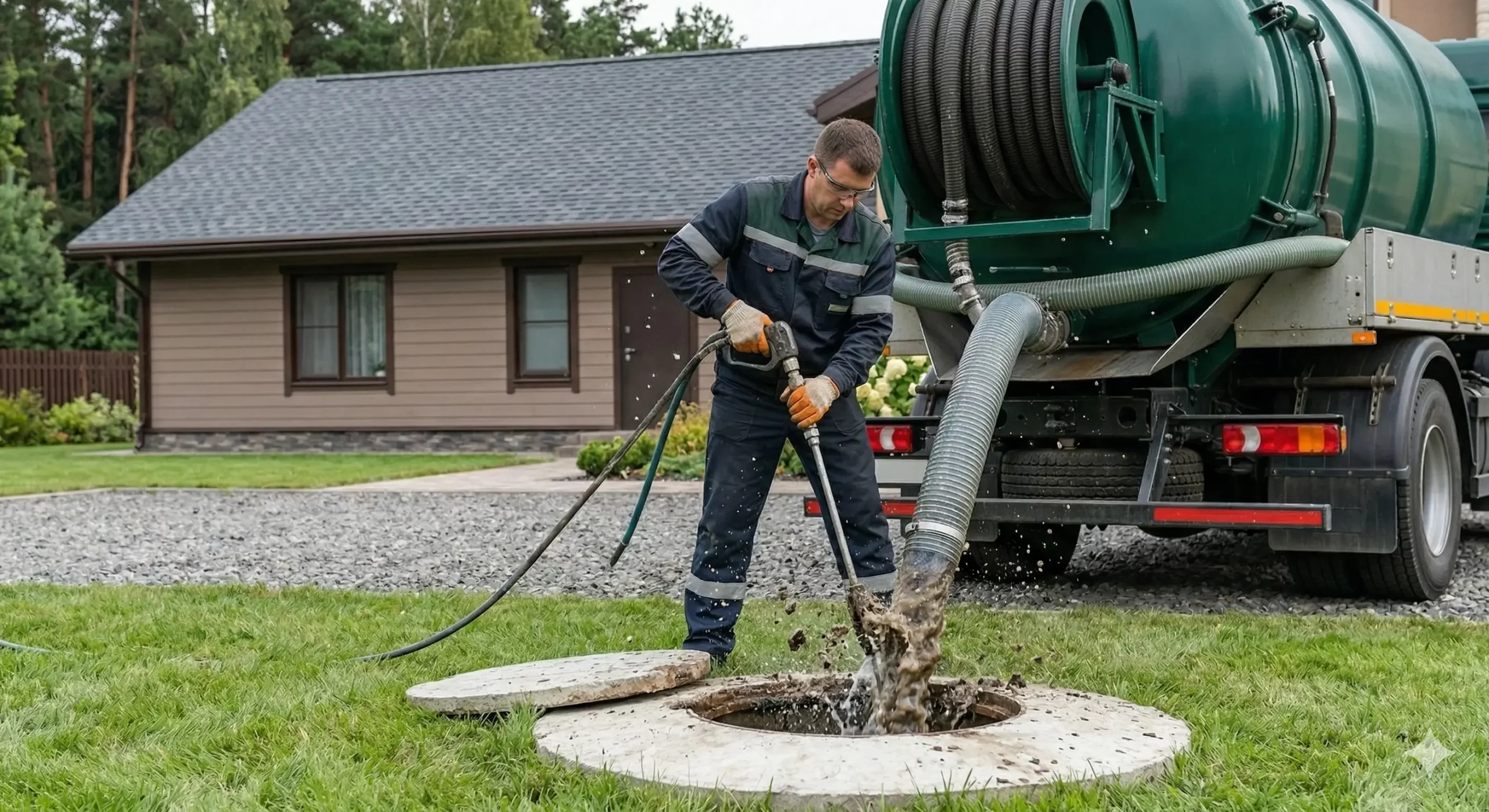
The Fix: A septic professional will need to open the cleanout port on the main line and use a heavy-duty mechanical auger or a high-pressure hydro-jetter to obliterate the roots or blockage.
*Based on national dispatch data for residential plumbing and septic service calls.
Plumbing Vents: The Invisible Airflow Issue
If your drains are gurgling, but the water is actually draining relatively quickly, and you have no history of septic neglect, the issue might be entirely on your roof.
As mentioned earlier, your plumbing requires air to function. The vent stacks on your roof pull air into the system. If these vent pipes become blocked, the water rushing down the drain will pull air from the only other available source: your P-traps and toilet bowls. This creates the exact gurgling sound.
Common culprits for blocked roof vents include:
- Bird or squirrel nests built inside the warm pipe.
- Heavy accumulation of autumn leaves.
- In northern climates, heavy snow or ice capping the vent.
If you suspect a vent issue, do not climb onto a steep, dangerous roof yourself. Hire a professional plumber to safely snake the vent stack from the top down.
Diagnostic Matrix: Clog vs. Septic Failure
If you are still unsure whether you need a plumber with a snake or a septic company with a vacuum truck, use this definitive diagnostic matrix to make the right financial decision.
| Symptom / Test | Likely: Localized Clog | Likely: Full Septic Tank or Mainline Blockage |
|---|---|---|
| Number of Drains Affected | Only one fixture (e.g., a single bathroom sink). | Multiple drains across the house, especially on the lowest floor. |
| The "Laundry Flush" Test | Washing machine drains normally; nearby toilet is unaffected. | Washing machine draining causes the nearby toilet to gurgle violently or overflow. |
| Visual Yard Inspection | Yard over the septic tank is dry and normal. | Wet, spongy soil, standing water, or unusually lush grass over the tank. |
| Olfactory (Smell) Test | Smell is confined to the clogged drain (smells like rotting hair/soap). | Strong sewage (rotten egg) smell in the yard, basement, or coming from multiple drains. |
| Lowest Point Backups | Water backs up only in the sink you are actively using. | Dark, foul water backs up into the basement floor drain or lowest bathtub when water is used upstairs. |
Fixing the Issue: Costs and Solutions
Once you have diagnosed the root cause of the gurgling, you need to understand the financial implications. Knowing what to expect prevents you from being overcharged in an emergency scenario.
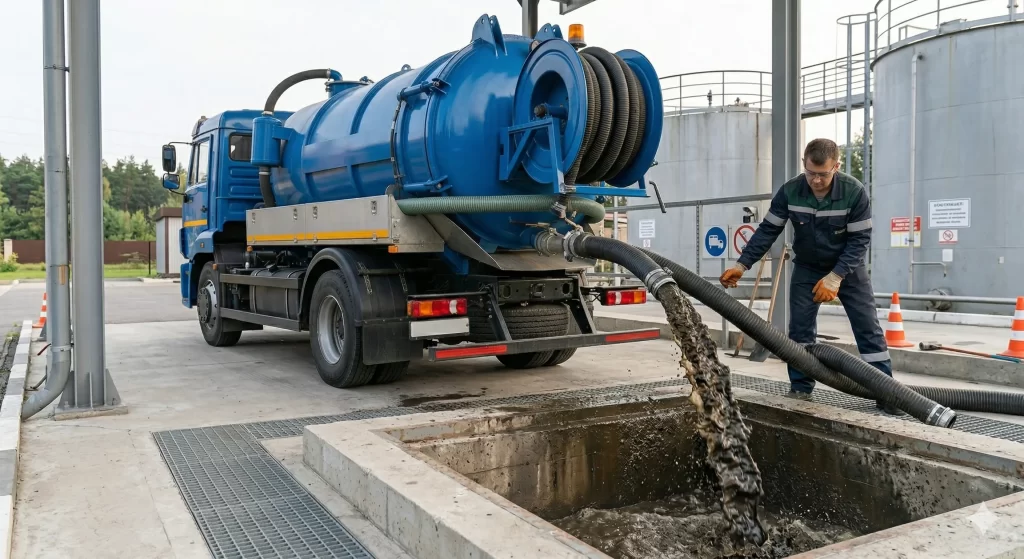
If your diagnosis points to a full tank, the only solution is a professional vacuum pump-out. According to our comprehensive 2026 guide on septic tank pumping prices, the national average cost to pump a standard 1,000-gallon septic tank is approximately $350 to $500. This assumes the tank lids are exposed and there are no emergency after-hours dispatch fees.
If the issue is a mainline blockage caused by tree roots, expect to pay an additional $200 to $450 for a professional hydro-jetting service to clear the lines completely.
The mathematics of property management are unforgiving: ignoring gurgling pipes and allowing a full tank to overflow into your drain field will permanently ruin the soil biomat. Replacing a ruined drain field will cost you between $7,000 and $15,000+. Spending $400 proactively today is the cheapest insurance policy you can buy.
Frequently Asked Questions
Is it safe to plunge a toilet connected to a septic tank?
Can heavy rain cause my toilets to gurgle?
How do I know if my roof vents are blocked?
Gurgling Toilets And Slow Drains Is It A Clog Or A Full Septic Tank Septic Expert AI
“My toilets started bubbling every time the washing machine ran. I almost poured three bottles of Drano down the sink thinking it was a massive hair clog. Thankfully, I read the diagnostic guide on Blix. I realized it was my main line. The contractor I found through the site came out, hydro-jetted a massive tree root out of the pipe, and saved my entire system. Incredible resource!”

Stop Guessing. Get Expert Diagnostics.
If multiple drains are running slow or gurgling, your tank is at critical capacity or your mainline is blocked. Do not wait for raw sewage to ruin your floors. Blix connects you with top-rated, elite local professionals for fast, transparent, and code-compliant service.
Available 24/7 for emergency dispatch in most zip codes.