
Emergency Well Pump Repair in Austin, TX
Nestled in the heart of the Texas Hill Country, Austin and its surrounding Travis County suburbs heavily rely on private groundwater systems, especially in areas like West Lake Hills, Bee Cave, and the sprawling properties west of Lake Travis. The region’s unique topography presents extreme challenges for water systems. With intense, prolonged summer droughts driving down the water table, and sudden winter freezes (like the historic Winter Storm Uri) causing catastrophic pipe and equipment bursts, having a reliable, high-functioning well pump is an absolute necessity for Austin homeowners. Whether you are drawing from the sensitive Edwards Aquifer or the deeper Trinity Aquifer, our network of elite, Texas-licensed well technicians possesses the heavy-duty equipment and specialized geological knowledge required to diagnose complex pressure failures, safely extract deeply set submersible pumps through solid limestone casings, and restore your home’s vital water supply with unprecedented speed and efficiency.
Fast Local Service & Diagnostics
Calls are routed to a licensed local well professional.
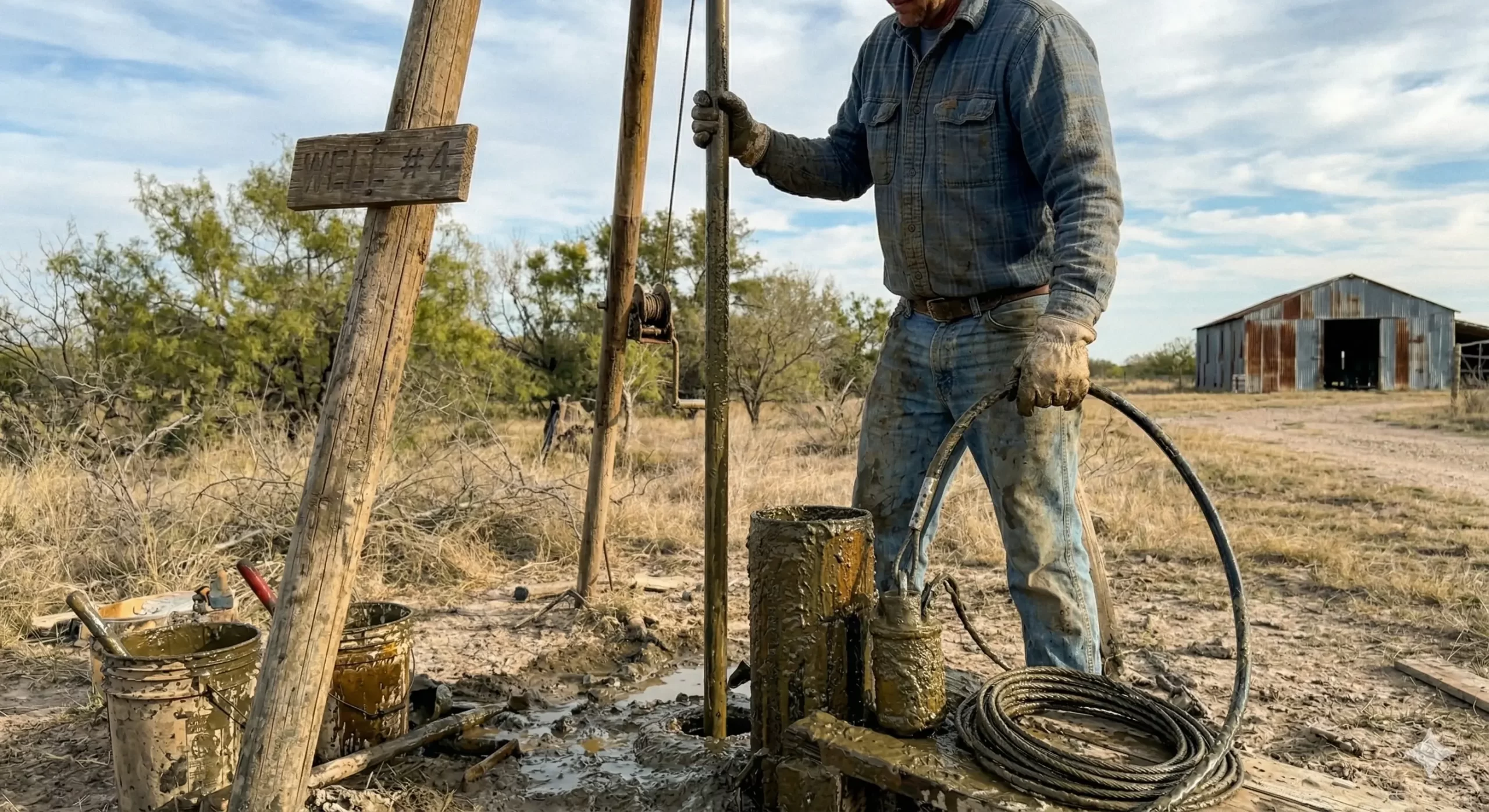
Well Pump Repair in
Austin
Austin & Travis County Well Stats
In Travis County, over 15,000 households operate on private water wells, primarily tapping into the Edwards and Trinity Aquifers. Due to the rapid urban expansion of Austin into the rocky Hill Country, the average newly drilled well depth has increased to approximately 450 feet to secure reliable yields during drought conditions. Historical data indicates that the average lifespan of a well pump in the Austin area is 8 to 12 years, significantly shortened by the extreme calcium hardness and abrasive sediment naturally occurring in local limestone formations.
- Standard Submersible Pump Replacement (Up to 400 ft): $1,800 – $3,500 (Includes labor, crane service, and high-grade stainless steel pump).
- Deep Well Submersible Pump (400 ft to 800+ ft for Trinity Aquifer): $3,500 – $5,200+ (Requires heavy-duty rig and specialized drop pipe).
- Above-Ground Jet Pump Repair/Replacement: $450 – $1,200 (Common for shallow wells near the Colorado River).
- Pressure Tank Replacement (Amtrol / Well-X-Trol): $650 – $1,400 (Crucial for preventing pump short-cycling).
- Variable Frequency Drive (VFD) Installation: $1,200 – $2,800 (Highly recommended for constant pressure in large Austin estates).
- Control Box and Electrical Relay Troubleshooting: $250 – $600 (Often caused by power surges or lightning strikes).
- Well Chlorination and Shock Treatment: $300 – $550 (Necessary after floods or noticeable bacterial issues).
Spring Well Maintenance in Texas
Heavy spring rains can cause surface runoff to breach well caps. We strongly recommend testing your water for coliform bacteria and inspecting the sanitary seal.
Save $500+ on Replacements
Via the TX Energy Co-op VFD Upgrade Program
Austin, TX
Local Aquifers & Geology
The primary groundwater sources in Austin include the Edwards Aquifer and Trinity Aquifer. Drilling through the local Shallow clay loam over dense, fractured limestone and Edwards chert means that average well depths range from 300 to 650+ feet.
Due to these geological factors, local homeowners frequently struggle with Severe calcium scaling on impellers and rapid motor burnout due to static water level drops during extreme summer droughts.
Drilling Depth Comparison
Deeper wells require heavy-duty crane hoists for pump extraction.
Climate & Water Quality
Pump systems in the Austin area face severe environmental stressors. The most significant threat is Extreme, prolonged triple-digit summer heatwaves causing aquifer depletion, coupled with sudden, severe winter freezes that aggressively crack unprotected above-ground wellhead plumbing and pressure switches.
Additionally, the raw groundwater often presents issues with Exceptionally high mineral hardness (calcium carbonate) leading to scale buildup, occasional iron bacteria, and localized sulfur odors depending on the specific aquifer zone..
Regional Groundwater Advisory
Known primary contaminant threat to submersible pumps and pipes in this area:
Common Area Systems
VFD Upgrade Savings
Constant Pressure vs StandardReplacing a standard single-speed pump with a Variable Frequency Drive (VFD) eliminates hard starts and drastically reduces energy draw in Texas.
Compliance & Local Permits
Travis County Level: Travis County and the BSEACD enforce rigorous regulations regarding groundwater extraction. Any major modification to a well system, including deepening the well or significantly upgrading the pump capacity, requires a specialized permit and inspection to ensure it does not negatively impact the sensitive Edwards Aquifer ecosystem or local springs.
Top Pump Brands in Texas
Most frequently installed hardware based on local geology (2026 data).
- Amp & Voltage Diagnostics: Testing the control box, capacitor, and motor leads to ensure the electrical supply is stable and within factory tolerances, ruling out grid fluctuations from Austin Energy or Pedernales Electric.
- Static & Pumping Water Level Check: Using sonic or tape meters to measure aquifer drawdown, ensuring the pump is not at risk of running dry during Texas droughts.
- Pressure Tank Integrity Test: Checking the bladder for ruptures and adjusting the pre-charge air pressure to match the cut-in settings of the switch.
- Limestone Scale Inspection: Examining the wellhead, pitless adapter, and check valves for severe calcium carbonate buildup that restricts flow.
- Downhole Camera Inspection: Deploying waterproof cameras to check casing integrity, identify root intrusion, or locate a collapsed screen in deep Trinity wells.
- Freeze Protection Assessment: Inspecting insulation, heat tape, and fiberglass enclosures around above-ground components to prevent winter storm damage.
- Sanitary Seal Verification: Ensuring the well cap is TDLR-compliant and completely sealed against insects, vermin, and surface water runoff.
Premium Well Pump Brands We Service
Our licensed technicians in Austin are certified to repair, replace, and install high-quality groundwater equipment from industry-leading manufacturers, including:
- Surging or Sputtering Water: Water that spits air forcefully from the faucet usually indicates the water table has dropped below the pump intake—a common issue during Austin summers.
- Rapid Clicking Sounds from the Wellhouse: A pressure switch rapidly clicking on and off (“short-cycling”) means your pressure tank bladder has likely failed, which will burn out your pump motor within days.
- Unexplained Spikes in Electric Bills: If calcium scaling from the Edwards Aquifer clogs the pump impellers, the motor must draw excessive amperage to push water, skyrocketing your energy costs.
- Sudden Drop in Water Pressure: Experiencing a noticeable loss of pressure, especially when running irrigation systems and household appliances simultaneously, points to a failing pump or a severely blocked sediment filter.
- Muddy or Chalky Water: A sudden influx of murky water or white limestone residue indicates the pump is pulling from the very bottom of a depleted well, or the casing has cracked.
- Scalding Hot Water from the Cold Tap: If the pump loses its prime but continues to run, the friction will literally boil the trapped water inside the casing, posing a severe hazard and destroying the PVC drop pipe.
Austin Real Estate Well Regulations
- Mandatory Well Inspections: Buyers almost always require a comprehensive flow test (Yield Test) conducted by a licensed inspector to verify the well can sustain household demand, typically testing for a minimum of 2 hours.
- Water Quality Testing: Lenders (especially for FHA/VA loans) demand recent lab results showing the absence of total coliform, E. coli, and acceptable levels of nitrates and lead.
- BSEACD Compliance: Properties located within the Barton Springs/Edwards Aquifer Conservation District may be subject to specific deed restrictions, mandatory drought stage rationing, and registration requirements.
- Setback Disclosures: The seller must prove the well meets state-mandated setback distances from septic drain fields (typically 100 feet in Texas) and property lines.
Local Dispatch & Response Times
Live Dispatch: Texas
Updated Just Now⚠️ High demand. Call now to secure the next available technician.
Our estimated arrival times are calculated based on your specific Austin-area sector:
- West Austin & Hill Country (Lakeway, Bee Cave, West Lake Hills): 60 to 120 minutes. These areas are our high-volume zones; despite winding roads, we maintain a heavy presence here.
- North Austin & Suburbs (Pflugerville, Round Rock, Cedar Park): 90 to 150 minutes. Efficient access via Hwy 183 and the SH-45 toll road allows for rapid response.
- South Austin Corridor (Buda, Kyle, Circle C Ranch): 2 to 4 hours. Traffic flow near the Hays County line can impact arrival, but emergency technicians are dispatched 24/7.
- East Travis County (Manor, Del Valle): 2 to 4 hours. Access via Hwy 290 or SH-130 ensures consistent service windows for rural agricultural properties.
- After-Hours & Weekend Emergencies: Our 24/7 rapid-response team is on standby specifically for catastrophic pump motor burnouts or pressure tank ruptures, typically arriving within 3 hours regardless of the day.
Please note that during extreme weather events, such as winter freezes or flash flooding, response times may be adjusted for technician safety, though no-water calls always retain top-priority status in our Austin dispatch queue.
⚠️ Travis County & State Regulatory Warning: Abandoned Wells
- Licensed Professionals Only: It is illegal in Texas for an unlicensed individual to break the sanitary seal of a well, pull a submersible pump, or perform major electrical wiring on a groundwater system.
- Abandoned Well Plugging: Under Texas law, any well that has not been used for six consecutive months and is in a deteriorated state is considered an “abandoned well.” The landowner is legally responsible for having it properly capped or plugged with bentonite grout by a licensed driller to prevent aquifer contamination.
- Well Reports: Every time a pump is pulled, replaced, or a well is serviced, the licensed technician is required to submit a detailed service report to the state to maintain an accurate database of Texas groundwater infrastructure.
Pump Lifespan Estimator
Select household size in Austin to see strain impact.
The Cost of Ignoring Symptoms
Fixing a short-cycling pump early saves thousands in Austin.
Data reflects average well contractor estimates in Austin.
Groundwater Threat Level
Current aquifer and mineral impact on pumps in Austin.
Dropping water tables cause pumps to suck air and overheat.
Hard water calcifies pump impellers, reducing lifespan.
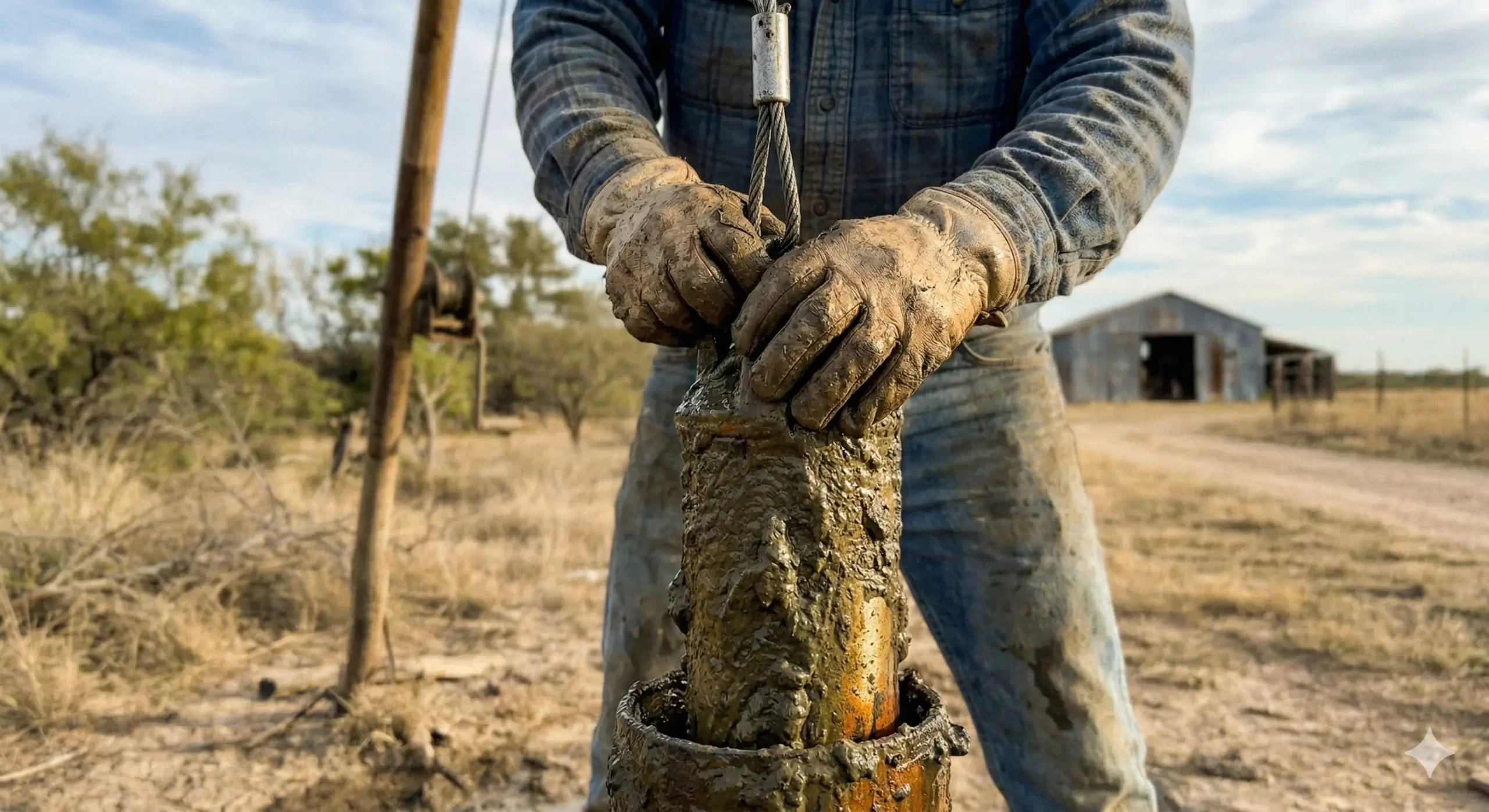
Local Austin
Well Pros
Fast Local Service & Diagnostics
Calls are routed to a licensed local well professional.
Septic System Services in Austin, TX
Do you have a septic tank on your property? Proper maintenance is critical to protecting your well water quality.
Austin Homeowner Feedback
“Living out in West Lake Hills, our pump completely died during the hottest week of August. The technicians arrived the same day, diagnosed a fried control box from a power surge, and pulled our 500-foot pump. They upgraded us to a constant pressure system, and the water pressure in our home is better than it has ever been. Unbelievable service.”

Local Homeowner
✓ Verified TX
“We lost all water pressure at our property near Lake Travis. I assumed the well had run dry because of the drought, but the local pros discovered it was just a blown capacitor and a ruptured pressure tank. They didn’t try to upsell me on a new pump I didn’t need. Honest, fast, and they clearly know the tricky Hill Country geology.”

Local Homeowner
✓ Verified TX
“After the devastating winter freeze cracked our wellhead pipes, these guys were lifesavers. They completely rebuilt our above-ground plumbing, installed a new heavy-duty Goulds pump, and built a custom insulated fiberglass enclosure to make sure it never freezes again. Best well service in the Austin area, hands down!”

Local Homeowner
✓ Verified TX
Expert Austin Well System FAQ
Can I pull and replace my own submersible well pump in Austin?
Absolutely not recommended, and technically against state regulations for major modifications. In the Austin area, wells are often drilled hundreds of feet deep into the Trinity aquifer. A submersible pump attached to 500 feet of water-filled drop pipe and heavy-duty electrical wire can weigh over 800 pounds. Attempting to pull this by hand or with a makeshift winch is incredibly dangerous and often results in dropping the pump down the casing, effectively destroying the well. Furthermore, the Texas Department of Licensing and Regulation (TDLR) requires a licensed Pump Installer to perform sanitary well capping and electrical work.
How does the limestone geology of the Texas Hill Country impact my well pump?
Austin sits atop massive limestone formations (the Edwards Plateau), which creates exceptionally hard water loaded with dissolved calcium and magnesium. Over time, this extreme mineral content causes thick, concrete-like scale to build up directly on the pump’s internal impellers and the pitless adapter. This scaling acts like plaque in an artery, severely reducing your Gallons Per Minute (GPM) flow and forcing the motor to run hotter and longer, which drastically reduces its operational lifespan compared to pumps operating in soft-water regions.
What is a Constant Pressure System (VFD), and why are they so popular in West Austin?
A Variable Frequency Drive (VFD), or Constant Pressure System, is a smart controller that speeds up or slows down the well pump motor based on your exact real-time water demand. Instead of the pump turning on at full blast and shutting off (like traditional systems), it provides smooth, city-like water pressure. These are incredibly popular in large Austin estates and Lakeway properties because they allow you to run multiple high-demand irrigation zones, multiple showers, and laundry simultaneously without anyone experiencing a drop in water pressure.
How can I protect my well pump system from unexpected Texas winter freezes?
Following the catastrophic Winter Storm Uri in 2021, freeze protection has become a top priority. Because the actual pump is deep underground where it’s warm, it is safe. However, the above-ground components—like the pressure switch, gauge, pressure tank, and exposed PVC piping—are highly vulnerable. You must protect these by installing a heavy-duty insulated fiberglass well house (“mock rock”), wrapping all exposed pipes in professional-grade foam insulation, and installing thermostatically controlled heat tape or a heat lamp inside the enclosure to keep the ambient temperature above freezing.
Austin Groundwater Expert AI
What are the specific groundwater regulations, average well depths, and the local conservation district for Austin, Travis County?
Groundwater Regulations, Well Depths, and Conservation District for Austin, Travis County (2026)
As a Senior Hydrogeologist and Local Groundwater Regulatory Expert for Texas, I can provide you with precise information regarding residential water wells in Austin, Travis County, for the year 2026. It's crucial to understand that groundwater regulation in Texas is a complex interplay between state agencies and local Groundwater Conservation Districts (GCDs).
Local Groundwater Conservation District (GCD)
For most of Austin and Travis County, particularly the western and southern parts where significant groundwater resources are utilized, the primary local regulatory body is the Barton Springs/Edwards Aquifer Conservation District (BSEACD). This district is responsible for managing, conserving, and protecting the groundwater resources within its jurisdiction, which includes portions of Travis and Hays Counties.
- BSEACD Official Website: https://bseacd.org/
Specific Groundwater Regulations for Residential Water Wells
While residential wells (defined as producing less than 25,000 gallons per day for domestic use or livestock) are generally "exempt" from requiring a production permit from a GCD under Texas Water Code Chapter 36, they are NOT exempt from registration, compliance with well construction standards, or other specific rules imposed by the local GCD or state agencies.
1. Barton Springs/Edwards Aquifer Conservation District (BSEACD) Regulations:
If your property in Travis County falls within the BSEACD's jurisdiction, you must comply with their rules. For residential wells, these typically include:
- Well Registration: All new domestic wells must be registered with BSEACD prior to or immediately after drilling. An application for a "Small-Use Well" registration is generally required.
- Well Spacing Requirements: BSEACD rules mandate minimum distances for new wells from property lines, septic systems, existing wells, and potential contaminant sources. These specific distances vary but are designed to prevent interference and contamination.
- Well Construction Standards: Wells must be constructed by a licensed driller and meet specific standards for casing, cementing, and wellhead completion to protect groundwater quality and quantity. These often align with state TDLR standards.
- Plugging Requirements: Abandoned or deteriorated wells must be properly plugged to prevent contamination and ensure public safety.
For the most current and detailed regulations, you should consult the official BSEACD Rules:
- BSEACD Rules: https://bseacd.org/regulatory-info/rules/ (Look for the most recent version, e.g., "District Rules 2023" or "District Rules 2024").
2. Texas Department of Licensing and Regulation (TDLR) Regulations:
At the state level, the TDLR regulates water well drillers and pump installers and sets the statewide standards for well construction.
- Licensed Drillers: All water wells in Texas must be drilled, altered, or plugged by a TDLR-licensed water well driller.
- Construction Standards: TDLR administers 16 Texas Administrative Code Chapter 76, which dictates comprehensive standards for well construction, casing, cementing, screens, and wellhead completion to ensure the well is safe, sanitary, and protects groundwater.
- Well Log Reports: Licensed drillers are required to submit a "Driller's Report" (or well log) for every new well to both TDLR and the Texas Water Development Board (TWDB). This report details the well's construction and geological formations encountered.
- TDLR Water Well Drillers and Pump Installers Program: https://www.tdlr.texas.gov/wwd/wwd.htm
- TDLR Well Construction Standards (16 TAC Chapter 76): https://texreg.sos.state.tx.us/public/readtac$ext.ViewTAC?tac_view=4&ti=16&pt=4&ch=76
3. Texas Commission on Environmental Quality (TCEQ):
While TCEQ does not directly permit private residential wells, it is the state agency responsible for protecting water quality. They provide guidance on private well water testing and contamination issues. If your well water is used for consumption, it is highly recommended to have it tested annually for coliform bacteria, nitrates, and other potential contaminants.
- TCEQ Private Well Information: https://www.tceq.texas.gov/drinkingwater/private_wells
Average Well Depths and Aquifers for Austin, Travis County
The primary aquifers targeted for residential water wells in Austin, Travis County, particularly in the western and southern regions, are the Trinity Aquifer (specifically the Middle Trinity Aquifer and Lower Trinity Aquifer) and, in specific areas within the district's boundaries, the Edwards Aquifer (Barton Springs Segment). East of the Balcones Fault, shallower, localized aquifers or shallower portions of the Trinity may also be utilized.
Based on historical state well logs from the Texas Water Development Board (TWDB) for the Trinity Aquifer in Travis County, the average depth for a residential well typically ranges from 300 to 700 feet, depending on the exact geological location and target water-bearing zone. A solid average estimate for a typical residential well targeting the Trinity Aquifer in Travis County is **approximately 500 feet**.
It's important to note that actual well depth can vary significantly due to:
- Geographic Location: Elevation, proximity to faults (like the Balcones Fault Zone), and local hydrogeological features.
- Target Aquifer Zone: Depending on the desired yield and water quality, a driller may target different water-bearing zones within the Trinity or Edwards systems.
- Local Stratigraphy: The depth to competent water-bearing rock layers can fluctuate across the county.
For detailed information on aquifers and to explore specific well logs, you can use the TWDB resources:
- TWDB Groundwater Resources: https://www.twdb.texas.gov/groundwater/index.asp
- TWDB Texas Water Well Explorer (for individual well logs): https://www.twdb.texas.gov/groundwater/data/well_logs/index.asp
Before proceeding with any well drilling project, it is strongly recommended to consult directly with BSEACD and a TDLR-licensed water well driller who has experience in Travis County.
Fast Local Service & Diagnostics
Calls are routed to a licensed local well professional.