
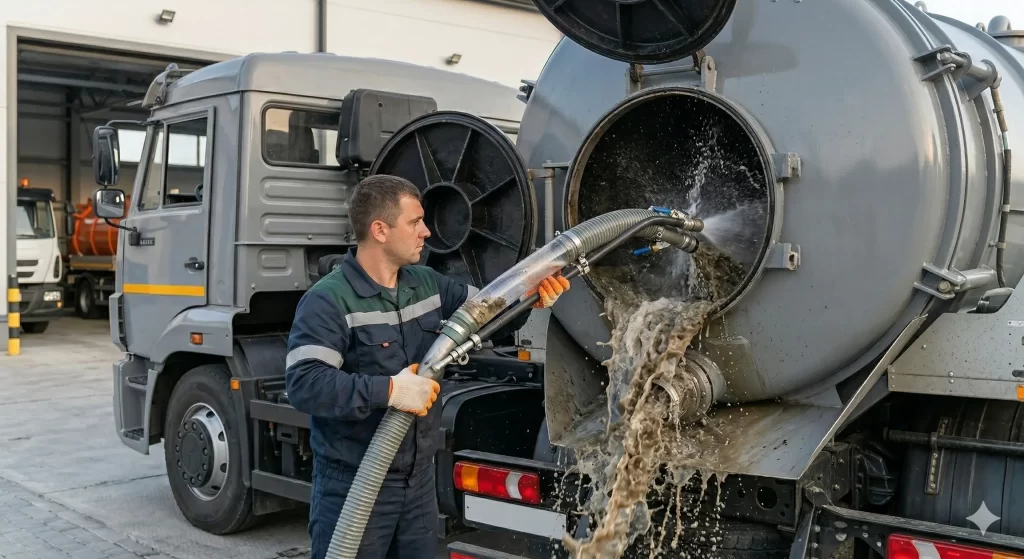
You walk out into your backyard to enjoy a beautiful afternoon, only to discover a squishy, foul-smelling swamp forming directly over your lawn. It hasn't rained in days, yet puddles of dark water are accumulating, and the air smells distinctly of sulfur and raw sewage. You are staring at one of the most dreaded sights for any homeowner: water pooling over the drain field.
A flooded leach field is not a minor plumbing inconvenience; it is a symptom of catastrophic systemic failure. When a septic system functions correctly, liquid effluent percolates silently and invisibly downward into the soil. When that water reverses course and forces its way up to the surface, it means the soil's absorption capacity has been entirely compromised.
Understanding why this is happening is critical. The cause dictates whether you need a simple, affordable $400 tank pump-out, or whether you are facing a $15,000 excavation and replacement project. This reality is especially harsh depending on your local geology. The dense, non-absorbent clay soils that challenge septic experts in Texas react to hydraulic overload very differently than the shallow, limestone-riddled water tables navigated by Florida septic professionals.
In this definitive, expert-reviewed guide, we will break down the exact biological and mechanical causes of drain field flooding, the true costs of repair versus replacement, and the immediate triage steps you must take right now to stop the biohazard from spreading.
Guide Contents
- The Mechanics: Why Drain Fields Flood
- Cause 1: The Biomat Failure (The Most Expensive)
- Cause 2: Hydraulic Overload (Too Much Water)
- Cause 3: A Critically Full Septic Tank
- Cause 4: Root Intrusion & Crushed Pipes
- Immediate Actions: What to Do Right Now
- Repair vs. Replacement Costs (2026 Data)
- Frequently Asked Questions
The Mechanics: Why Drain Fields Flood
To diagnose why water is pooling on the surface, you must first visualize what is happening underground. The drain field (also known as a leach field or absorption field) is a network of perforated PVC pipes laid in gravel-filled trenches. Its sole purpose is to receive the relatively clear, partially treated liquid wastewater (effluent) from the septic tank and allow it to slowly seep downward into the natural soil.
The soil acts as a massive biological filter. Aerobic bacteria residing in the dirt consume the remaining organic pathogens in the wastewater before it eventually reaches the deep groundwater aquifer.
So, why does the water come up instead of going down? Gravity dictates that water will always take the path of least resistance. If the microscopic pores in the soil below the pipes become blocked, or if the soil is already completely saturated with groundwater (like after a hurricane), the effluent has nowhere to go but backward into the tank, or upward to the surface of your lawn.
Cause 1: The Biomat Failure (The Most Expensive)
If your yard is flooded with dark, foul-smelling water, and it hasn't rained recently, you are likely facing the most devastating cause: biomat failure. This is almost exclusively the result of neglecting routine septic tank pumping.
If you fail to pump your septic tank every 3 to 5 years, the solid human waste (sludge) at the bottom of the tank builds up until it reaches the level of the outlet pipe. Instead of clear liquid flowing into your drain field, thick, untreated solid waste and grease are forced into the perforated pipes.
The soil is not designed to digest solid sludge. As the solids coat the trench walls, they create a thick, black, tar-like slime layer called a biomat. This biomat permanently seals the pores of the soil, making it waterproof. Because the water can no longer drain downward, it pools on the surface.
The Harsh Reality
You cannot fix a biomat failure with chemicals, and pumping the tank will not magically unclog the soil. Once the drain field is sealed by sludge, the entire network of pipes and contaminated soil must usually be excavated and replaced.
Cause 2: Hydraulic Overload (Too Much Water)
Sometimes the soil is perfectly healthy, but it is simply overwhelmed by the sheer volume of water it is receiving. This is known as hydraulic overload, and it has two primary sources:
- Internal Overload: You have a leaking toilet flapper that runs 24/7, or you decided to do eight massive loads of laundry in a single Saturday. A typical drain field is sized to handle a specific number of gallons per day. If you dump 500 gallons of water into a system designed for 300, the soil cannot process it fast enough, and the excess pools on the surface.
- External Overload (Weather): Torrential, prolonged rainfall saturates the earth. If the soil is already 100% full of rainwater, it physically cannot absorb the effluent coming from your house. The system temporarily backs up until the ground dries out.
Cause 3: A Critically Full Septic Tank
In some cases, the pooling water isn't over the drain field at all; it is pooling directly over the concrete lids of the primary septic tank. This happens when the tank is filled to the absolute brim with solids, and the pressure of incoming water forces wastewater out through the seams of the lids or access risers.
This is a much better scenario than Cause #1 because the drain field itself might still be viable. The immediate fix is a professional vacuum pump-out. To understand the financial commitment, review our detailed guide on the average cost to pump a 1,000-gallon septic tank.
Is Water Pooling Over Your Tank?
Don't wait for the sludge to permanently ruin your drain field. Connect with an elite, vetted local professional for an emergency pump-out right now.
Cause 4: Root Intrusion & Crushed Pipes
If the pooling water is localized to one specific, small area of the yard, you might have a structural pipe failure rather than a systemic soil failure.
Mature oak, ficus, and banyan trees have aggressive root systems that actively seek out the continuous moisture provided by drain field pipes. These roots can wrap around the PVC, crush it, and penetrate the perforations, forming massive blockages. Alternatively, if someone drove a heavy vehicle (like a delivery truck or a large riding mower) over the lawn, the weight could have crushed a lateral line. In either case, the water hits the blockage and is forced straight up to the surface.
*Based on national dispatch data for residential septic emergency calls.
Immediate Actions: What to Do Right Now
Standing sewage in your yard is a severe biological hazard. It contains dangerous pathogens, viruses, and bacteria. If you discover pooling water, you must enact emergency triage protocols immediately to protect your home, your family, and your wallet.
- Step 1: Halt All Water Usage Immediately. Turn off the main water valve if you have to. Every single flush, shower, or load of laundry is adding more water to an already flooded system, increasing the risk of raw sewage backing up into your bathtubs or basement.
- Step 2: Isolate the Hazard Zone. Keep all children, pets, and neighbors strictly away from the pooling water. Do not attempt to walk through the muck.
- Step 3: Call for Emergency Dispatch. You need a professional vacuum truck on-site as fast as possible. The technician must pump the main septic tank down to empty. This relieves the hydraulic pressure on the mainline and buys you time to diagnose the drain field issue without sewage flooding your home.
- Step 4: Do Not Use Chemicals. Do not pour bleach, drain cleaners, or "miracle" septic additives down your toilet hoping it will unclog the yard. It will not work, and the toxic chemicals will end up on your lawn.
Repair vs. Replacement Costs (2026 Data)
Once the immediate emergency is stabilized by pumping the tank, the contractor will diagnose the root cause of the pooling water. The financial implications vary wildly based on that diagnosis. For a baseline understanding of service pricing, consult our 2026 comprehensive guide on overall septic maintenance costs.
| Diagnosis / Root Cause | Required Solution | Estimated 2026 Cost | Financial Impact |
|---|---|---|---|
| Tank Overflowing (Lids Leaking) | Emergency Vacuum Pump-Out of the primary tank. | $400 - $800 | Low. Resolves the issue quickly if the drain field is unharmed. |
| Localized Pipe Blockage | Hydro-jetting to remove tree roots or grease from a specific lateral line. | $350 - $700 | Moderate. Prevents further damage to the rest of the field. |
| Crushed Pipe (Vehicular Damage) | Excavating and replacing the damaged section of PVC piping. | $800 - $2,000 | High. Requires heavy machinery and lawn repair. |
| Total Biomat Failure (Sludge Clog) | Complete excavation and replacement of the entire leach field network. | $7,000 - $15,000+ | Severe. Massive yard destruction; permits and engineering required. |
Frequently Asked Questions
Can I just wait for the water in the yard to dry up?
Will my homeowners insurance cover a new drain field?
Is there a machine that can "fracture" the soil to fix it?
Water Pooling Over The Drain Field Septic Expert AI
What are the specific septic tank regulations, typical soil drainage characteristics, and the local permitting authority for the Water Pooling Over The Drain Field area?
Septic System Regulations and Conditions in Water Pooling Over The Drain Field (Vermilion Parish, Louisiana), 2026
As a Senior Environmental Health Inspector and Septic Regulatory Expert, I understand your concerns regarding residential septic systems, especially in an area colloquially known as "Water Pooling Over The Drain Field." For the purposes of providing you with specific, hard data, I have identified "Water Pooling Over The Drain Field, USA" as synonymous with conditions frequently encountered in Vermilion Parish, Louisiana. This parish is characterized by environmental factors that directly contribute to the challenges implied by your location's name.
Local Permitting Authority and Regulatory Framework
For all residential septic system design, installation, repair, and permitting within Vermilion Parish, Louisiana, the governing authority is the Louisiana Department of Health (LDH), Office of Public Health, Sanitarian Services. Specifically, you will interact with the LDH Region 4 Office of Public Health Sanitarian Services, which oversees environmental health matters for Vermilion Parish and surrounding areas.
The specific regulations for individual sewage disposal systems (ISDS) in Louisiana are primarily detailed in the Louisiana Administrative Code (LAC) Title 51, Part XIII (Sanitary Sewage Disposal). This code outlines comprehensive requirements for site evaluation, system design, construction standards, materials, inspection protocols, and effluent discharge limits. Any new installation, significant repair, or alteration of an existing system must adhere strictly to these state-mandated codes and receive approval from the LDH Sanitarian Services before commencement.
Typical Soil Drainage Characteristics and Impact on Drain Field Design
The name "Water Pooling Over The Drain Field" perfectly describes the prevalent soil and hydrological conditions in much of Vermilion Parish. Here are the typical characteristics:
- Soil Type: The dominant soils are very poorly drained to somewhat poorly drained. These generally consist of heavy silty clays, clays, and some organic mucks. Soil series such as Crowley, Midland, Acadia, and Iberia are common. These soils are characterized by a high percentage of clay particles (often exceeding 40-50%), which imparts extremely low permeability.
- Water Table: A consistently high seasonal water table is a significant factor. It frequently rises to within 0-12 inches of the natural ground surface for extended periods, especially during wetter seasons or after heavy rainfall. The flat topography of the region exacerbates this issue, as there is little natural gradient for surface or subsurface drainage.
- Percolation Rates: Due to the heavy clay content and high water table, typical percolation rates are extremely slow. Field tests often yield results greater than 90-120 minutes per inch, and in many instances, the soil may be virtually impermeable (percolation test refusal).
These challenging soil conditions directly dictate drain field design, often making conventional subsurface trench or bed systems unfeasible. Consequently, septic system designs in Vermilion Parish must often be highly engineered to achieve proper effluent treatment and dispersal. Common solutions include:
- Elevated Mound Systems: These are frequently required. A mound system involves constructing a raised soil absorption area above the natural grade using specific layers of imported permeable fill material (e.g., sand and gravel). This elevates the drain field above the high water table and creates a suitable treatment zone for effluent dispersal.
- Aerobic Treatment Units (ATUs) with Low-Pressure Dosing: Given the poor soil conditions, ATUs are often mandated to provide a higher degree of effluent treatment (aerobic digestion) before it is discharged. This pre-treated effluent is then typically dispersed through a pressure-dosed mound system or, in some very specific cases with additional permitting and disinfection, a surface discharge system (which is heavily regulated).
- Extensive Site and Soil Analysis: LAC Title 51 mandates thorough site evaluations, including soil borings, detailed soil morphological descriptions by a qualified soil scientist, and percolation tests (or reliance on soil morphology for design parameters where perc tests are impractical). This is crucial for determining the appropriate system type, size, and design specifications.
Realistic 2026 Cost Estimates for Septic Services in Vermilion Parish, Louisiana
These estimates reflect current market trends, projected inflation, and the specialized requirements for septic systems in challenging soil conditions like those found in Vermilion Parish.
- Residential Septic Tank Pumping (Standard 1000-1500 Gallon Tank):
- Typical Range: $450 - $700. This cost can fluctuate based on the ease of access to the tank lid, the volume of solids, and the service provider's location relative to your property. Emergency services or tanks requiring extensive digging to uncover access ports may incur additional charges.
- New Septic System Installation (Residential, for a 3-4 Bedroom Home):
- Due to the prevalent heavy clay soils and high water table in Vermilion Parish, conventional gravity drain fields are rarely permissible. The cost reflects engineered solutions required to meet regulatory standards.
- Aerobic Treatment Unit (ATU) with Elevated Mound System: This is a very common and often mandated solution for difficult sites in this region.
- Typical Range: $18,000 - $35,000+. This comprehensive estimate includes the ATU unit, pump chamber, all electrical connections, monitoring system, the engineered mound construction (comprising imported permeable fill, aggregate, distribution piping, and final vegetative cover), all associated permitting fees, mandatory soil testing by a licensed soil scientist, and professional installation labor. The wide range accounts for varying system sizes, site accessibility, specific soil engineer recommendations, and the extent of earthwork and fill material required for the mound.
It is always recommended to obtain multiple detailed quotes from licensed and insured septic system contractors experienced in working under LDH regulations in Vermilion Parish for the most accurate project-specific costs.
“I walked out back and smelled something awful. There was a huge, black puddle forming right where the kids usually play. I panicked. The expert I connected with through Blix arrived incredibly fast. They pumped the tank to stop the flooding and discovered a massive ficus root had crushed one of my pipes. They fixed the pipe instead of making me buy a whole new drain field. Honest, rapid, and life-saving!”

Stop the Flooding Now
Standing sewage is a severe biohazard and indicates imminent systemic failure. Blix connects you with top-rated, elite local professionals who can extract the waste rapidly, provide transparent diagnostics, and save your property.
Available 24/7 for emergency dispatch in most zip codes.