
Figuring Out the Bill: What a Real Texas Septic Inspection Costs
Alright, let’s talk turkey. Everyone wants to know the price but nobody wants to pay for quality. Buying a house is already draining your wallet, I get it. But skimping on the septic inspection is like buying a used car without ever looking under the hood. It’s just plain dumb. Prices in Texas are all over the map, depending on if you’re in the sticky gumbo clay near Houston or the hard-as-concrete caliche of the Hill Country.
Here’s a breakdown that won’t be on some slick corporate website. This is the real deal, from a guy who’s seen it all. ️
| Service or Test | Typical Texas Cost Range | Grumpy Veteran’s Notes |
|---|---|---|
| Basic Visual Inspection & Pump-Out | $450 – $700 | This is your bare minimum. We open the tank, pump it so we can see the walls, and check the baffles. If your inspector doesn’t insist on pumping, fire him. He’s lazy. |
| Hydraulic Load Test | $200 – $400 (add-on) | We flood the drain field with water to simulate heavy usage. This is how you find out if that field is on its last legs. A must-do on older systems. |
| Sewer Camera Scope | $300 – $550 | Got big oak trees? Roots love old clay pipes. This little camera is the only way to see if your main line is crushed or clogged with roots without digging. Pays for itself. |
| Aerobic System Inspection | $250 – $450 | More complex, more parts to fail. We gotta check the aerator, pumps, alarms, and spray heads. Don’t let a conventional guy inspect an aerobic system. He’ll miss things. |
| The “I Need a New System” Gut Punch | $8,000 – $30,000+ | Yeah, you read that right. Full replacement, especially in tough Texas soil with new TCEQ regulations, is a budget-wrecker. This is why you spend the money on a good inspection upfront! |

Some Free Advice: How to Not Ruin Your Septic System

Look, I get paid when your system breaks. But I’m getting too old for this, so I’d rather you just listen and take care of your stuff. A septic system is a living thing—a big concrete stomach in your yard. You have to feed it the right stuff and not poison it. It’s not a magic portal to another dimension.
- Your Toilet is Not a Trash Can: The only things that go in are human waste and toilet paper. That’s it. No “flushable” wipes (they’re liars!), no feminine products, no paper towels, no dental floss, no cat litter. Nothing. Are we clear?
- Watch the Water Usage: Long showers, doing 10 loads of laundry on a Saturday… you’re flooding the system. Spread it out. A septic system can only handle so much water at once before it starts pushing solids into your drain field, killing it dead.
- Go Easy on the Chemicals: Bleach, drain cleaners, harsh chemicals… you’re killing the good bacteria that break down the waste. A little bit here and there is fine, but if your house smells like a chemical factory, you’re murdering your septic’s gut biome.
- Don’t Park On Your Drain Field: I’ve seen it all. Cars, boats, above-ground pools. You’re compacting the soil and crushing the pipes. That area is for grass and grass alone. Keep heavy stuff off it!
- Regular Pumping is Not a Suggestion: It’s a requirement. Every 3-5 years, depending on your tank size and family size. It’s like changing the oil in your car. You don’t do it, the engine seizes. You don’t pump your tank, the drain field dies and you’re calling me for a $20,000 replacement. Your choice.
The Troubleshooting Tree: My Brain, On Paper
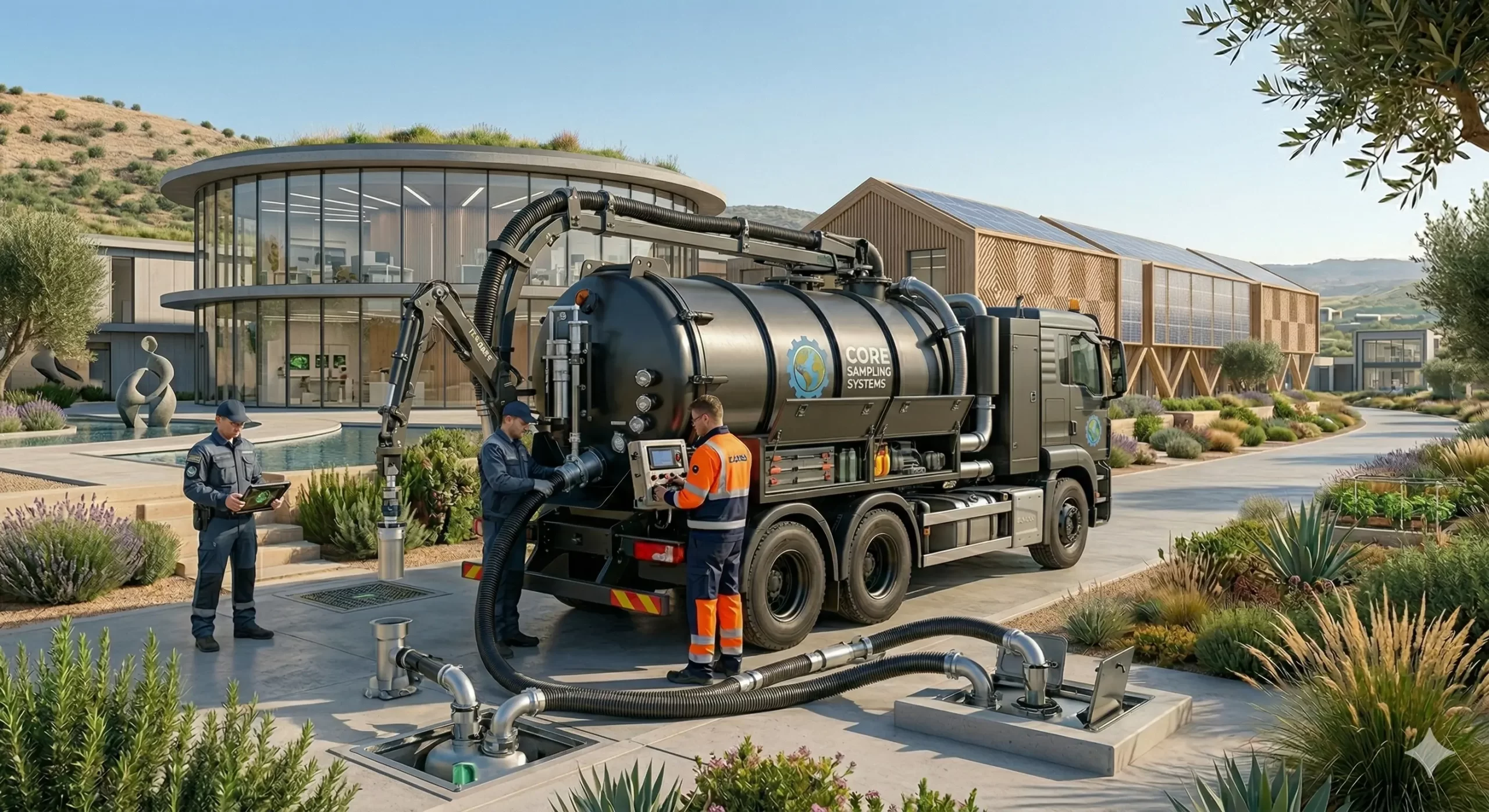
After 30 years in the Texas heat, you learn to diagnose problems from the truck. Here’s a step-by-step guide. When you’re looking at a house, keep your eyes and nose open. This is what I’m looking for.
Symptom Group 1: Slow Drains & Gurgling Noises
This is the first whisper of trouble. Don’t ignore it.
- IF only one sink or shower is draining slow, THEN it’s likely a simple clog in that specific pipe. It’s not a septic problem. Lucky you.
- IF all the drains in the house are slow, especially on the ground floor, and the toilets “gurgle” when you flush or when the washing machine drains, THEN we have a system-wide problem. This means the wastewater has nowhere to go.
- NEXT STEP: The tank is probably full and needs pumping. But if it was pumped recently, it could be a clog in the main line leaving the house, or worse, a saturated drain field that’s no longer accepting water.
Symptom Group 2: Bad Smells & Soggy Ground
Now we’re getting serious. Your nose is your best diagnostic tool.
- IF you smell raw sewage inside the house, especially around floor drains or after doing laundry, THEN you could have a dry P-trap or, more seriously, a main line clog causing sewer gas to back up into the home.
- IF you smell a distinct rotten-egg odor outside, particularly over a specific area of the yard, THEN you are smelling liquid effluent that has surfaced. This is a public health hazard and a sign of catastrophic drain field failure. The system is condemned. In Texas, the TCEQ takes a very dim view of this. It’s a guaranteed failure on an inspection.
- IF you see an area of the yard that is unusually green and lush, or spongy and wet to walk on (even when it hasn’t rained), THEN you are looking at the drain field. It’s saturated. Liquid is pooling just below the surface. It’s failing.
Symptom Group 3: The Inspection Itself – What We Find
This is where the tools come out. The seller can’t hide from a Sludge Judge and a camera.
- IF I open the tank lid and the liquid level is above the outlet pipe, THEN the drain field isn’t accepting water. It’s backing up. This confirms a drain field problem.
- IF I use my Sludge Judge (it’s a clear tube that lets me take a core sample of the tank’s layers) and the combined scum and sludge layers are more than 1/3 of the tank’s liquid depth, THEN the tank is overdue for pumping. Solids are likely being pushed into the drain field, clogging it permanently.
- IF we pump the tank and inspect the concrete baffles and they are crumbling or gone, THEN the tank is shot. Those old concrete baffles get eaten away by sewer gases. A missing baffle lets solids flow directly to the drain field, which is a death sentence for it.
- IF we run a camera down the main line from the house to the tank and see cracks, offsets, or a big ball of tree roots, THEN we’ve found a major blockage or a broken pipe. This is common in older homes with cast iron or clay pipes, especially with those big, beautiful Texas oak trees.
- IF it’s an aerobic system and the alarm is going off, or the aerator pump is silent, or the spray heads are dribbling instead of spraying, THEN you’ve got a failure of a key component. Could be a cheap fix (a new air pump) or an expensive one (a bad water pump), but it needs immediate attention.
Real-Life Case Study: The San Antonio Switcheroo
Let me tell you a story. A young couple, real excited, buying their first place just outside San Antonio. Nice little ranch house on a couple acres, beautiful Hill Country views. The seller was a real smooth talker, said he’d just had the septic “serviced.” The buyers’ real estate agent, bless his heart, was greener than the grass over the drain field. They skipped the full inspection to save $500. A fool’s bargain if I ever saw one. Discover why so many neighbors recommend our septic tank services in Roosevelt City, AL.
They move in. Two weeks later, after a big housewarming party with lots of guests, the toilets stop flushing. Drains are backed up. A foul smell starts creeping up from the showers. They call me in a panic. Need immediate assistance? Find trusted septic tank pumping in Tampa, FL right away.
I get out there, pop the lids. The tank is full of thick, black sludge. The “servicing” the seller mentioned? He’d likely just paid a guy to dump a few gallons of chemicals in it, which does absolutely nothing. We pump the tank down and find the real problem. The outlet baffle was completely gone. For years, every flush had been sending solids straight into the drain field lines. We tried hydro-jetting the lines, but it was too late. The surrounding caliche soil was so packed with biomat it was like concrete. The drain field was 100% failed.
The final bill for a completely new, engineered aerobic system (required by the county for that lot size) was over $22,000. They had to take out a personal loan just to be able to flush their toilets. Their $500 savings cost them a fortune. Don’t be those people. Pay for the inspection. Discover why so many neighbors recommend our septic tank services in Parkland, FL.
What Folks Are Saying…
Barbara H. – Fort Worth, TX ⭐⭐⭐⭐⭐
“I was buying a home and terrified of the septic system. This company came out and the inspector was a grumpy old coot, but my god, he knew his stuff. He found a crack in the tank the seller’s ‘guy’ completely missed. Saved me from a financial disaster. He explained everything in plain English, no sugar-coating. Worth every single penny.”
David P. – Austin, TX ⭐⭐⭐⭐⭐
“Don’t mess around with anyone else. These guys are the real deal. They used a camera to show me the tree roots crushing the pipes on a property I was about to buy. The seller had to knock $15,000 off the price to cover the repair. The inspection fee was the best money I’ve ever spent. No-nonsense and brutally honest.” We also provide specialized local support—see our Palm Beach, FL service page for details.
Progression of Failure: A Septic Timeline of Neglect ️
A septic system doesn’t just fail overnight. It’s a slow, silent death caused by neglect. Here’s how it usually goes down. Don’t ignore the warning signs. Reach out to our septic maintenance crew in Anna, TX today.
- Year 1-3 (The Honeymoon Phase): Everything works great. The system is new or was recently pumped. The bacteria are happy. The homeowner thinks, “This is easy!” and promptly forgets about it. No issues are visible.
- Year 4-6 (The Warning Signs): The sludge and scum layers are building up. They’re now taking up over a third of the tank. The system is starting to push small amounts of solids into the drain field pipes. You might hear occasional gurgling or notice drains are a *tiny* bit slower after a big load of laundry. Most people ignore this.
- Year 7-9 (The Point of No Return): The drain field pipes are becoming seriously clogged with a thick, black layer of biomat. The soil around the trenches can no longer absorb water efficiently. You’ll see wet spots in the yard, bad odors after a rain, and frequent drain backups in the house. The damage is becoming permanent. Pumping the tank at this point is like putting a band-aid on a bullet wound.
- Year 10+ (Catastrophic Failure): The system is completely backed up. Raw sewage is surfacing on your lawn. Toilets won’t flush. Wastewater is backing up into your showers. The drain field is a toxic swamp. The health department might condemn it. You have no choice but a full, expensive replacement. You ignored all the signs, and now you have to pay the piper.
Questions You’re Too Afraid to Ask Me in Person
Is a septic inspection legally required to sell a house in Texas?
Here’s the deal: The state of Texas itself doesn’t have a blanket law mandating a septic inspection for every single property transfer. However, don’t be a fool. Most mortgage lenders, especially for FHA or VA loans, absolutely will require one. Furthermore, many local county or city ordinances DO require an inspection and a permit transfer. The real answer is that your lender and your desire not to buy a money pit should make it 100% necessary for you. Don’t rely on the law to protect you; protect yourself.
How does Texas’s clay soil affect my septic system?
Ah, Texas clay. My old enemy. In huge parts of the state, we have expansive clay soil. This stuff shrinks when it’s dry (creating huge cracks) and swells up like a sponge when it’s wet. This constant movement puts immense stress on septic tanks and pipes, leading to cracks and breaks. Worse, clay doesn’t percolate well, meaning it doesn’t absorb water easily. This makes it a terrible soil for conventional drain fields. That’s why you see so many engineered systems, like aerobic systems with spray heads or Low-Pressure Dosing (LPD) systems, in clay-heavy areas. They are designed to work around the soil’s limitations, but they’re also more complex and expensive.
What’s the difference between a conventional and an aerobic system?
Think of it like this: a conventional system is a cow’s stomach. It’s anaerobic, meaning it uses bacteria that don’t need oxygen to break down waste. It’s simple, passive, and works great with good soil. An aerobic system is more like a human lung. It has an aerator that actively pumps oxygen into the tank, fostering oxygen-loving bacteria that clean the wastewater to a much higher degree. The treated water is then usually disinfected with chlorine and sprayed onto your lawn. They’re basically little wastewater treatment plants. You need them for bad soil or small lots, but they have pumps and alarms, require electricity, and need a regular maintenance contract by law in Texas.
The seller says the system is “grandfathered in.” Should I be worried?
Worried? You should be terrified. “Grandfathered in” is real estate agent code for “This system is ancient and doesn’t meet any modern codes, but we don’t have to upgrade it… until it fails.” And guess when it will fail? Right after you buy it. If that old system fails, you can’t just repair it. The Texas Commission on Environmental Quality (TCEQ) will require you to install a brand new system that meets all current, and much stricter, regulations. That “grandfathered” system is a ticking, stinking time bomb. You need to know its exact condition before you sign anything.
Technically Reviewed By:
BlixBase Master Plumber Team
20+ Years Septic Industry Experience | Certified System Inspectors