

What Are the Deterministic Variables Influencing the 2026 Septic Pumping Quotation?

The cost associated with the necessary pumping of an Onsite Wastewater Treatment System (OWTS), commonly referred to as a septic system, is not a monolithic figure. It is a calculated sum derived from several quantifiable variables, each contributing to the final invoice. For residents of Oregon, projecting these costs for 2026 requires an understanding of local logistics, regulatory fee structures, and the physical parameters of the system in question. Miscalculation or attempts to source non-certified services will invariably lead to non-compliance with Oregon Administrative Rules (OAR) Chapter 340, Division 071, and potential civil penalties.
The primary cost determinants are as follows:
- Tank Capacity: The nominal volume of the septic tank, typically measured in U.S. gallons. Standard residential tanks in Oregon range from 1,000 to 1,500 gallons. The cost is directly proportional to the volume of septage requiring extraction and transport.
- Geographic Location & Travel Surcharge: Service providers factor in transportation logistics. A service call in the dense Portland metropolitan area (e.g., Washington County) will have a lower base travel fee than a call to a remote property in Harney County or east of the Cascades, where travel distances to approved disposal facilities are significantly greater.
- Excavation & Accessibility: If the septic tank lids are buried more than 6-12 inches below grade and are not equipped with risers to the surface, an excavation fee will be applied. This is a labor-intensive activity, billed at an hourly rate, which can add substantially to the baseline cost.
- Septage Disposal Fees: The extracted material (septage) is not simply discarded. It must be transported to a licensed wastewater treatment facility. These facilities charge the pumping company a per-gallon ‘tipping fee’, a cost that is passed directly to the property owner. These fees are subject to annual adjustments by the governing municipality.
- Emergency Service Surcharge: A service call requested outside of standard business hours (e.g., nights, weekends, holidays) due to a system backup or alarm activation will incur a significant emergency surcharge, often 1.5x to 2.0x the standard rate.
To provide a quantitative framework, the following table outlines projected costs for 2026, based on current economic trends and regulatory fee schedules. These figures are estimates and subject to market variance.
| Service Component | Projected 2026 Cost Range (Oregon) | Notes & Conditions |
|---|---|---|
| Standard Pumping (1,000 Gallon Tank) | $475 – $750 | Assumes accessible lids and standard travel distance. |
| Standard Pumping (1,500 Gallon Tank) | $650 – $950 | Cost increases due to volume and disposal fees. |
| Per-Gallon Rate (Overage) | $0.45 – $0.70 | Applied for tanks larger than quoted size. |
| Lid Excavation (per foot of depth) | $75 – $150 | Fee per lid. A two-compartment tank has two lids. |
| Effluent Filter Cleaning | $50 – $100 | Mandatory if present. Prevents drain field clogging. |
| Emergency Service Fee | $200 – $400+ | In addition to the base pumping fee. |
| System Inspection Report for DEQ | $125 – $250 | Often required for property transfers or specific system types. |
What Are the Prescribed Protocols for Onsite Wastewater Treatment System (OWTS) Longevity?
Proactive maintenance is not a suggestion; it is a technical imperative for ensuring the operational longevity of an OWTS and maintaining compliance with public health standards. The septic tank is merely a primary treatment component designed for solids separation. The secondary treatment, and the most critical component, is the soil absorption system (drain field). Failure to protect the drain field from excessive solids loading will result in catastrophic, and expensive, system failure. Regular maintenance is crucial. Connect with our Prattville, AL septic experts to schedule a check-up.
The core maintenance protocols are grounded in managing the inputs to the system and adhering to a strict pumping schedule based on empirical measurement, not arbitrary timelines. The biochemical processes within the tank—anaerobic digestion—can only reduce a fraction of the influent solids. The remainder accumulates as sludge (at the bottom) and scum (at the top). Our Childress, TX service technicians are fully licensed to handle these exact types of installations.
Progression of System Failure Due to Neglected Maintenance
The degradation of an OWTS is a predictable process. This timeline illustrates the escalating risk and cost associated with deferred maintenance. Keeping your system healthy is easier when you partner with top-rated Richwood, LA septic technicians.
- Year 1-3 (Normal Operation): Solids accumulate as designed. Sludge and scum layers are well within the tank’s operational capacity. Effluent discharged to the drain field has low Total Suspended Solids (TSS) and Biochemical Oxygen Demand (BOD). The system is in full compliance.
- Year 3-5 (Action Required): The combined sludge and scum depth approaches 1/3 of the tank’s liquid depth. This is the critical threshold. While the system may show no outward signs of failure, its retention time is compromised. Higher velocity flows begin to carry suspended solids out into the drain field. Pumping is now required under OAR 340-071-0160.
- Year 5-7 (Imminent Failure): The tank is now operating as a pass-through conduit rather than a settlement chamber. Effluent is thick with solids. A biomat—a dense, black, anaerobic layer—begins to form in the drain field trenches, clogging the infiltrative surface of the soil. This biomat formation is largely irreversible and is the primary mechanism of drain field failure. The homeowner may notice slow drains or gurgling sounds.
- Year 7+ (Catastrophic Failure & Health Hazard): The drain field can no longer accept effluent. Sewage surfaces on the ground, creating a public health hazard and a direct violation of state law. Backups into the residence are common. The property owner will receive a Notice of Violation from the county health department or DEQ, mandating immediate corrective action. This typically involves a full drain field replacement, costing between $15,000 and $40,000 in Oregon, depending on soil conditions and system complexity.
The climate of Oregon, particularly west of the Cascades, with its high annual precipitation and clay-rich soils (e.g., Jory and Willakenzie series in the Willamette Valley), exacerbates drain field failure. Saturated soils have zero capacity to accept additional hydraulic load from a failing septic system, leading to rapid surfacing of effluent during the rainy season.
How Does One Diagnose and Quantify Septic System Malfunction Prior to Catastrophic Failure?
A systematic diagnostic approach is required to assess the condition of an OWTS. Visual inspection alone is insufficient. Quantitative measurements must be taken by a certified professional to determine if the system is operating within its design parameters.
- Solids Measurement: The primary diagnostic procedure. A technician will open the main access lid of the septic tank and use a tool—such as a ‘sludge judge’ or core sampler—to measure the depth of the sludge layer at the bottom and the scum layer at the top. The ‘1/3 Rule’ is the industry and regulatory standard: if the combined thickness of these layers occupies one-third or more of the tank’s liquid depth, pumping is mandatory.
- Effluent Filter Inspection: Most systems installed after the late 1990s in Oregon are equipped with an effluent filter in the outlet baffle. This filter must be removed and cleaned during every pumping service. A filter that is heavily clogged with solids is a definitive indicator that the tank is overloaded and overdue for service.
- Drain Field Observation: The technician will walk the entire area of the drain field, looking for specific indicators of stress or failure. These include: persistently wet or spongy soil, unusually green grass concentrated over the trench lines, sewage odors (hydrogen sulfide), or visible surfacing of effluent.
- Hydraulic Load Testing (Dye Test): In some cases, particularly for real estate transactions, a dye test may be performed. A fluorescent, non-toxic dye is introduced into the system, and the drain field is observed over a period of 24-48 hours. The appearance of dye on the ground surface is conclusive proof of hydraulic failure.
What Is a Documented Case of Non-Compliance and its Legal and Financial Ramifications in Oregon?
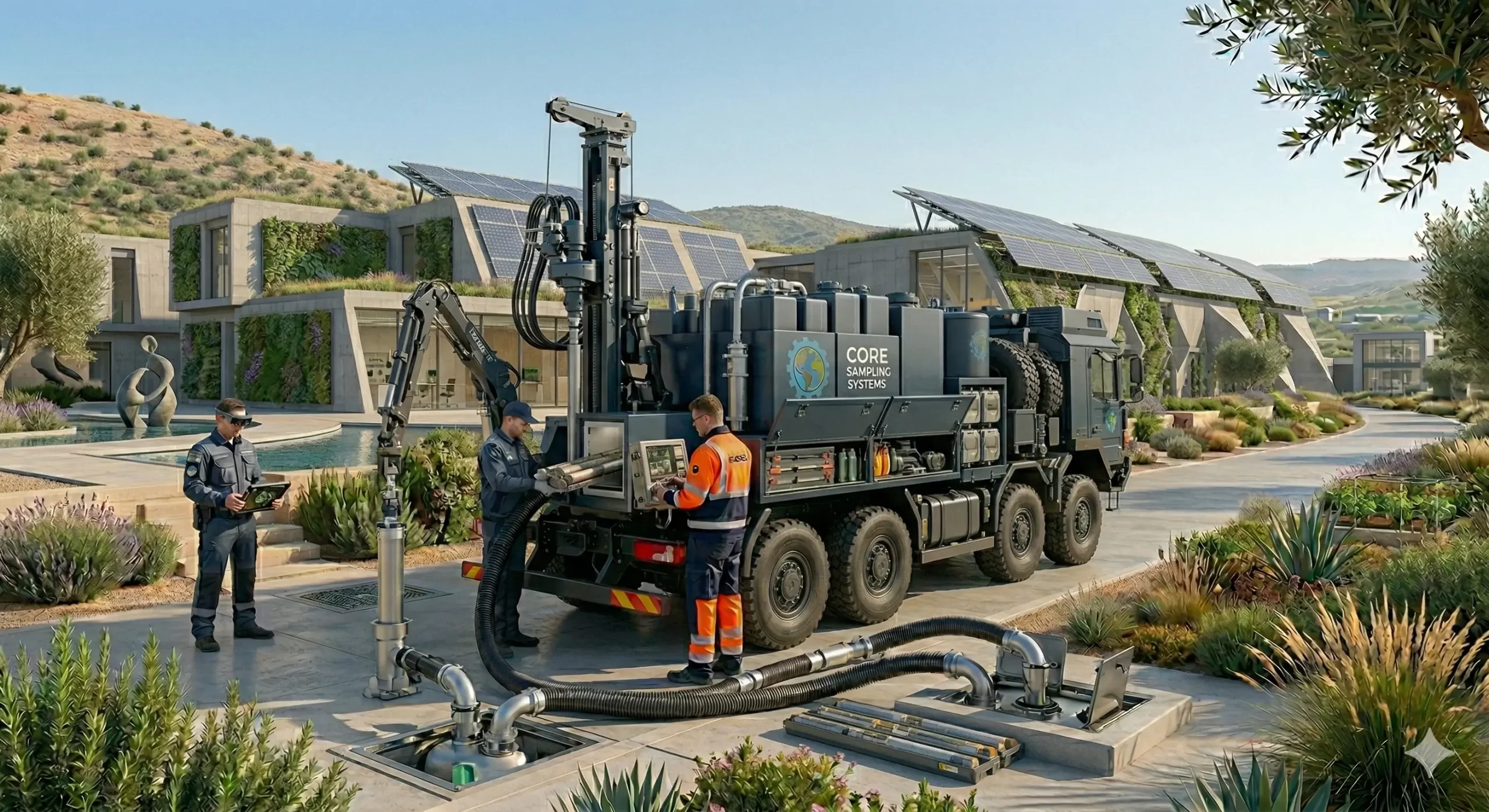
To illustrate the severe consequences of neglect, consider this representative case study based on consolidated events from Clackamas County public health records.
Case File: 2024-CC-081B
- Subject Property: A 3-bedroom residence on a 1.2-acre parcel, with a 1,250-gallon standard gravity-fed system installed in 1998.
- Initial Condition: The homeowners had resided at the property for 12 years and had never pumped the septic tank. They reported slow drains for over a year, which they attempted to resolve with chemical drain cleaners—a direct violation of best practices, as these chemicals can harm the anaerobic bacteria and corrode concrete components.
- Incident: In March 2024, during a period of heavy rainfall, the system experienced a total hydraulic failure. Effluent began to surface in the backyard and backed up into the home’s downstairs shower, causing significant property damage and creating a Category 3 water loss event (blackwater).
- Regulatory Intervention: A neighbor reported the surfacing sewage to the Clackamas County Public Health Division. An inspector was dispatched and documented the failure, issuing a Notice of Violation. The homeowner was given 10 days to abate the public health nuisance.
- Financial Ramifications:
- Emergency Pump-Out: Required immediately to stop the backup. Cost: $1,150 (included after-hours fee).
- Initial Civil Penalty: A fine of $500 was levied by the county for creating a public health hazard.
- Interior Water Damage Remediation: Professional cleaning and restoration of the contaminated bathroom. Cost: $4,500.
- System Diagnosis: A certified septic designer was hired to assess the drain field. It was determined to be in a state of complete biological failure. Cost: $800.
- New System Design & Permitting: The original drain field could not be repaired. A new, more complex pressure-distribution system was required due to poor soil conditions. Design and permit fees. Cost: $3,500.
- New System Installation: Full excavation and installation of the new tank and drain field. Cost: $28,000.
- Total Financial Impact: The homeowner’s failure to perform approximately $2,400 in routine maintenance (four pump-outs over 12 years) resulted in a total corrective cost of $38,450, not including the loss of property use and significant personal stress. This case underscores that septic maintenance is not an optional expense; it is a critical investment in infrastructure and a legal obligation.
Field Verification Reports
⭐⭐⭐⭐⭐
“The technician arrived for our scheduled maintenance pump in Bend and performed a full diagnostic. He identified that our effluent filter was degrading and close to failure, a detail missed by our previous provider. He measured the sludge and scum layers to the inch and provided a detailed report for our records. The professionalism and adherence to technical standards were exemplary. This is how you prevent the $30,000 problems you hear about.” Discover why so many neighbors recommend our septic tank services in Athens, TX.
– David K., Deschutes County, OR
⭐⭐⭐⭐⭐
“We had a septic alarm go off on a Sunday morning at our home near Tillamook. The response was rapid and professional. The technician did not just pump the tank; he diagnosed the issue as a failed pump in our ATT (Advanced Treatment Technology) system. He explained the regulatory requirements for ATT systems in Oregon, stabilized the situation, and coordinated the necessary certified repair. Their knowledge of DEQ rules saved us from potential fines.” Need immediate assistance? Find trusted septic tank pumping in Georgetown, TX right away.
– Susan M., Tillamook County, OR
What Are the Frequently Asked Questions Regarding Septic System Compliance and Maintenance?
Is a DEQ-certified maintenance provider mandatory for my system type in Oregon?
Yes, for certain system types. While a standard gravity septic system does not legally require a recurring maintenance contract, any system with advanced components does. According to Oregon Administrative Rules (OAR 340-071-0220), Alternative Treatment Technologies (ATTs) and complex systems like sand filters or pressure distribution systems require a valid service contract with a DEQ-certified maintenance provider at all times. Failure to maintain this contract is a compliance violation and can invalidate the system’s operating permit.
What is the maximum permissible sludge depth before pumping is legally required?
Oregon DEQ standards, consistent with EPA guidelines, dictate that a septic tank must be pumped when the total combined volume of the settled sludge layer and the floating scum layer displaces one-third (33.3%) of the tank’s liquid working capacity. For a standard 4-foot deep tank, this is typically when the sludge and scum layers combined reach a thickness of 16 inches. Allowing accumulation beyond this point significantly reduces effluent retention time, leading to the discharge of solids into the drain field, which is the primary cause of system failure.
Can I use chemical or biological additives to prolong the period between pump-outs?
The Oregon Department of Environmental Quality (DEQ) does not recommend the use of septic system additives. There is no independent, peer-reviewed scientific data that proves these products reduce the need for routine pumping. In fact, some chemical additives (particularly those containing solvents) can disrupt the natural anaerobic digestion process, inhibit bacterial action, and potentially contaminate groundwater. Certain additives can also cause solids to become suspended and flushed into the drain field, accelerating its failure. The only approved method for removing accumulated solids is physical extraction via pumping.
What are the legal liabilities if my failing system contaminates a neighboring well?
The legal liabilities are substantial and multi-faceted. First, you will be in violation of the federal Clean Water Act and state environmental regulations, leading to significant fines from the EPA and Oregon DEQ. Second, you will be subject to civil litigation from the affected neighbor. Under tort law, you can be sued for damages including the cost of drilling a new well, installing a water treatment system, any medical bills resulting from consumption of contaminated water (e.g., from E. coli or nitrate poisoning), and diminution of their property value. The financial responsibility for full environmental remediation falls squarely on the owner of the failing system. This is a liability that standard homeowner’s insurance policies often exclude.
Technically Reviewed By:
BlixBase Master Plumber Team
20+ Years Septic Industry Experience | Certified System Inspectors