
Don’t Even THINK About It: A Veteran’s Rant on Cars vs. Septic Fields
Alright, settle down and listen up. For thirty years, I’ve been crawling in the mud, fixing the messes people make because they treat their yard like a parking lot. You think that patch of grass is just grass? Wrong. It’s the lungs of your entire plumbing system. Your septic tank is the stomach, digesting the nasty stuff , but the drain field—or leach field, whatever you wanna call it—is where the system breathes. It’s where the treated wastewater slowly percolates back into the soil. Think of it like the radiator on your truck; if you clog it with mud, the whole engine overheats. You park a 4,000-pound SUV on it, and you’re not just crushing grass, you’re giving your system a fatal case of pneumonia. And trust me, septic pneumonia is an expensive cure. ️
What Folks Are Saying…
⭐⭐⭐⭐⭐ – The Miller Family
“He’s a bit of a grump, but he saved us from a complete septic catastrophe. He diagnosed our compacted drain field (from where my brother-in-law parked his RV) in minutes. Explained everything about soil PSI and biomat formation. Didn’t just fix the problem, he taught us how to prevent it. Worth every single penny.”
Facing a drain field failure? Our team in Monroe, LA is ready to diagnose the problem.
⭐⭐⭐⭐⭐ – Sarah Jenkins
“Called him out for slow drains. I thought it was a clog. He took one look at the tire ruts in my side yard and knew immediately. He used some fancy soil probe to show me how compacted the ground was. Honest, brutally honest, but he knows his stuff. My system’s running better than ever.”
If you reside in the area, you can learn more about our septic services in Kermit, TX.

Real-Life Horror Story: The Henderson’s Holiday Catastrophe
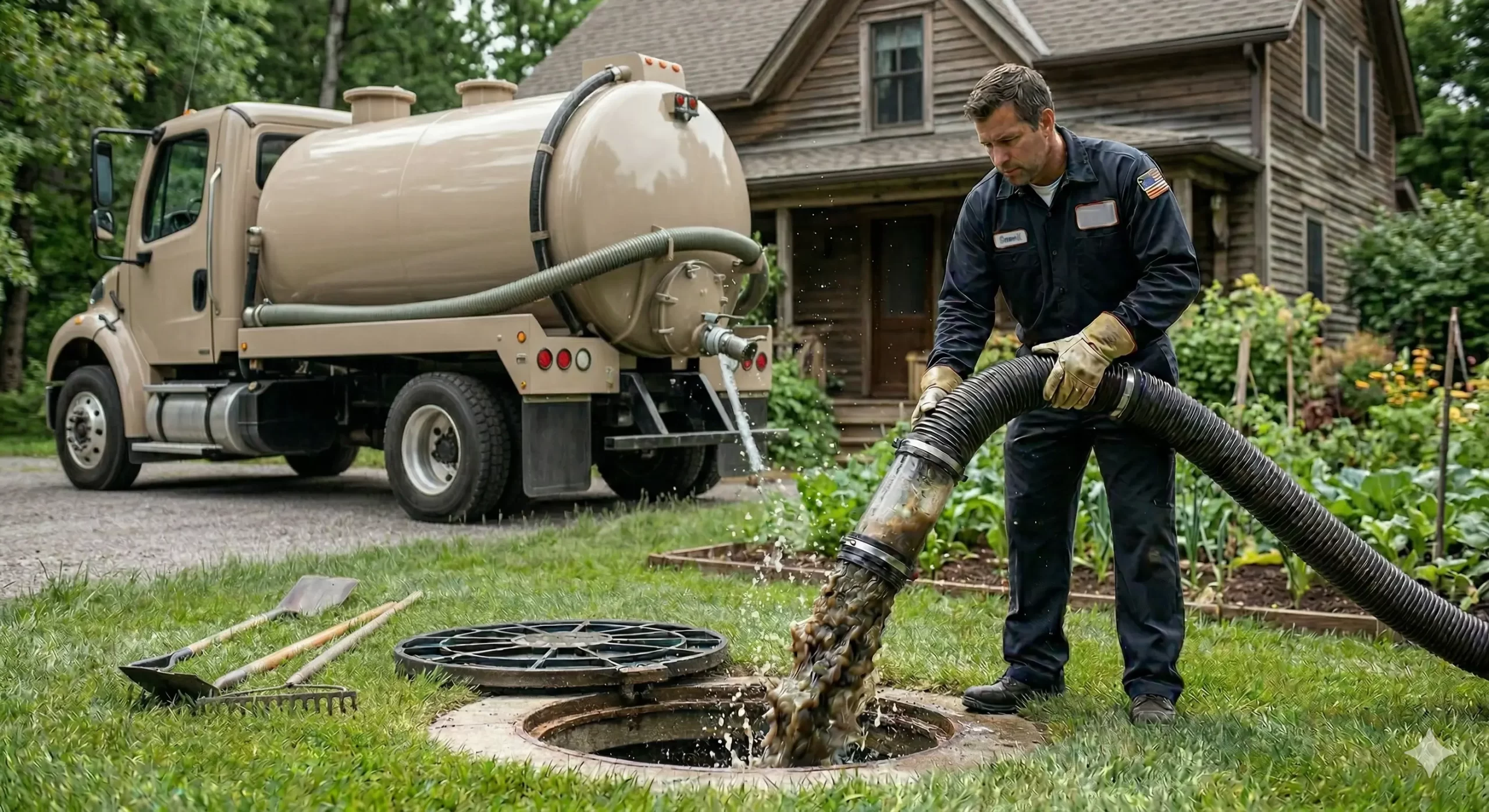
Let me tell you about the Hendersons, back in ’19. Nice people. Had the whole family coming for Thanksgiving. Their driveway was full, so they told Uncle Bob to park his 28-foot Class C motorhome on the side yard. Seemed harmless, right? That rig weighs about 12,000 pounds, putting about 3,000 pounds of pressure on each tire patch. For a week, it sat there, right over the third lateral line of their drain field. They live in an area with heavy clay soil, which is already a nightmare for percolation. Protect your property value by working with certified septic inspectors in Madison, AL.
Thanksgiving Day arrives. The dishwasher’s running, people are showering, toilets are flushing. Around 3 PM, the downstairs toilet gurgles like a dying monster. Then, the shower drain in the basement starts backing up with gray water. Pure chaos. I get the emergency call. I show up, and the first thing I ask is, “What changed?” They mention the RV. I walk out to the yard, and even though the rig is gone, I can see the indentations. We sent a camera down the line, and sure enough, the 4-inch perforated PVC pipe looked like a crushed soda can. But that wasn’t the worst part. The real damage was invisible.
The weight had compacted the soil from its normal state to something as dense as cheap concrete. The soil’s ability to accept water (the ‘percolation rate’) had dropped by an estimated 70%. Water couldn’t escape the pipe, so it just backed right up into the house. The Hendersons didn’t just pay for a new lateral line; they had to pay for us to excavate 20 tons of compacted clay soil and replace it with engineered sand and new topsoil. A holiday parking spot cost them over $9,000. Don’t be the Hendersons.
Progression of Failure: The Timeline of a Bad Decision
This isn’t an overnight disaster. It’s a slow, painful death for your system. Here’s how it usually plays out when you start treating your leach field like a driveway. Don’t ignore the warning signs. Reach out to our septic maintenance crew in Hondo, TX today.
- Year 1 (Occasional Parking – e.g., a sedan for a weekend): Minor surface compaction. The grass might look a little mashed, but the system functions normally. The soil’s natural elasticity handles the temporary stress. No internal damage… yet. You got lucky.
- Year 2-3 (Regular Parking – e.g., a daily driver SUV): Compaction now reaches 6-10 inches deep, into the crucial soil layers around your pipes. The soil’s porosity is reduced by up to 25%. You might notice the toilet is a little slow to flush after a three-day rainstorm. The ground above the tire tracks stays soggy longer than the rest of the yard. This is your warning shot.
- Year 4 (Heavier Vehicle / Continued Abuse): Now we’re talking business. The PVC or Infiltrator chambers start to deform under the load—a process we call ‘pipe ovalization’. Hairline cracks can form. The biomat (the necessary bacterial slime layer) can’t process effluent correctly and gets ‘smeared’ into the soil, clogging it permanently. You’ll smell a faint septic odor on damp days. The grass over the lines might start dying off in patches.
- Year 5+ (Catastrophic Failure): The pipes are fully or partially crushed. The surrounding soil is so compacted it’s virtually waterproof. Effluent has nowhere to go but up to the surface or back into your house. You have a constant sewage swamp in your yard and toilets that won’t flush. Congratulations, you’ve just turned a $15,000 asset into a $15,000 liability. Full system replacement is your only option.
The Brutal Cost Breakdown: Parking Fee vs. Repair Bill
You think you’re saving time by parking on the lawn. Let me show you what that convenience can really cost you. This isn’t theoretical; these are numbers from real jobs I’ve had to do. Property owners in the region trust our Alabaster, AL septic system services for long-term reliability.
| Expense Item | Typical Cost | Grumpy Veteran’s Notes |
|---|---|---|
| Emergency Service Call-Out Fee | $250 – $500 | You’re paying extra because it’s always after 5 PM on a Friday. Always. |
| Diagnostic Camera Inspection | $300 – $700 | To see exactly how bad you crushed the pipes. |
| Mini-Excavator & Operator (per day) | $800 – $1,500 | This is for digging up just ONE damaged line. |
| Perforated Pipe / Infiltrator Chambers (per foot) | $15 – $40 | The new stuff is flimsy compared to the old Schedule 40. It crushes easier. |
| Engineered Fill/Gravel & Topsoil (per truckload) | $400 – $900 | You can’t reuse the compacted dirt. It’s garbage now. |
| Full Drain Field Replacement | $8,000 – $20,000+ | The grand prize for ignoring good advice. Includes permits, soil tests, and my unending disappointment. |
Troubleshooting a Suspected Compaction Zone
So you’ve been parking on the field and now you’re sweating. How do you know if you’ve already done damage? Look for the subtle signs, not just a sewage lake in your yard.
- Selective Soggy Spots: After a rain, does the whole yard dry out except for two parallel tracks? That’s a classic sign of localized compaction. The water is pooling because it can’t soak in where the tires have been sitting.
- The Gurgle Test: Have someone flush all the toilets in your house at once while you stand outside near the drain field. If you hear a distinct gurgling or bubbling sound coming from the ground, it means the effluent is struggling to exit the pipes. It’s hitting a wall of compacted soil.
- Stunted Growth: Healthy drain fields have lush grass. But if you see areas directly over the lines where the grass is thin, yellow, or dead, it’s suffocating. The soil is too dense for roots to penetrate or for air to exist, which is critical for the aerobic bacteria that treat the wastewater.
Remember, your drain field pipes are often buried shockingly shallow—sometimes as little as 6 to 18 inches below the surface. That’s not nearly enough to distribute the concentrated pressure from a vehicle tire.
Maintenance Tips From Someone Who’s Seen It All
This isn’t rocket science. It’s just about not being lazy.
- Mark Your Territory: You got a map of your system when it was installed. If you lost it, call the county health department; they might have it. Mark the four corners of your drain field. Use landscaping rocks, a small garden bed with shallow-rooted plants (like ferns or groundcovers), or simple marker posts. Create a visual barrier so no one “forgets.”
- Educate Your Guests: When people come over, tell them where they can and can’t park. Don’t be shy about it. It’s your house, your $15,000 system. They can walk an extra 50 feet from the street.
- Beware of Construction: Getting a new roof? A deck built? Make sure you tell the contractors their heavy trucks and equipment are forbidden from the drain field area. I’ve seen roofers park a 10-ton supply truck on a field and destroy it in an afternoon.
- No Patios, No Pools, No Sheds: This should be obvious, but it’s not just about driving. Don’t build anything over your drain field. Not even an “temporary” above-ground pool. Anything that covers or compacts the soil is a death sentence for the system.
Frequently Asked (and Annoying) Questions
But what about just a small car, like a sedan? Is that really a problem?
Yes, it’s still a problem. Stop trying to find loopholes. It’s not about the total weight of the car as much as the pressure exerted per square inch (PSI). A 3,000 lb car puts about 750 lbs on each tire, concentrated into a tiny patch of about 20-30 square inches. That’s over 30 PSI of direct, ground-compacting pressure. Your soil is designed to handle rain and foot traffic, not that. It’s cumulative damage. Don’t do it.
Can I drive my riding lawn mower over the drain field?
Generally, yes, a standard residential riding mower is okay. They are designed for lawns and distribute their weight more evenly. A typical lawn tractor weighs 400-600 lbs, which is usually not enough to cause deep compaction. However, if you have very wet, saturated soil (especially clay soil after a storm), try to wait for it to dry out. Making ruts with a mower is still a form of surface compaction. A zero-turn mower is usually better than a tractor-style one due to its weight distribution.
My drain field is in the only spot I can build a new driveway. What are my options?
You have two options, and they’re both expensive. Option 1: Relocate the entire drain field to another suitable part of your property. This involves new soil tests, permits, and a full installation, costing anywhere from $10,000 to $25,000. Option 2: Install a special, traffic-rated septic system. There are products like H-20 rated chambers and pipes encased in concrete that can be driven over. This is a highly specialized, engineered solution that can easily double or triple the cost of a standard drain field installation. There is no cheap way to pave over a septic system.
How can I tell exactly where my drain field is if I lost the plans?
First, check with your local health or building department. They often keep records (‘as-builts’) on file. If that fails, a professional can help. On a dewy morning, the trenches may appear as distinct strips because the grass over them holds moisture differently. In a light snow, the snow might melt faster in lines over the warmer trenches. A pro can also use a thin metal probe rod to gently feel for the gravel or chambers underground to map out the system boundaries without any digging.
Technically Reviewed By:
BlixBase Master Plumber Team
20+ Years Septic Industry Experience | Certified System Inspectors