
Introduction: The Non-Negotiable Reality of Onsite Wastewater Treatment Systems
A denial of a home warranty claim for a failing Onsite Wastewater Treatment System (OWTS), colloquially known as a septic system, is not a customer service issue. It is a critical engineering and public health event. The home warranty provider has made an assessment, often flawed, that absolves them of financial liability. Your objective is to deconstruct their assessment using empirical data, regulatory citations, and established engineering principles. This document serves as a procedural manual for constructing a technically irrefutable appeal. We will not be appealing to emotion; we will be presenting a case file built on hydraulics, soil science, and municipal code. Proceed with precision. ️ Protect your property value by working with certified septic inspectors in Clyde, TX.

Case Study: The Henderson Residence, Fayette County, Georgia
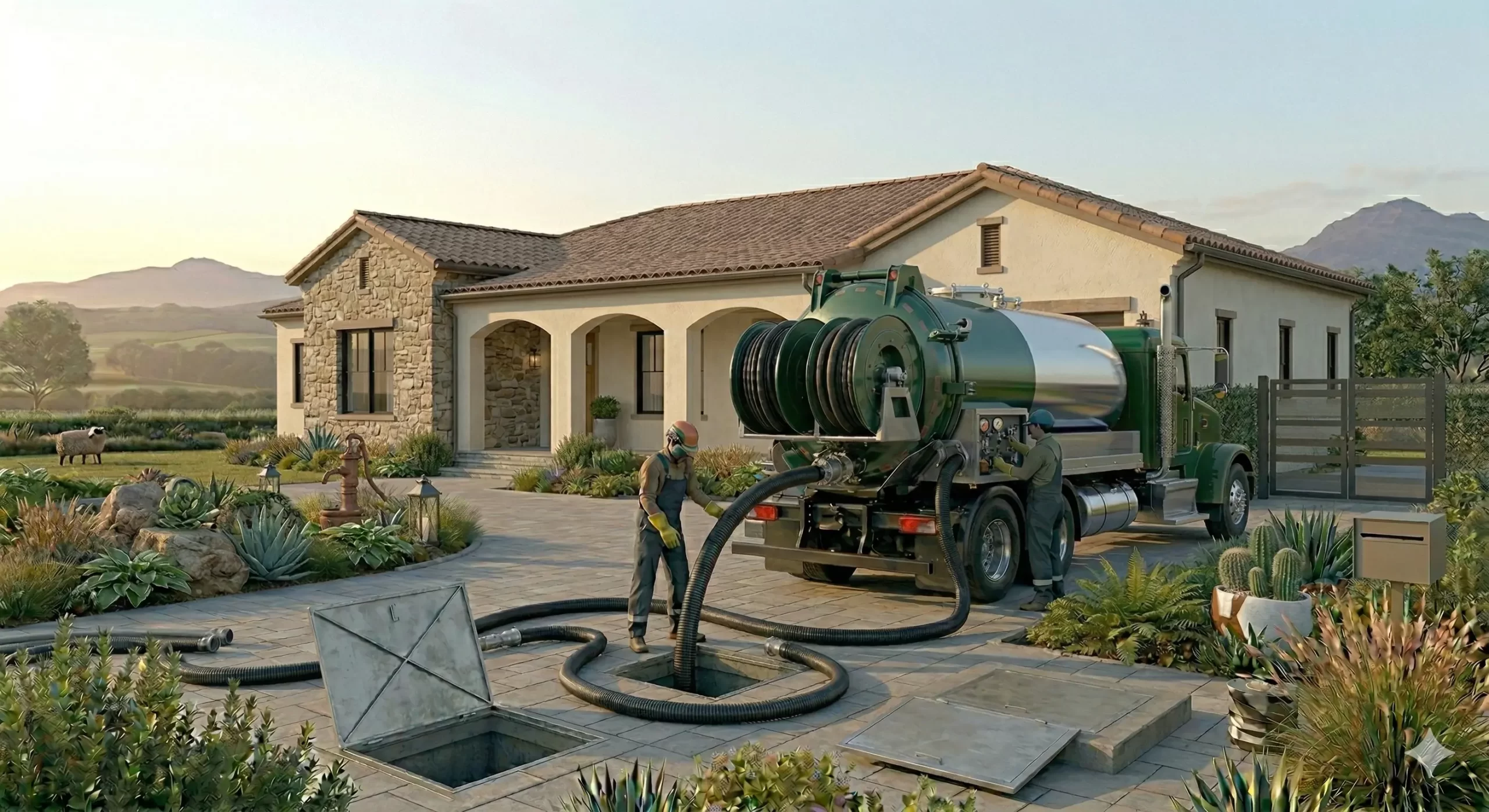
Initial Presentation: The client reported classic Grade 3 failure symptoms: hydraulic surging in lower-level plumbing fixtures, intermittent sewer gas odor (H₂S) near the drain field, and abnormally lush vegetation over the lateral lines. The property is situated on Cecil series soil, a fine, kaolinitic, thermic Typic Kanhapludult—in layman’s terms, unforgiving Georgia red clay with a low percolation rate, typically below 60 minutes per inch (MPI).
Home Warranty Response: The warranty provider dispatched a general plumbing contractor. Their invoice noted “sewer line clog,” and they performed a mechanical auger service on the main building drain, a fundamentally incorrect diagnosis. The claim was subsequently denied, citing a clause for “improper maintenance” and alleging the homeowner failed to prevent clogs. This is a common and technically baseless deflection.
Independent Forensic Analysis: Our firm was retained to conduct a Level 2 forensic evaluation. The protocol included:
- Tank Stratification Measurement: A Sludge Judge® was deployed to measure the scum and sludge layers. The sludge layer was at 35% of the tank’s liquid depth, within acceptable parameters preceding a scheduled pump-out, disproving the “improper maintenance” claim regarding tank solids.
- Soil Profile Analysis: Two soil borings were executed to a depth of 72 inches adjacent to the drain field. The analysis confirmed the presence of the Cecil clay loam and identified the seasonal high water table at 24 inches below grade, a critical finding.
- Hydraulic Load Calculation: The 4-bedroom residence, per Georgia Department of Public Health, Environmental Health Section, Chapter 511-3-1, requires a system designed for a minimum of 600 Gallons Per Day (GPD). Water meter readings indicated an average household usage of 280 GPD, well below design capacity.
- Drain Field Investigation: A sewer camera inspection revealed no structural collapses. However, a digital manometer pressure test showed excessive backpressure in the lateral lines, indicative of a clogged biomat and a drain field that had reached hydraulic failure. The failure was due to the long-term interaction of effluent with low-permeability clay soil, exacerbated by the high water table.
The Appeal Dossier: A formal engineering report was submitted to the warranty provider’s arbitration board. The report cited GA DPH Chapter 511-3-1, which mandates a minimum of 24 inches of vertical separation between the trench bottom and the seasonal high water table for conventional systems. Our findings proved the original installation was non-compliant or, at best, marginal. The failure was a direct result of a system improperly sited and designed for the known local soil conditions, not homeowner negligence. The appeal included the soil boring logs, hydraulic calculations, and a notarized affidavit. The denial was overturned, and the warranty provider funded a full replacement with a code-compliant mound system, valued at over $22,000.
Cost Analysis: The Financial Imperative of a Data-Driven Appeal

The costs associated with diagnosing a septic failure are not expenses; they are investments in the evidentiary record required to compel your warranty provider to act. Attempting to save money on diagnostics is the most common and fatal error a homeowner can make. Below is a breakdown of typical costs required to build your technical case file. All figures are estimates and subject to regional variation. ️ Property owners in the region trust our Atlantic Beach, FL septic system services for long-term reliability.
| Service / Component | Diagnostic Cost Range (USD) | Repair/Replacement Cost Range (USD) | Regulatory Significance |
|---|---|---|---|
| NAWT-Certified Inspection | $450 – $800 | N/A | Provides an impartial, expert third-party report essential for appeals. |
| Septic Tank Pumping | $300 – $600 | N/A (Maintenance) | Required for internal tank inspection; provides proof of maintenance. |
| Sewer Camera Inspection | $350 – $700 | $1,500 – $25,000+ | Identifies structural failures (e.g., crushed pipes, root intrusion), a common warranty exclusion. |
| Soil Percolation & Profile Test | $1,000 – $2,500 | N/A | Core evidence for proving system-site incompatibility; required by health departments for new designs. |
| Full Drain Field Replacement | N/A | $8,000 – $40,000+ | The ultimate consequence of failure; subject to extensive permitting and inspection. |
Proactive Maintenance Protocols to Preemptively Thwart Warranty Denials
The most frequent denial justification is “lack of routine maintenance.” To render this claim indefensible, you must maintain a meticulous log that meets or exceeds municipal and state requirements. This is not merely about pumping the tank; it is about managing the entire OWTS as the biological treatment facility it is. For homeowners nearby, we highly recommend calling our Carrollton, TX wastewater professionals.
Progression of Septic System Failure: A Timeline
Understanding the degradation curve of an OWTS is critical. Failure is a process, not an event. Your maintenance log must demonstrate your interventions at the appropriate stages.
- Year 1-2 (Optimal Function): Effluent meets treatment standards (Biochemical Oxygen Demand [BOD5] < 30 mg/L, Total Suspended Solids [TSS] < 30 mg/L). Anaerobic digestion is efficient. Scum and sludge layers accumulate predictably. Your log should note annual visual inspections of baffles and tank condition.
- Year 3-4 (Early Warning / Intervention Required): The combined thickness of scum and sludge occupies >25-33% of the tank’s liquid depth (per EPA guidelines). This is the mandatory pumping interval. Failure to pump at this stage is a legitimate cause for a maintenance-based denial. Log the pumping date, gallons removed, and hauler’s name.
- Year 5-7 (Accelerated Failure): If pumping was deferred, solid waste carryover begins to clog the effluent filter and the soil absorption system (drain field). A biomat of excessive thickness forms, reducing the soil’s hydraulic acceptance rate. Log any slow drain issues or gurgling sounds.
- Year 8+ (Catastrophic Failure & Public Health Hazard): The drain field is hydraulically overloaded. Untreated or partially treated effluent surfaces on the ground or backs up into the residence. The system is now in violation of the Clean Water Act and local health codes. At this stage, a denial is almost certain and difficult to fight without prior documentation of attempted remediation.
Chemical Additives: A Warning
Do not use commercial septic tank additives. There is no independent, peer-reviewed scientific data supporting their efficacy. In fact, many additives, particularly those containing yeast, bacteria, or enzymes, can re-suspend solids, forcing them into the drain field and accelerating its failure. The EPA has studied this and does not recommend their use. Documenting the use of additives can, in some cases, be used by a warranty company to void your coverage.
Advanced Troubleshooting & Evidence Acquisition for a Formal Appeal ️
The core of your appeal is your ability to prove, with quantifiable data, that the failure falls within the warranty’s scope of coverage. This requires a systematic, forensic approach. The burden of proof is on you, the homeowner, to dismantle the provider’s reason for denial. We understand the specific environmental rules for your region. Learn more from our experts in Southside, AL.
- Secure All Communications in Writing: Cease telephone communications. All correspondence with the warranty provider must be conducted via certified mail or email to create a permanent, time-stamped record. Request the official denial letter, which MUST specify the exact clause in your contract that justifies their decision.
- Retain an Independent, Certified Professional: The technician sent by the warranty company is not working for you. You must hire your own expert. This individual should be, at a minimum, certified by the National Association of Wastewater Technicians (NAWT) or a state-equivalent regulatory body. Their role is to generate an impartial, data-based report on the system’s condition and cause of failure.
- Commission a Full Diagnostic Suite: Authorize your certified inspector to perform the necessary tests to build your case. This is not the time for fiscal conservatism. You need data points, not opinions.
- Compile the Appeal Dossier: Your appeal is not a letter; it is a technical report. It must include: The denial letter, your complete maintenance log, the independent inspector’s full report (with their credentials and certification number), all diagnostic data (soil logs, camera footage reports, hydraulic load calculations), and clear photographs of any system components or failure symptoms.
Specialized Diagnostic Equipment: The Professional’s Toolkit
The tools used by a true wastewater professional go far beyond a shovel and a sewer snake. The data from these instruments can form the bedrock of your appeal.
- Sludge Judge®: A 1-inch diameter clear polycarbonate tube with a check valve, assembled in sections. It is lowered to the bottom of the septic tank to extract a core sample, allowing for precise measurement of the scum and sludge layers to within 1/4 inch. This data directly refutes unsubstantiated claims of “lack of pumping.”
- Soil Penetrometer: A calibrated, spring-loaded steel rod with a pressure gauge. It is pressed into the soil of the drain field to measure its compaction in pounds per square inch (PSI). This can diagnose failures caused by vehicle traffic or poor initial site preparation, which may be covered events.
- Optical Brightener Detector: A handheld, long-wave ultraviolet (UV) light source. When shone on areas of suspicious ground moisture at night, it causes residual optical brighteners from laundry detergents in surfacing effluent to fluoresce a brilliant blue-white, providing irrefutable photographic evidence of a surface failure.
- Effluent Filter Porosity Gauge: A set of precision-milled pins of varying diameters. These are used to measure the degree of blockage (biomatting) on the effluent filter’s mesh screen, providing a quantifiable metric for solid waste carryover from the tank.
- Digital Manometer: An electronic pressure sensor used to perform a pressure/vacuum test on the drain field’s lateral lines. It can detect minute leaks, blockages, or verify hydraulic equilibrium across the distribution box outlets, which a camera cannot always see.
Independent Verification Reports
Robert Chen, Gwinnett County, GA
⭐⭐⭐⭐⭐
“My home warranty gave me the runaround for three months, blaming our clay soil. After a complete forensic analysis from this team, we had a 40-page report citing state codes and soil mechanics. We submitted the appeal, and the denial was overturned in less than two weeks. The warranty company ended up paying for a new drip irrigation drain field. This isn’t just a septic service; it’s a legal and engineering task force.”
Maria Sanchez, Cherokee County, GA
⭐⭐⭐⭐⭐
“They denied our claim saying our failed drain field was a ‘pre-existing condition.’ The inspection report we commissioned was so thorough—with historical satellite imagery and permit records—that it proved the system was failing due to a design flaw from the builder 15 years ago, a covered peril. The level of detail was astronomical. Don’t even talk to your warranty company without this kind of ammunition.” For a free consultation, simply reach out to our office serving Belleview, FL.
Frequently Asked Questions (Regulatory & Technical)
Can a home warranty legally deny a claim for a system that passed a home inspection?
Yes. A standard home inspection is a visual, non-invasive assessment and does not constitute a full functional or code-compliance analysis of a septic system. A warranty company will argue that the inspector could not have seen internal tank conditions, biomat development, or soil saturation. To appeal, you need a comprehensive OWTS inspection report from a certified wastewater professional that specifically tests these parameters, which is far more rigorous than a standard home inspection.
What specific EPA regulation governs residential septic systems?
The EPA does not directly regulate individual residential septic systems. Regulation is delegated to state and local health departments. The EPA provides guidance documents, such as the “Onsite Wastewater Treatment Systems Manual” (EPA/625/R-00/008), which form the basis for most state codes. Your appeal must cite specific chapters and verses from your state and county health department’s environmental codes, not broad EPA guidelines. For example, in Georgia, it is the “Rules and Regulations for On-Site Sewage Management Systems, Chapter 511-3-1.”
Is “lack of maintenance” a valid reason for denial if I have pumping receipts?
It depends. Pumping receipts are strong evidence, but a warranty company can still claim other forms of neglect. For instance, they may argue that you introduced harmful chemicals (bleach, drain cleaners), non-biodegradable items, or experienced hydraulic overload from excessive water use. Your defense must include a complete maintenance log, water usage records (from your utility bills), and a statement from your certified inspector confirming that the failure mechanism (e.g., soil saturation, baffle failure) is unrelated to the contents of the tank.
What are the legal consequences of a failing septic system?
The legal consequences are severe. A failing septic system that surfaces effluent is discharging raw sewage, which is a violation of the federal Clean Water Act and state/local environmental laws. The local health department can issue a Notice of Violation, which may come with daily fines (often $100-$1,000 per day) until the system is repaired or replaced. In extreme cases, they can condemn the property, rendering it uninhabitable. This regulatory pressure can be leveraged in your appeal to demonstrate the non-negotiable urgency of the repair.
How do I prove a septic problem was not a “pre-existing condition”?
Proving a condition is not pre-existing requires a forensic timeline. Your expert must demonstrate that the system was functional at the time the warranty took effect. This can be accomplished by analyzing the sellers’ disclosure documents, any septic inspection reports from the time of sale, and by conducting a forensic analysis that shows the failure mechanism is recent or progressive. For example, a sudden structural failure like a crushed pipe caused by a vehicle after you moved in is clearly not pre-existing. A slow, progressive soil failure is more complex, but can be argued if the system was operational and not exhibiting symptoms at the start of the contract term.
Technically Reviewed By:
BlixBase Master Plumber Team
20+ Years Septic Industry Experience | Certified System Inspectors