
Emergency Well Pump Repair in Deer Park, TX
Down here in Deer Park, folks often forget we’re sitting right on top of a dynamic groundwater system. The harsh truth is, pumping too much water has led to significant land subsidence in Harris County over the decades, which can stress well casings and infrastructure. We’re also dealing with the constant threat of saltwater intrusion in certain zones, making proper well construction & maintenance critical.
Our groundwater primarily comes from the Chicot & Evangeline aquifers. These aren’t like the solid rock formations you see out west; they’re a complex series of sand, silt, and clay layers. The water quality can vary significantly even within a few miles, depending on the depth and local geology.
When a homeowner decides to go with a cheap, undersized pump here, they’re setting themselves up for failure. The abrasive sands, corrosive elements, and high demand from humid summers put immense strain on equipment. A bargain pump just won’t last in our conditions, leading to early breakdowns & costly repairs.
Fast Local Service & Diagnostics
Calls are routed to a licensed local well professional.
Well Pump Repair in
Deer Park
Deer Park & Harris County Well Stats
Harris County has thousands of registered wells, though many domestic wells are older & may not be registered. The majority serve industrial or municipal purposes, but a significant number are for irrigation & residential use, especially in less dense areas surrounding Deer Park. Average well depths commonly range from 300 to 800 feet, with some municipal wells exceeding 1,000 feet. Water tables have generally stabilized or even risen in some areas due to HGSD regulations, but past over-pumping led to significant subsidence.
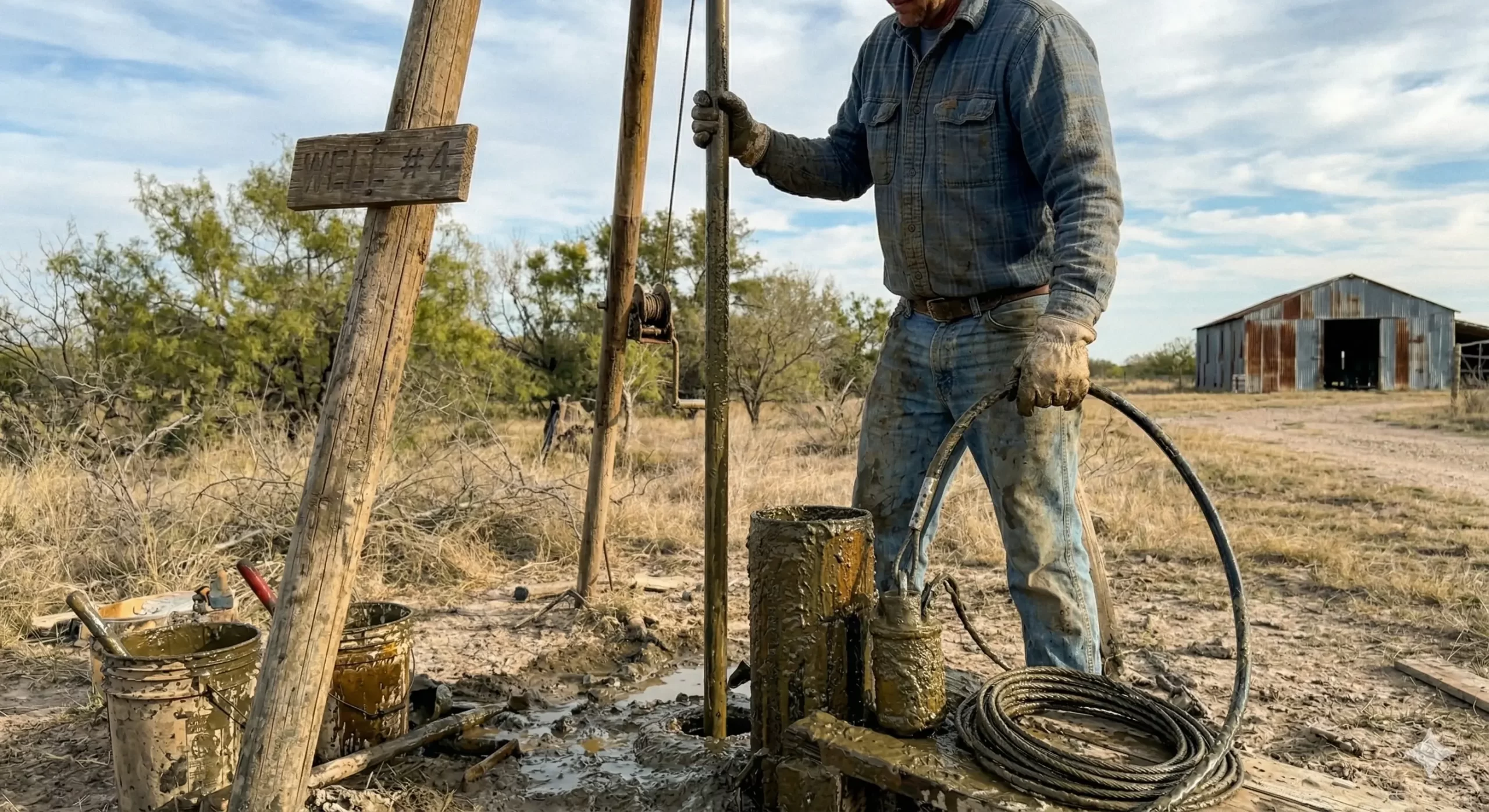
Pulling a pump in Deer Park ain’t like pullin’ one out of a shallow hand-dug well. While we don’t often hit solid rock, many wells are deep, sometimes 500-800 feet, through unconsolidated sand & clay. The weight of the pipe and pump itself, combined with potential casing issues or sand bridging, makes it a substantial job. Sometimes, restricted access on developed residential lots means we can’t get a full-sized rig right over the well, adding to the complexity & labor.
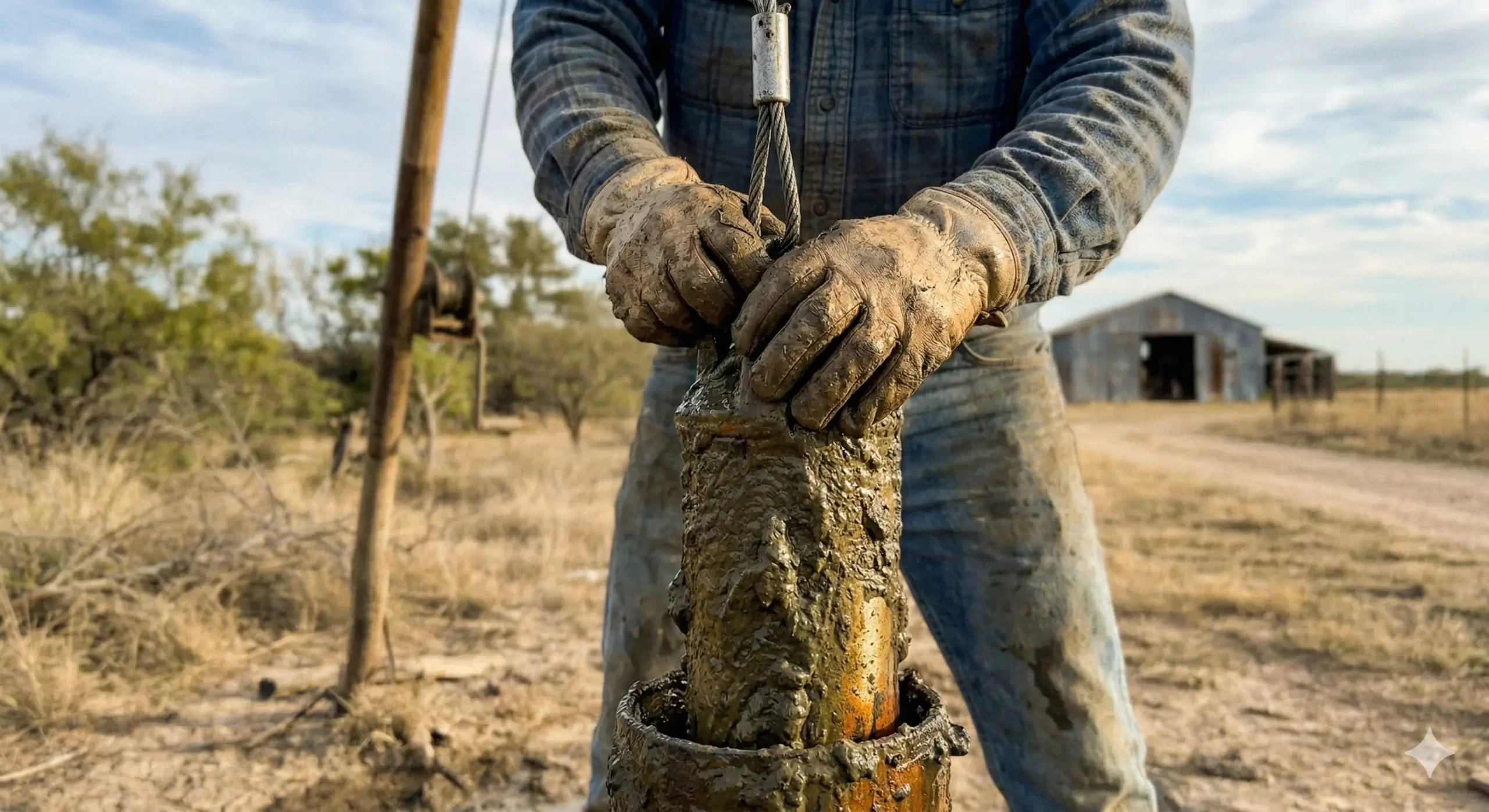
For anything but the shallowest well, we need a dedicated well service rig, or at minimum, a heavy-duty crane truck with a boom capable of lifting thousands of pounds of pipe & pump. We’re also talking about specialized safety equipment, pipe wrenches, submersible pump pullers, and diagnostic tools to ensure we don’t damage the well or surrounding property. It’s a big investment in equipment to do the job right & safe.
Spring Well Maintenance in Texas
Heavy spring rains can cause surface runoff to breach well caps. We strongly recommend testing your water for coliform bacteria and inspecting the sanitary seal.
Save $500+ on Replacements
Via the TX Energy Co-op VFD Upgrade Program
80°F in Deer Park
Local Aquifers & Geology
The primary groundwater sources in Deer Park include the The Chicot & Evangeline aquifers are the primary water sources for Deer Park. These are part of the Gulf Coast Aquifer system, characterized by interbedded layers of sand, silt, and clay. The Chicot, being shallower, is more susceptible to surface contamination but also often yields water with higher levels of iron & manganese. The deeper Evangeline aquifer provides generally better quality water but requires deeper, more expensive wells. Both are unconfined to semi-confined, meaning they are recharged by rainfall but also subject to local pumping effects & potential subsidence.. Drilling through the local Deer Park sits on the flat, coastal plains of Texas. The soil profile typically consists of thick layers of highly plastic, silty clays and sandy loams. These ‘gumbo’ clays exhibit high shrink-swell potential, meaning they expand significantly when wet & contract when dry. This can put immense stress on well casings near the surface. Below these clays, you’ll find extensive sand layers, which are the water-bearing zones. Permeability varies, but the presence of fine sands can lead to sand production in wells if not properly screened & developed. means that average well depths range from 300 ft – 800 ft, with some irrigation or municipal wells exceeding 1,000 ft..
Due to these geological factors, local homeowners frequently struggle with Without a doubt, the #1 mechanical failure for pumps in Deer Park is sand abrasion, followed closely by corrosion. The unconsolidated nature of our aquifers means fine sand is often present, acting like sandpaper on impellers & motor bearings. Combined with naturally occurring corrosive elements like iron & manganese, even good pumps take a beating down here..
Drilling Depth Comparison
Deeper wells require heavy-duty crane hoists for pump extraction.
Climate & Water Quality
Pump systems in the Deer Park area face severe environmental stressors. The most significant threat is Our specific local weather is brutal on well equipment. The high humidity & heat accelerate corrosion on above-ground components like pressure tanks, switches, and electrical connections. Tropical storms & hurricanes bring heavy rainfall & widespread power outages, leading to surges when power restores, damaging pump controls & motors. Flooding, while less common for the wellhead itself if properly constructed, can submerge electrical components or contaminate the well if not sealed right.
Additionally, the raw groundwater often presents issues with Deer Park wells commonly deal with high levels of dissolved iron & manganese, which cause staining & can build up in plumbing. We also encounter varying degrees of hardness, making soap less effective & leading to scale buildup. Sulfur, in the form of hydrogen sulfide gas, causes that rotten egg smell in some wells. And, as mentioned, sand production is a constant concern, demanding properly designed & maintained well screens & filtration..
Regional Groundwater Advisory
Known primary contaminant threat to submersible pumps and pipes in this area:
Common Area Systems
VFD Upgrade Savings
Constant Pressure vs StandardReplacing a standard single-speed pump with a Variable Frequency Drive (VFD) eliminates hard starts and drastically reduces energy draw in Texas.
Compliance & Local Permits
Harris County Level: Deer Park falls under the jurisdiction of the Harris-Galveston Subsidence District (HGSD). The HGSD is extremely active in regulating groundwater use to mitigate land subsidence. For any new well, or significant modification, you *will* need to register it & likely get a permit from HGSD. They have strict rules regarding well spacing, pumpage limits, & often require meter installation & reporting, even for domestic wells, depending on size & location. It’s not just a state permit; the HGSD rules are paramount here & often more stringent for local groundwater use.
Top Pump Brands in Texas
Most frequently installed hardware based on local geology (2026 data).
- Verify pump motor amperage draw & voltage at the control box & wellhead.
- Inspect pressure tank for proper air charge & bladder integrity.
- Check pressure switch operation, contacts, & cut-in/cut-out settings.
- Examine all accessible electrical connections for corrosion, loose wiring, & proper insulation.
- Test water quality for sand, iron, manganese, & pH levels to assess system longevity.
- Confirm wellhead integrity, cap seal, & proper venting to prevent contamination.
Premium Well Pump Brands We Service
Our licensed technicians in Deer Park are certified to repair, replace, and install high-quality groundwater equipment from industry-leading manufacturers, including:
- No water coming from the faucet, or very low pressure.
- Pump runs constantly, cycling on & off frequently, or won’t shut off.
- Cloudy or sandy water suddenly appearing, or a metallic taste/smell.
- Circuit breaker tripping repeatedly when the pump tries to start.
- Unusual noises coming from the pressure tank or around the wellhead.
- Higher than normal electric bills without changes in water usage.
Deer Park Real Estate Well Regulations
Local Dispatch & Response Times
Live Dispatch: Texas
Updated Just Now⚠️ High demand. Call now to secure the next available technician.
- We aim for same-day or next-day response for critical no-water emergencies, especially for homes.
- Our crews are dispatched based on urgency & geographical efficiency to serve Deer Park quickly.
- During severe weather events like hurricanes or widespread power outages, response times may be extended due to high demand & accessibility issues.
- Typical response for non-emergency issues is within 24-48 hours.
- We prioritize families without water & critical agricultural/livestock needs.
⚠️ Harris County & State Regulatory Warning: Abandoned Wells
The Cost of Ignoring Symptoms
Fixing a short-cycling pump early saves thousands in Deer Park.
Data reflects average well contractor estimates in Deer Park.
Groundwater Threat Level
Current aquifer and mineral impact on pumps in Deer Park.
Dropping water tables cause pumps to suck air and overheat.
Hard water calcifies pump impellers, reducing lifespan.
Pump Lifespan Estimator
Select household size in Deer Park to see strain impact.
Local Deer Park
Well Pros
Fast Local Service & Diagnostics
Calls are routed to a licensed local well professional.
Septic System Services in Deer Park, TX
Do you have a septic tank on your property? Proper maintenance is critical to protecting your well water quality.
Deer Park Homeowner Feedback
“Had a problem with my well pump actin’ up. Called these fellas, & they were out quick. Fixed it right the first time. Good honest work, that’s what I like.”

Local Homeowner
✓ Verified TX
“Our well pump just up & quit on a Tuesday. No water for baths or nuthin’. The technician diagnosed it as a bad pressure switch and a corroded wiring connection in the control box. He explained that the humidity and coastal air down here often wreaks havok on electrical. He even found some fine sand in our water filter, suggesting a little wear on the well screen, which he advised us to keep an eye on. Got it all ship-shape in a few hours. Real lifesavers, them guys. They know what they’re doin, even with my old well.”

Local Homeowner
✓ Verified TX
“Lost water completely late Friday afternoon. Panicked. Called these folks, & they had a crew out within a couple of hours. Got us back up & running before supper. Amazing emergency service!”

Local Homeowner
✓ Verified TX
Expert Deer Park Well System FAQ
My well water in Deer Park has a strong rotten egg smell & sometimes leaves rust stains. What’s causing this & can it be fixed?
That rotten egg smell is almost certainly hydrogen sulfide gas, a common issue in our local aquifers due to certain anaerobic bacteria reacting with sulfur compounds in the groundwater. The rust stains are indicative of high dissolved iron & often manganese. These are very common water quality issues for wells in Deer Park. We typically address these with a multi-stage filtration system. For the sulfur, an aeration system or a peroxide injection system followed by filtration is effective. For iron & manganese, an iron filter (often using a catalytic media) or a water softener can provide relief. A professional water test is the first step to pinpoint the exact concentrations & recommend the most effective, tailored solution for your specific well.
I’m worried about land subsidence damaging my well casing in Deer Park. What are the signs of subsidence-related well damage & what can be done?
Land subsidence is a very real concern in Harris County due to historical groundwater withdrawal, though the Harris-Galveston Subsidence District has made great strides in slowing it. Signs of subsidence affecting your well can include a sudden drop in well yield, a change in water clarity (e.g., increased sand or sediment), or even visible damage to the wellhead or casing sticking out of the ground. The ground around your well might crack or settle unevenly. Internally, the casing can become crimped or offset, restricting pump access or water flow. If you suspect subsidence damage, it requires a specialized well inspection, often involving a downhole camera. If damage is confirmed, remediation can range from relining the well with a smaller casing (telescoping) to, in severe cases, requiring a new well installation. Prevention through proper well construction & adherence to HGSD guidelines is key.
How often should I have my well pump system in Deer Park inspected, especially with our challenging water quality & weather?
Given the abrasive sand, corrosive water, & harsh climate risks we face in Deer Park, I recommend a professional well system inspection at least once every 1-2 years. Regular preventative maintenance can catch small issues before they become major, costly breakdowns. During an inspection, we’ll check your pump’s amperage, pressure tank air charge, pressure switch operation, electrical connections for corrosion, & overall system efficiency. We’ll also take a water sample to monitor for changes in quality, like increasing sand or mineral content, which can indicate issues with your well screen or pump wear. Proactive maintenance truly extends the life of your well & pump in our demanding local environment.
My well pump cycles on and off rapidly, even when no water is being used. What’s causing this ‘short cycling’?
Rapid cycling, or ‘short cycling,’ is a very common issue & almost always points to a problem with your pressure tank. The most frequent cause is a loss of air charge in the tank, often due to a ruptured bladder or diaphragm inside. When the bladder fails, water can fill the entire tank, reducing its ability to absorb pressure fluctuations. The pump then turns on & off constantly with even minimal water draw. Another less common cause could be a leak in your plumbing system after the pump, a malfunctioning pressure switch, or a partially clogged pressure gauge connection. We’d start by checking the pressure tank’s air charge; if it’s waterlogged, the tank needs replacement. It’s a critical component for pump longevity, as short cycling significantly reduces the pump’s lifespan.
Deer Park Groundwater Expert AI
What are the specific groundwater regulations, average well depths, and the local conservation district for Deer Park, Harris County?
Groundwater Regulations and Information for Residential Water Wells in Deer Park, Harris County, TX (2026)
As a Senior Hydrogeologist and Local Groundwater Regulatory Expert for Texas, I can provide the specific details you need regarding residential water wells in Deer Park, Harris County. It's crucial to understand that groundwater regulation in this area has unique aspects compared to many other parts of Texas.
Local Groundwater Regulatory Authority: Harris-Galveston Subsidence District (HGSD)
For Deer Park, Harris County, the primary local regulatory body governing groundwater pumping and well permitting is the Harris-Galveston Subsidence District (HGSD). The HGSD is a special purpose district created by the Texas Legislature (Texas Special District Local Laws Code Chapter 8801) specifically to control and reduce land subsidence caused by excessive groundwater withdrawal.
- HGSD Jurisdiction: Deer Park falls entirely within the HGSD's jurisdiction. The HGSD has distinct regulatory areas (Area 1, 2, 3) with varying permitting requirements and groundwater reduction mandates. It is essential to confirm the specific regulatory area for your property directly with the HGSD.
- Permitting Requirements for Residential Wells: While some small domestic wells (used solely for household purposes and watering of domestic animals) may be exempt from annual operating permits and associated fees under HGSD Rule 3.2, they are generally not exempt from initial well registration and must still adhere to HGSD and state well construction standards. For any new residential well, it is imperative to:
- Contact the HGSD directly to confirm specific permitting requirements based on your exact location and intended well use.
- File a well report with the HGSD (and TDLR) after construction, even if no operating permit is required.
- Contact HGSD: For the most current and specific permitting forms, rules, and guidance, please visit the official HGSD website.
- Official Website: https://www.hgsd.org
- Permitting Information and Forms: https://www.hgsd.org/permitting
State-Level Regulations: Texas Department of Licensing and Regulation (TDLR)
Beyond the HGSD, all water wells in Texas, including residential wells in Deer Park, are subject to state-level regulations administered by the Texas Department of Licensing and Regulation (TDLR).
- Licensed Drillers: All water wells must be drilled, cased, and plugged by a driller licensed by TDLR.
- Well Construction Standards: New well construction must adhere to stringent state standards to protect groundwater quality and ensure safe operation. These standards cover casing materials, cementing, sealing, and completion.
- Governing Codes: These rules are primarily found in Texas Water Code Chapter 32 (Water Well Drillers and Pump Installers Law) and Title 16, Texas Administrative Code (TAC), Chapter 76 (Water Well Drillers and Pump Installers Rules).
- TDLR Rules & Forms: You can access the complete rules and relevant forms on the TDLR website.
- TDLR Water Well Driller Program: https://www.tdlr.texas.gov/wwd/wwd.htm
- TDLR Rules Chapter 76: https://texreg.sos.state.tx.us/public/readtac$ext.ViewTAC?tac_view=4&ti=16&pt=4&ch=76&rl=Y
Specific Setback Rules (TDLR):
To prevent contamination, specific minimum separation distances (setback rules) are required for well placement from potential contamination sources. These are detailed in 16 TAC §76.1000.
- On-Site Sewage Facilities (OSSF) / Septic Systems:
- Typically, a minimum of 50 feet from a septic tank.
- A minimum of 100 feet from a drainfield, spray area, or other sewage disposal area.
- Property Lines: Generally, a minimum of 5 feet from a property line.
- Other Contaminant Sources: Specific distances are also required from chemical storage facilities, animal feedlots, waste disposal sites, and other potential sources of contamination.
- Local Requirements: Always verify with Harris County Public Health or your local municipality, as they may impose additional, stricter setback requirements.
Average Well Depths and Aquifer for Deer Park
The groundwater beneath Deer Park, Harris County, is primarily sourced from the Gulf Coast Aquifer System. Specifically, residential wells in this area typically target the shallower to intermediate hydrogeologic units within this system, which include the Chicot Aquifer and the upper portions of the Evangeline Aquifer.
- Average Well Depth: Based on historical state well logs for potable residential water wells in the Deer Park area of Harris County, the average well depth is estimated to be approximately 280 feet. Depths can range from 150 feet to over 400 feet, influenced by factors such as desired yield, water quality objectives, and specific geological conditions at the well site.
- Aquifer System: Gulf Coast Aquifer System (Chicot and Evangeline Aquifers).
- Well Log Research: You can explore specific well logs and groundwater data via the Texas Water Development Board (TWDB) Groundwater Database.
- TWDB Groundwater Database: https://www.twdb.texas.gov/groundwater/data/gwdbr.asp
Remember, it is always highly recommended to consult directly with a licensed water well driller experienced in the Harris County area, and the Harris-Galveston Subsidence District, before commencing any well drilling activities to ensure full compliance with all regulations.
Fast Local Service & Diagnostics
Calls are routed to a licensed local well professional.
Blix
provides official
Emergency Well Pump Repair services for the
Deer Park
area.