
Emergency Well Pump Repair in Southlake, TX
Folks often move to Southlake for that bit of elbow room & independence, thinking a well’s just a well. But underneath that pristine North Texas landscape, the geology is tough. We’re sitting on ancient bedrock, and getting water out of it, and keeping a pump running, ain’t always simple. The challenges here are unique, far from what you’d see in the sandy East Texas Piney Woods.
Most wells in this part of Tarrant County tap into the Trinity Group aquifer system. That means we’re dealing with layers of limestone, shale, & sandstone. It’s not a free-flowing river underground; it’s more like drawing water from a sponge that’s held tight in a rock. Yields can be variable, & water quality often reflects the minerals in these formations.
When folks try to save a buck on a cheap pump or an installer who doesn’t know the local ground, they learn the hard way. These wells require robust equipment designed for deeper lifts, abrasive water, & the constant demand of suburban homes. A discount pump might last a year or two, but it’ll cost you double in headaches & emergency calls when it inevitably gives up the ghost in the middle of summer.
Fast Local Service & Diagnostics
Calls are routed to a licensed local well professional.
Well Pump Repair in
Southlake
Southlake & Tarrant County Well Stats
Tarrant County has a significant number of private water wells, particularly in the more rural & suburban fringe areas like Southlake. While exact current numbers are hard to pin down without a direct county registry, estimates suggest thousands of active wells. These wells primarily serve residential purposes, irrigation, & some smaller commercial operations where municipal water is either unavailable or cost-prohibitive. Typical well depths range from 300 to 700 feet, depending on the specific location & the target formation within the Trinity Group. Yields vary widely, from 5 GPM (gallons per minute) to 25 GPM or more, with most residential wells aiming for 10-15 GPM for adequate household supply.
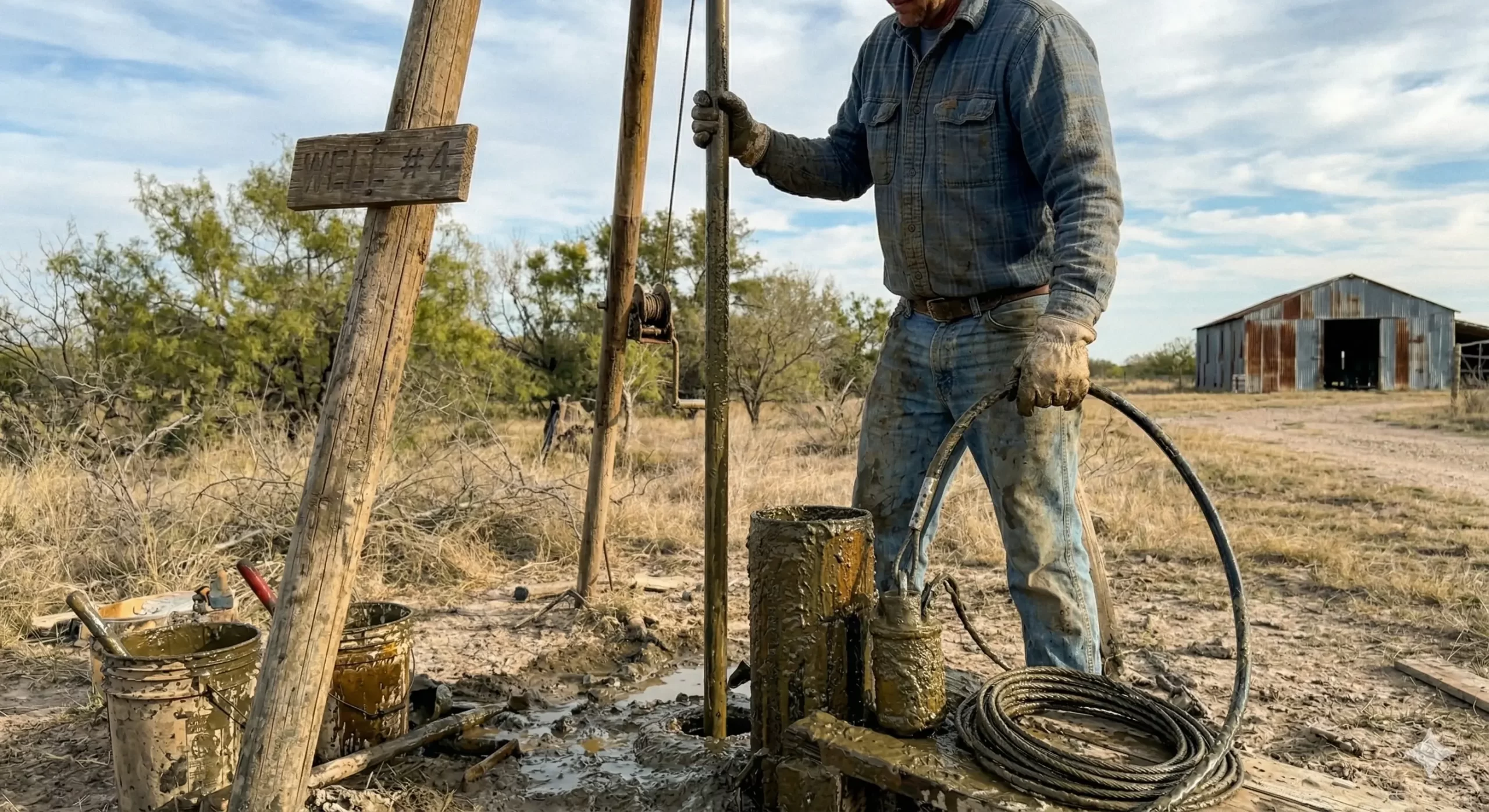
Pulling a pump in Southlake isn’t like pulling a catfish out of a pond. We’ve got significant rock formations, often requiring specialized drilling and well construction. Many wells here are deep, sometimes over 500 feet, which means a lot of pipe & heavy equipment to hoist it all out. Access can also be tricky with landscaped yards & gated properties, adding time & complexity to the job.
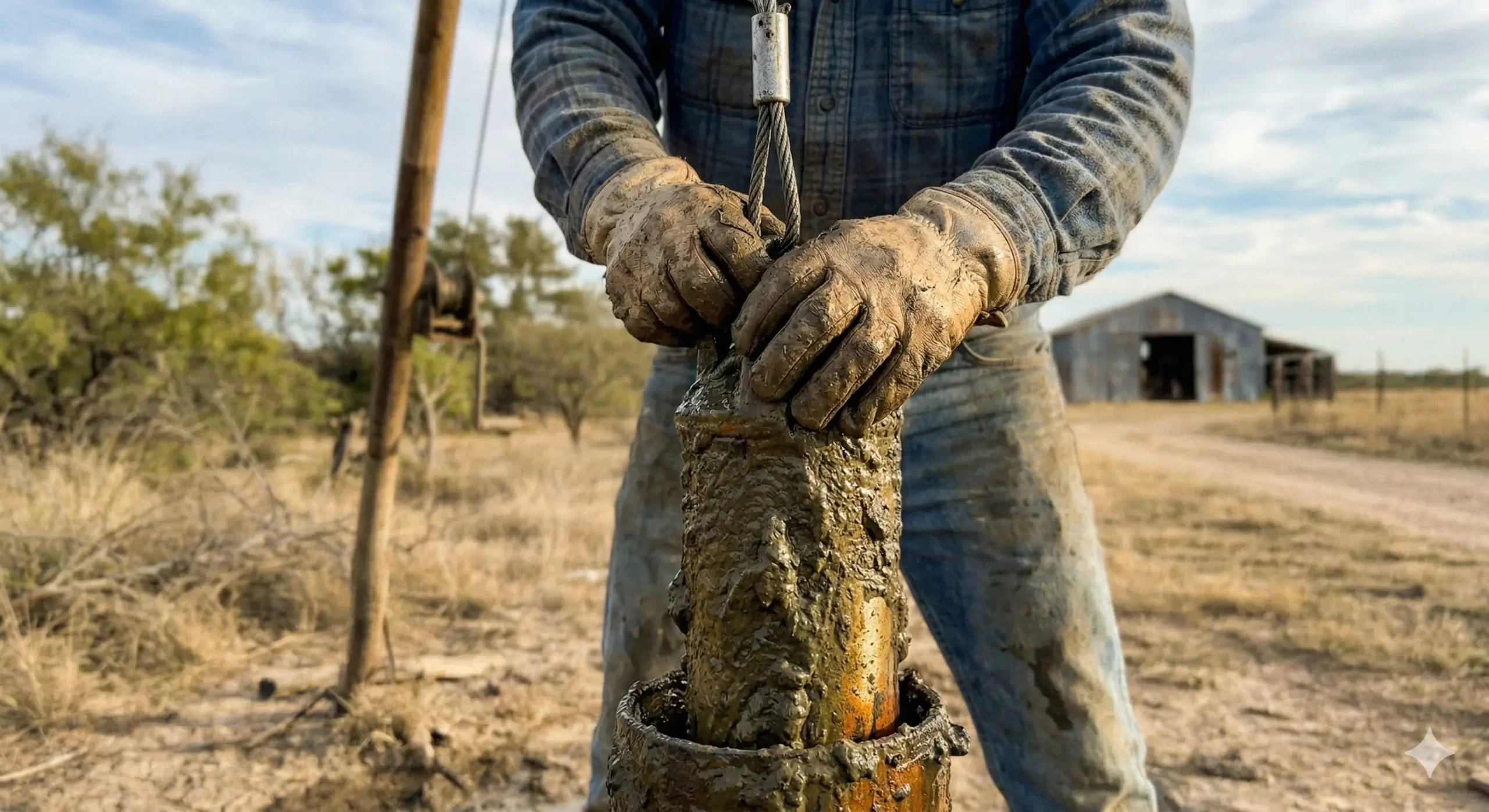
Our rigs aren’t just pickup trucks with a winch. We use heavy-duty well service trucks equipped with powerful derricks & specialized tools to safely & efficiently pull hundreds of feet of pipe & pump. We also carry a full inventory of high-quality submersible pumps, motors, control boxes, & electrical components suitable for the specific demands of Southlake’s wells.
Spring Well Maintenance in Texas
Heavy spring rains can cause surface runoff to breach well caps. We strongly recommend testing your water for coliform bacteria and inspecting the sanitary seal.
Save $500+ on Replacements
Via the TX Energy Co-op VFD Upgrade Program
78°F in Southlake
Local Aquifers & Geology
The primary groundwater sources in Southlake include the Trinity Group Aquifer, specifically tapping into the Paluxy & Glen Rose formations. This aquifer system is characterized by layers of sandstone, limestone, & shale. Water is stored & transmitted primarily through pores in the sandstone & fractures in the limestone. It’s a confined aquifer, meaning it’s overlain by less permeable layers, which helps protect its quality but also means slower recharge rates. The water can be moderately hard due to calcium & magnesium from the limestone, & sometimes exhibits elevated levels of iron or manganese, occasionally even sulfur or trace amounts of naturally occurring fluoride.. Drilling through the local Southlake sits on a transition zone, primarily characterized by soils derived from the Cretaceous limestone & shale bedrock. We see a mix of materials from the Blackland Prairie, Grand Prairie, & Cross Timbers ecoregions. The dominant soil types are typically dark, calcareous clays (like ‘shrink-swell’ clays) in the lower-lying areas, transitioning to sandy loams & stony clay loams on the uplands. This diverse soil profile affects everything from well drilling to septic system design & foundation stability. means that average well depths range from 300 ft – 700 ft, with some deeper wells exceeding 800 ft depending on local geology & water demand..
Due to these geological factors, local homeowners frequently struggle with Sanding & mineral buildup. The sandstone formations in the Trinity Group can be unconsolidated in places, leading to sand ingress into the well, which acts like sandpaper on impellers & motor bearings. Combined with hard water & occasional iron, mineral scaling can choke off pump efficiency & lead to premature failure of submersible pumps & pressure tanks..
Drilling Depth Comparison
Deeper wells require heavy-duty crane hoists for pump extraction.
Climate & Water Quality
Pump systems in the Southlake area face severe environmental stressors. The most significant threat is Texas weather is brutal on well equipment. The intense summer heat means pumps run longer & harder, increasing electrical load & thermal stress on motors. Drought cycles cause water tables to drop, forcing pumps to work at lower efficiencies & sometimes suck air, which is disastrous. Conversely, rare but severe freezes can burst exposed lines, pressure tanks, & even crack well casings if not properly protected, leading to expensive repairs & potential contamination.
Additionally, the raw groundwater often presents issues with Hardness is prevalent, often ranging from 150-300 mg/L (9-18 grains per gallon), leading to scale buildup in pipes, water heaters, & appliances. Iron & manganese are also common, causing staining & metallic tastes. Occasional sulfur (hydrogen sulfide) can produce a ‘rotten egg’ odor. As mentioned, fine sand can also be an issue, particularly in older wells or those not properly developed..
Regional Groundwater Advisory
Known primary contaminant threat to submersible pumps and pipes in this area:
Common Area Systems
VFD Upgrade Savings
Constant Pressure vs StandardReplacing a standard single-speed pump with a Variable Frequency Drive (VFD) eliminates hard starts and drastically reduces energy draw in Texas.
Compliance & Local Permits
Tarrant County Level: Unlike some areas of Texas, Tarrant County does not have a local Groundwater Conservation District (GCD) with its own specific permitting rules for well drilling or pump installation. However, all well drilling & pump installation activities fall under the strict oversight of the Texas Department of Licensing & Regulation (TDLR). This means licensed drillers & pump installers must adhere to statewide well construction standards, including proper casing, grouting, & setback distances. Additionally, Tarrant County’s Public Health department often has requirements regarding well placement relative to septic systems & other potential contaminants, & may require well registration or bacteriological testing for new installations. Always check with the county & TDLR before starting any well project.
Top Pump Brands in Texas
Most frequently installed hardware based on local geology (2026 data).
- Check pressure switch & pressure gauge for proper calibration & operation.
- Test motor windings & insulation resistance for submersible pumps.
- Verify amperage draw against manufacturer specifications to detect overload or impending failure.
- Inspect all electrical connections in control box & at well head for corrosion or loose wiring.
- Check pressure tank air charge & bladder integrity to ensure efficient system cycling.
- Conduct water sample test for basic quality parameters like hardness, iron, & pH, & visual sand content.
Premium Well Pump Brands We Service
Our licensed technicians in Southlake are certified to repair, replace, and install high-quality groundwater equipment from industry-leading manufacturers, including:
- No water or very low water pressure from all fixtures.
- Pump cycles on & off too frequently, even when no water is being used.
- Water coming out in spurts or with air bubbles.
- Unusual noises (grinding, humming, clicking) coming from the well head or pressure tank area.
- Cloudy, sandy, or discolored water suddenly appearing.
- Significantly higher electricity bills without a change in water usage.
Southlake Real Estate Well Regulations
Local Dispatch & Response Times
Live Dispatch: Texas
Updated Just Now⚠️ High demand. Call now to secure the next available technician.
- Our goal is always same-day or next-day service for no-water emergencies in Southlake.
- We prioritize Southlake calls due to its proximity & the immediate need for water.
- Our service trucks are stocked with common parts to minimize return trips.
- After-hours & weekend service available for critical situations, though rates may apply.
- We aim to diagnose the issue quickly & provide a clear action plan on-site.
⚠️ Tarrant County & State Regulatory Warning: Abandoned Wells
Pump Lifespan Estimator
Select household size in Southlake to see strain impact.
The Cost of Ignoring Symptoms
Fixing a short-cycling pump early saves thousands in Southlake.
Data reflects average well contractor estimates in Southlake.
Groundwater Threat Level
Current aquifer and mineral impact on pumps in Southlake.
Dropping water tables cause pumps to suck air and overheat.
Hard water calcifies pump impellers, reducing lifespan.
Local Southlake
Well Pros
Fast Local Service & Diagnostics
Calls are routed to a licensed local well professional.
Septic System Services in Southlake, TX
Do you have a septic tank on your property? Proper maintenance is critical to protecting your well water quality.
Southlake Homeowner Feedback
“Had a problem with my well pump goin’ out last month. Called these fellas & they were out quick. Knew exactly what they were doin’. Got us water back the same day. Good honest work, highly recommend.”

Local Homeowner
✓ Verified TX
“My water pressure was acting real strange, cutting in & out, & then just stopped altogether on a Saturday mornin’. I called them up, & they sent a technician out within a few hours. Turns out my old pump had finally given up the ghost after too many years suckin’ up fine sand. The tech, a young fella named Billy, explained everything clearly. He even showed me how the impellars were totally worn out. They had a new Grundfos pump on the truck, which was a relief. Billy & his helper worked steady, got the old one pulled from 400 feet down, & had the new one installed by late afternoon. Pressure’s better than ever, & the water seems clearer too. Great service, even with my pump being such a pain.”

Local Homeowner
✓ Verified TX
“We lost water right before guests arrived for a big family dinner. Panic set in! I called them, & they truly understood the urgency. They had a crew out to my Southlake property within an hour & a half. Diagnosed a bad control box & replaced it on the spot. Lifesavers! Can’t thank ’em enough for the quick turnaround.”

Local Homeowner
✓ Verified TX
Expert Southlake Well System FAQ
Why is my well pressure fluctuating so much in Southlake, even after replacing my pump?
Frequent pressure fluctuations, especially after a new pump, often point to an issue with your pressure tank or the pressure switch settings. In Southlake, with our deeper wells & sometimes sandy conditions, it’s critical to have the pressure tank properly sized & charged. If the tank’s air bladder is compromised or the pre-charge pressure is incorrect, the pump will short-cycle, leading to erratic pressure. It could also be a leak in your water lines between the well & the house, or even a partially clogged screen in the well itself from residual sand. We’d start by checking the tank & switch calibration, then look for leaks & well integrity.
Do I really need a water softener with Southlake well water, or is a filter enough?
Whether you ‘need’ a water softener depends on your tolerance for hard water issues, but for most Southlake well owners, it’s highly recommended. Our water from the Trinity Group aquifer is typically moderately to very hard, meaning it has high levels of dissolved calcium & magnesium. A standard sediment filter will remove sand & particulate matter, but it won’t address the hardness. Hard water leads to scale buildup in pipes, water heaters, & appliances, reducing their efficiency & lifespan. It also makes soaps less effective. A water softener uses an ion exchange process to remove these hardness minerals, extending appliance life, improving cleaning, & making your water feel much smoother. It’s an investment that pays off over time.
What are the rules & permits for drilling a new well on my Southlake property?
Drilling a new well in Southlake, while not requiring a permit from a local GCD, still involves important state & county regulations. You must hire a TDLR-licensed water well driller. The driller will handle the permitting process with the TDLR, which includes filing a Notice of Intent to Drill. This notice ensures the well is recorded & constructed according to statewide standards, including casing, grouting, & setback distances from septic systems, property lines, & potential contamination sources. Additionally, Tarrant County Public Health may have requirements for well placement & water quality testing after the well is completed. It’s crucial to work with an experienced driller who understands all these local & state requirements to ensure your well is legal, safe, & reliable.
How often should I have my Southlake well inspected & maintained?
For most Southlake homeowners, we recommend a professional well inspection & maintenance check every 3 to 5 years. This proactive approach can catch small issues before they become major, costly problems. During an inspection, we’ll check your pump’s performance, motor health, pressure tank air charge, electrical components, & overall system integrity. We’ll also inspect the well head for any signs of damage or potential contamination. Given the hard water & potential for sand in our area, regular checks can identify mineral buildup or early signs of pump wear. Investing in routine maintenance can significantly extend the life of your well system & ensure you have a consistent, reliable water supply.
Southlake Groundwater Expert AI
What are the specific groundwater regulations, average well depths, and the local conservation district for Southlake, Tarrant County?
Groundwater Regulations and Residential Wells in Southlake, Tarrant County (2026)
As a Senior Hydrogeologist and local groundwater regulatory expert for Texas, I can provide you with precise information regarding residential water wells in Southlake, Tarrant County, for the year 2026.
Local Groundwater Conservation District (GCD) for Southlake, Tarrant County
As of 2026, Tarrant County is NOT currently located within an active Groundwater Conservation District (GCD). This is a critical distinction in Texas groundwater law. While GCDs are the state's preferred method for local groundwater management and regulation, Tarrant County has not established one. Therefore, residential water well regulations in Southlake primarily fall under state jurisdiction, specifically through the Texas Department of Licensing and Regulation (TDLR).
State Regulations Governing Water Wells in Texas
In the absence of a local GCD, the primary regulatory authority for water well drilling, construction, and registration in Southlake is the Texas Department of Licensing and Regulation (TDLR). Key regulations include:
- Driller Licensing: All water well drillers and pump installers operating in Texas must be licensed by the TDLR.
- Well Construction Standards: Wells must be constructed according to the standards outlined in TDLR's Water Well Drillers and Pump Installers Rules, which implement Texas Water Code Chapter 32 and Chapter 33, and specifically 16 Texas Administrative Code Chapter 76. These rules cover casing, cementing, and wellhead completion to protect groundwater quality.
- Well Registration: Property owners are required to register new water wells with the TDLR within 30 days of completion. The licensed driller is typically responsible for submitting the well log and completion report.
- Setback Requirements: While TDLR rules provide general guidance, common setbacks enforced by local health authorities (e.g., Tarrant County Public Health, where applicable to well permitting for septic systems) often include:
- 50 feet from a property line.
- 50 feet from a septic tank.
- 100 feet from a septic system drainfield.
- 150 feet from a septic system drainfield if a well is supplying a public water system (not typically applicable to residential private wells).
Official TDLR Resources:
- TDLR Water Well Driller and Pump Installer Program: https://www.tdlr.texas.gov/wwd/wwd.htm
- Search for Texas Water Well Reports (Well Logs): https://www.tdlr.texas.gov/wwd/wwdsearch.htm
Specific Aquifer Beneath Southlake, Tarrant County
The primary aquifer system supplying residential water wells in Southlake, Tarrant County, is the Trinity Aquifer System. This extensive aquifer in North Central Texas consists of three main water-bearing units (from shallowest to deepest): the Paluxy Formation, the Glen Rose Formation, and the Travis Peak Formation. Most residential wells in Southlake target one or more of these formations within the Trinity Group.
Average Well Depths in Southlake, Tarrant County
Based on historical state well logs for the Southlake area within Tarrant County, the average well depth for residential water wells tapping into the Trinity Aquifer System is typically between 450 to 700 feet. Some wells may be shallower if they achieve sufficient yield from the upper Paluxy or Glen Rose Formations, while others may extend deeper, up to 900-1100 feet, to reach the more productive lower Travis Peak Formation for more reliable, long-term supply or specific water quality objectives. The exact depth will depend on the specific location, desired yield, and the driller's assessment of the local hydrogeology. It is highly recommended to consult a licensed driller who can provide a site-specific estimate.
For the most accurate and up-to-date information for your specific property, I recommend engaging a licensed Texas water well driller experienced in the Tarrant County area. They can access detailed well logs for nearby properties and provide a precise assessment.
Fast Local Service & Diagnostics
Calls are routed to a licensed local well professional.
Blix
provides official
Emergency Well Pump Repair services for the
Southlake
area.